
.C. Worley for The New York Times Jay Henderson leads Tim Norrie into a turn on an ice bike racing course in Minneapolis. Interest Guide T.C. Worley for The New York Times The screw-studded tire, above, of an ice racing bike. Wheels on Ice: Slip-Sliding and Loving It By STEPHEN REGENOLD THE mass perforation of Brownie Lake began at noon, when eight rolling tires, thousands of shiny screw tips and the fast-pumping legs of four bike riders were set in motion on a dizzying figure-eight track of ice. “Round and round we go,” said Jay Henderson, known as Hollywood, whizzing by on a plane of ice, jockeying for position on a tight turn in the course. Pellets shot off spinning wheels. Four riders cranked and wrangled, a trail of tiny divots left in their wake. The track they rode, a double-loop path on the frozen surface of a lake in Minneapolis, glinted in the afternoon sun. “Coming on the inside,” Mr. Henderson hollered, squeaking by a rider, his elbows out. Ice bike racing, a subgenre of the subgenre of winter cycling, is a hybrid discipline where spiked tires bite solid ice on twisting, circuitous courses cut from a mantle of snow. Riders pedal hard on straight-aways, then slide and fishtail through the turns. Frozen lakes and rivers serve as the medium of the sport, which mixes elements of a sprint road race with a dirt bike rally. Like its cousin sport of ice motorcycling, ice bike racing appeals to a niche of hard-core winter riders, irreverent renegade types and cycling gear aficionados who thrill to toy endlessly with homemade spiked tires. Organized races started up five or more years ago in places like Minnesota, Alaska, Ontario and Manitoba, some being underground affairs with just a dozen competitors. Nationally, there is no ice bike racing organization. The clubs that put on events are disparate and not in communication with one another. There are no rules or standards, making every race different. But an ever-increasing trickle of interest in wintertime riding has helped raise awareness of the events. At competitions like the Chilly Chili Ice Race, held each January on a frozen lake in Bloomington, Minn., more than 100 riders regularly show up. “It’s a strange crew that does our race,” said Chuck Hood, a director of the Chilly Chili race, which celebrated its five-year anniversary with a race last Sunday. Mr. Hood, a 36-year-old product manager at a bike-parts distribution company, said ice racers tended to be “mountain bikers, urban single-speeders or cabin-feverish roadies blowing off steam.” Though there are serious racers like Mr. Henderson — a 35-year-old bike shop owner who is a four-time Chilly Chili champion — most ice bikers are casual competitors. “We get everyone from college students to retirees on the ice,” said Carlos Lozano, the 63-year-old organizer of the Frigid Bits Race Series in Anchorage, where ice bikers pedal a plowed lane on the surface of Goose Lake. From November to March, usually two times per month, Mr. Lozano directs a Frigid Bits race, which is free and open to anyone. Racers make laps on a mile-long labyrinth of a course that this year features 36 snaking turns. “I prefer to design my race courses after the Formula One venues,” said Mr. Lozano, a retiree who spends hours digging a 12-foot-wide lane with a snowplow-equipped A.T.V. On race day, mountain bikes are the steed of choice for most ice riders, though cyclocross bikes and simple single-speeds are also used. Commercially made tires with carbide studs from companies like Suomi Tyres, Schwalbe and Kenda populate most of the rims spinning on a course. The most serious competitors make their own tires, drilling hundreds of holes in the tread, inserting screws, and padding the interior face with duct tape, rubber, silicon caulking and other secret concoctions. Screw size and type varies from racer to racer. “My tire methods are strictly off the record,” said Mr. Henderson, who incorporates more than 600 screws to create a pair of medieval-looking ice-chewers that can corner at nearly 90 degrees on the glare ice of a hockey rink. ON a Saturday last month, the weekend before the Chilly Chili Ice Race, Mr. Henderson parked on a neighborhood street near downtown Minneapolis and carried his bike through the woods to Brownie Lake. A small group was assembling for a training session at noon. Skiers glided by on the trails that surround the lake. The ice bikers shoveled snow from their course for 20 minutes before taking off. Rounding a corner, shoulders leaning into the turn, Kristy LaVigne let out a little squeal. “Oooh, yikes, whee!” she shouted, her tires digging into a sheen of exposed ice. Ms. LaVigne, a 26-year-old office manager from Circle Pines, Minn., touched the brakes and skidded, her rear tire sliding sideways like fingernails on slate. “These things more or less seem to work,” said Ms. LaVigne, coming to a stop, looking down at her front wheel. “Really, it feels like you’re on pavement most of the time.” But the track ahead, a tight 500-foot looped trail, had patches as shiny as glass. A coat of fluffy white covered the nearby forest floor. The riders formed a line on the straight-aways, spinning fast while sitting down, then coming together in a crush at each corner. They rode lap after lap, tires aerating the ice. “Look out, coming through,” yelled Tim Norrie, a 31-year-old electrician from Minneapolis, brushing by a rider on a turn. Crashes on ice are common, and during the Brownie Lake session riders went down a dozen times, tipping after taking a corner too fast, or flying over handlebars while ramming a snow bank. The sparring sessions during tight turns — shoulders nudging, elbows poking out — didn’t help either. (Though such moves are much more subtle in a real race.) Ms. LaVigne, a former hockey player and first-time ice biker, was cautious of her knees. “I know how hard ice can be in a bad fall,” she said, stopping to let three riders whiz by. Russell Loucks, a 45-year-old software engineer from Eagan, Minn., put a foot down to skim the ice on fast turns, his shoe skating as a solid outrigger for balance. Across the ice, on a packed trail that circles the lake, a skier stopped to assess the scene, hand blocking the sun in a salute on his forehead. A dog ran free nearby, dragging a leash through the snow. On a turn in the course, Mr. Norrie scooted in for a shoulder check, and Mr. Henderson went flying, bouncing on the ice. But Mr. Henderson stood up smiling and brushed himself off. “I’ll be feeling that one tomorrow,” he said. By 1 p.m., the winter sun cast long shadows on the track. Ms. LaVigne rode up front, confident on the bike after only an hour of practice. Her feet spun on the pedals. Her tires hummed on the ice. VISITOR INFORMATION STUDDED bike tires meet the ice at events throughout North America each winter, including skating-rink sprints in Toronto, river ice races in Winnipeg and ice-biking events twice a month in Anchorage. Here’s a schedule of coming races: MONTREAL The Coupe des Glaces 2007 will be held tomorrow at Bonsecours skating rink, where racers sprint laps in multiple elimination heats. Now in its fourth year, the Coupe des Glaces attracts more than 50 ice bikers (www.coupedesglaces.org). WINNIPEG, MANITOBA Winnipeg’s Icebike 9, its ninth annual ice biking event, is scheduled for Sunday at the Forks National Historic Site near downtown. Up to 200 competitors pedal a course that travels on river ice and into the woods (www.icebiking.com). ANCHORAGE The Frigid Bits Race Series in Anchorage has races on Feb. 10 and Feb. 24 at Goose Lake. Competitors pedal a labyrinthine mile-long course that has 36 turns. Races start at 7 p.m., and there is no entry fee. Contact the race organizer, Carlos Lozano, by e-mail for more information: rio@ak.net. TORONTO Two ice-skating rinks at Dufferin Grove Park are the site for the Feb. 24 Icycle Race. About 40 racers compete each year in a series of rounds that can include up to 60 laps in a row. Information: (416) 532-6392. |
|
 | 
Chad Case for The New York Times Skiercross competition at Sun Valley, Idaho. A New Ski Tour Brings Snow, a Show and Many Parties By ALISON BERKLEY TOMMY LEE, the former Motley Crüe drummer, steps into a makeshift D.J. booth in Sun Valley, Idaho, tattoos and nipple rings in full splendor like a peacock’s feathers. Throngs of tipsy women in eerily similar outfits — designer jeans, studded belts and skintight T-shirts — suddenly materialize on the living-room dance floor, vying for his attention. Meanwhile, a crowd of skier dudes in their 20s, dressed in baggy jeans and T-shirts, gather in the kitchen for the best view of the pro snowmobilers out front, jumping into the freezing air over a giant Red Bull ramp erected in the front yard. The house, an 8,000-square-foot mansion, also has an indoor rock-climbing wall, a backyard amphitheater and a heated lap pool and hot tub. A steady stream of partygoers arrives on plush coach buses staffed with cocktail waitresses. It’s like a Playboy mansion transplanted into snow country with Kipp Nelson, 47, a retired banker turned full-time ski bum, as its Hugh Hefner. “I want to bring glamour back to skiing,” Mr. Nelson said. Flush from his days as a partner at Goldman Sachs, Mr. Nelson is trying to revive the ski circuit in this country with a four-stop competition that offers a $500,000 purse. The Ski Tour, as the event was called before corporate sponsorship added “Honda” to the official title, kicked off during the Martin Luther King weekend last month in Sun Valley — a four-day extravaganza that included 15 bands, fireworks, countless parties and top-notch skiing. (The second stop, in Breckenridge, Colo., began yesterday and continues to Sunday.) “What happened to the days when the pro ski tour would come, and these huge parties would hit the town?” asked Mr. Nelson, dressed in a ski jacket and beanie cap, as he welcomed some 500 skiers, catalog models and B-list celebrities to his palatial ski chalet in the chic resort town of Ketchum, Idaho. “What happened to the hot dog era?” Well, for one thing, snowboarding. As skiing sagged during the 1990s, it was viewed as a stodgy pastime for older people. Snowboarding, with its emphasis on freestyle expression and maneuvers, captured the youth market and, along with it, the sponsorships and advertising dollars that once fueled the professional ski circuit. The only major ski event in the United States today, between Christmas and Easter, is the Winter X Games — and it revolves around snowboarding, with skiing taking a back seat. But don’t expect the Ski Tour to feature Alpine skiing, giant slalom or big names like Bode Miller. The Sun Valley event featured only two competitions, skier halfpipe and skiercross (similar to motocross, but on skis), which owe their popularity to snowboarding rather than a nostalgia for Spandex and silly hats. The festivities started on Friday night when about 3,000 people poured into the BaseCamp Music Experience Pavilion, a 14,000-square-foot tent erected in the middle of Ketchum. Fans of all ages turned out, dressed in layers as thick as astronauts’. There were young couples toting bundled-up toddlers, teenagers taking swigs from flasks and lots of skiers approaching middle age seeking to reclaim their youth. Main Street was closed to traffic for the first time in 25 years to make way for bonfires, flame throwers and break dancers. JumboTrons hovered over the small downtown streets, projecting fast-moving images of daredevil moves and party montages into the night sky, while an outdoor D.J. played hip-hop. THE entire spectacle felt like a heterosexual version of the exuberant Gay Ski Week held in Aspen, with the kind of excess that has wide-eyed guests whispering about how much everything must have cost. (Mr. Nelson estimates that the sponsors will spend about $7 million for the tour, or about $1.5 to $2 million for each of the four stops.) Participants were impressed. “It’s the best thing I’ve ever experienced, really,” said Taylor Stoecklein, 19, a college freshman who has lived in Sun Valley his entire life. “It’s the best thing I’ve ever witnessed in Sun Valley.” The headline performance that night was the Wailers, Bob Marley’s former band, which took to the huge stage at about 6 p.m. Despite the minus-10-degree temperatures, thousands stood outside, swaying back and forth in puffy down jackets, as the Wailers belted out reggae classics like “Buffalo Soldier” and “One Love.” Meanwhile, in the heated V.I.P. area backstage, mini lamb chops and steak skewers were being washed down with kiwi martinis. Michelle Rodriguez, an actress from the TV series “Lost,” was standing by the bar, throwing back Red Bull vodkas alongside pro skiers, ski industry executives and well-groomed Sun Valley regulars. “I love people who think of things that are amazing and make them happen,” said Ms. Rodriguez, who wore white fur boots and a matching fur shawl. A huge fireworks display marked the end of the concert, but it was by no means the end of the evening. Hordes of hungry people packed the restaurants beyond capacity. Sushi on Second had a two-hour wait. The Cellar, a popular restaurant and pub next to the BaseCamp, was turning people away. “We ran out of silverware,” one of the bartenders said, wiping the sweat from his brow. The official party didn’t stop until 2 a.m., after the rap group Swollen Members played in the NexStage Theater, the last D.J. packed up his turntable, and the town bars like Whiskey Jacques and Roosevelt Tavern enforced last call. But for those in the know, there were plenty of after-parties, like the one at the Loft, a converted warehouse in Ketchum, that lasted until dawn. The late night didn’t seem to dampen spirits the next day. By noon on Saturday, several thousand had turned out for the skiercross finals at Dollar Mountain, clutching cans of Pabst Blue Ribbon in gloved hands and lining both sides of the short oval course. A gaggle of fashion models in faux fur parkas, called the Ski Tour Girls, were passing out hand warmers and beer cozies, while Sun Valley’s upper crust overwhelmed the small V.I.P. tent, sipping top-shelf gin and tonics. A beer-fueled roar erupted when the ski racers finally emerged, like colorful rubber balls in a giant pinball machine, careening through the banked turns, bumpy rollers and steep tabletops. “This is the biggest prize purse I’ve ever seen,” said Casey Puckett, 34, who took the $25,000 first-place prize. Like many of his competitors, Mr. Puckett, a four-time Olympian in Alpine skiing, is a frustrated World Cup athlete who switched to the skiercross circuit a few years ago because it was more lucrative — and a lot more fun. The Ski Tour, he said, was “taking skiing to a whole different level by making it the premier event, whereas at the X Games, it’s just one of many events.” No premiere ski event, of course, would be complete without television coverage. To position the Ski Tour under its desired spotlight, Mr. Nelson paid ABC an undisclosed sum to broadcast an hourlong show for each of the inaugural Ski Tour stops. He also hired a 40-person production crew to shoot and edit the program. (The first show aired midday on ABC on Jan. 20). One thing the cameras didn’t capture, however, were female athletes. In an unfortunate throwback to the hot dog era, there were plenty of ski bunnies, but no women’s division in either competition. “I came here because Red Bull wanted me to be here to show a woman’s presence, but the organizers didn’t even make an effort,” said Kristi Leskinen, a top professional freeskier who has appeared in FHM magazine in lingerie. (Mr. Nelson said the organizers didn’t want to “bite off more than they could chew” and that women may be included in the future.) A marathon party atmosphere swept the town on Saturday night, with the sleep-deprived trying to keep their buzz going. The bars seemed even more crowded than the night before, though the high man-to-woman ratio remained the same: if the hot dog era was back, no one seemed to have notified the ladies. At Whiskey Jacques, a cramped dive bar where a late-night party was being held, the crowd was overrun with scruffy men in fleece jackets and wool caps, clutching bottles of beer and chasing after women like wolves. “In this town, they say you don’t lose your girlfriend, you lose your turn,” said Thia Konig, 41, a photographer who has lived in Sun Valley for 13 years. “The guys are loving this because there’s a fresh crop of girls from out of town.” The Ski Tour wrapped up Sunday evening with the skier halfpipe finals at the Warm Springs base area, which, at 6 p.m., was far from warm. Thousands of spectators climbed up the steep slope to see Peter Olenick land a double back flip in the halfpipe; he’s the only skier to have done that in competition. It made for great television, even if he ended up in 10th place. BUT the real action took place at the nearby base lodge, where a fashion show was under way, featuring the Ski Tour Girls again and a few local amateurs, who seem to be living out every wild girl’s fantasy, sashaying down the runway in everything from gold lamé hot pants to bikini tops. It was the last event on the official schedule — a festive send-off to cap the first Ski Tour — but the party was far from over. “How long do you think this is going to last?” a woman whispered to her friend. “I still need to get home and change for Kipp’s party. What are you going to wear?” Mr. Nelson, who is famous in town for his elaborate parties, was holding an invitation-only gala in his mansion. Choosing the right thing to wear certainly wasn’t an issue for a half-naked Mr. Lee, who, according to Mr. Nelson, was messing around on the climbing wall until 8 that morning. “He finally asked me if he could just stay up at the house,” Mr. Nelson said. “I said, ‘Sure.’ “ The Circuit Stops on the Honda Ski Tour: BRECKENRIDGE, COLO. Feb. 1 to 4. ASPEN, COLO. Feb. 22 to 25. SQUAW VALLEY, CALIF. March 8 to 11. All-access tickets are $99. More information is at www.theskitour.com.
|
|
| 
Gary Hallgren 
Chip Litherland for The New York Times Northerners have developed familiar migratory patterns taking them to their Florida enclaves, including a concentration of Québécois in Hollywood. Snowbirds Flock Together for Winter By JULIA LAWLOR IT takes a big state to absorb the entire North every winter, but once again, Florida is pulling it off. From Miami to Pensacola, the cold-weather escapees have been filtering in, completing the midwinter migration to the Northerners’ land of dreams — or at least, the land of polo shirts and khaki shorts. And with more than 50,000 square miles of territory, Florida has plenty of room for all of them — sun-hungry retirees, peripatetic second-home owners and seasonal settlers — to spread out. So why don’t they? It’s not exactly regimentation, and there are plenty of exceptions to be found, but Florida’s winter arrivals clearly like to settle in clumps. Even in the sunny South, they seem to want to be among their own — occupying turf in the company of their clans, their neighbors, their golf buddies and, in general, people who share the cadences of their accents and the colors of their license plates. That’s why the Miami area is called the Sixth Borough — and why Palm Beach County voters lamenting the weaknesses of the butterfly ballot in 2000 so often sounded like Long Islanders. It’s why Memphis families returning from spring break will be walking around with white sand from the Panhandle city of Destin (not Fort Myers, certainly not Miami) between their toes. It’s the reason two newspapers in French, with a Québécois tilt, are published in the Fort Lauderdale-area city of Hollywood and a big Quebec bank, Caisse populaire Desjardins, has started three branches nearby, complete with French-flashing A.T.M.’s. New Englanders settle around Sarasota, and Philadelphians camp out nearby in Clearwater. Minnesotans congregate on Sanibel Island; Ohioans on the Gulf Coast east of Panama City. Carolinians find their own in Daytona. In the beginning, all of this segmentation was a function of the Interstates. From the Midwest, the most direct route to Florida, I-75, goes to the West Coast. From the Northeast, I-95 follows the East Coast straight down to Miami. From Alabama, Tennessee and Georgia, it’s a comfortable drive to the Panhandle. Now, of course, you can board a flight to just about anywhere in Florida. But Northerners cling to the old patterns anyway. “They’re like birds,” said John Tuccillo, an economist in Arlington, Va., who serves as a real estate consultant to businesses and government agencies. “They keep to their flyways.” Demographers have a name for it: chain migration. “People who live near each other share information about where to retire, where to vacation,” said Lance deHaven-Smith, a professor of public administration at Florida State University in Tallahassee. “They tell their friends and neighbors, and then they end up in the same place.” Sometimes those flyways can be very narrow. Often a Florida resort has a chillier twin farther north. Seventy-five percent of second-home owners on Ponte Vedra Beach near Jacksonville are from Atlanta, according to Linda Sherrer, a broker with Prudential Network Realty. Palm Beach County has its counterpart in New York’s Nassau and Suffolk Counties. Even Staten Island has a colony, in the Villages, a sprawling retirement and golf community southeast of Ocala. FOR years, the high-toned West Coast resort town of Naples has been a domain of suburban Detroit. So many retired General Motors executives have homes there (including the former chief executives Roger Smith and Jack Smith) that a group got together and formed the 120-member Gulf Shores GM Retired Executives Club. The Detroit connection may have solidified on the day in 2001 when Nina Machus, a snowbird from the suburb of Bloomfield Hills, and a friend dreamed up a women’s club called the Juliets as a way for old friends to do something during their three or four months in Naples other than play endless rounds of golf. (They also wanted to outdo their husbands, who had started a men-only lunch club called the Romeos — Retired Old Men Eating Out.) The Juliets started by limiting membership to current or past residents of Bloomfield Hills or nearby Birmingham. They got a book discussion group going, set up bridge games and organized outings. Soon the phones started ringing and didn’t stop. “We had to cut it off when we hit 100,” said Ms. Machus, a vocal music teacher who likes to tune the TV to Detroit weather when she’s on the treadmill. “It’s hard to find a place that has room for more than a hundred women at lunch.” On a balmy Monday morning in November, 13 Juliets managed to squeeze into the narrow new fiction aisle of a local Barnes & Noble to discuss “The White Russian,” by Tom Bradby. Half hadn’t read the book. But the group’s leader, Barbara Denomme, a former kindergarten teacher who is married to Thomas G. Denomme, a former vice chairman of Chrysler, started the discussion anyway. Later, Ms. Machus, Ms. Denomme and a Birmingham Juliet, Janette Engelhardt, went to lunch and did a little shopping — first at a costume jewelry store that sells $10 watches, then in a boutique in Old Naples where Ms. Engelhardt admired a black net top for $885 and a metallic skirt for $820. “It’s great fun,” Ms. Engelhardt said of the Juliets club. “And it’s become a tremendous support system.” Of course, there are exceptions to the migratory rules, especially involving people from New York State. A study this year by Stan Smith, director of the Bureau of Economic and Business Research at the University of Florida in Gainesville, found that of all the people who spend part of each year in Florida, the greatest number were from New York, with Michigan next, followed by Ohio, Pennsylvania, Canada, Illinois, Georgia, Massachusetts, New Jersey and California. Upstate New Yorkers have long gravitated to places like the central eastern coast and the area around Tampa and St. Petersburg. And now that South Florida has filled up, metropolitan New Yorkers are popping up in nearly every place where Florida sand meets the sea. It would take radical change, however, to break the old ties to Miami, and the connection has renewed itself with the emergence of South Beach as a new winter haunt that mirrors the Manhattan and Hollywood scenes. The film and television producer Jerry Bruckheimer just bought a condo in one of the nicest buildings in South Beach, according to Diane Lieberman, broker-owner of South Beach Investment Realty. The rappers Diddy and Lil Wayne, the billionaire businessman Mark Cuban and the Yankees star Alex Rodriguez all have homes nearby. After the 1970s, New Yorkers began to move north from Miami to Fort Lauderdale and then to Palm Beach County, often traceable for demographers partly by their Jewish ethnicity. Ira Sheskin, director of University of Miami’s Jewish Demography Project, said that since the 1980s and 1990s, Boca Raton, Delray Beach and Boynton Beach had all acquired large Jewish populations of New Yorkers, though many Orthodox Jews buck the trend by staying in Miami. Boynton Beach, a booming city south of Palm Beach, attracts New York’s suburbanites. “This is Long Island plopped down with palm trees,” said Beverly Sandberg, who is from Huntington, N.Y., and spent 10 winters in Boynton Beach before retiring there recently with her husband, Alan. In nearby Delray Beach, Evelyn Stefansky, who was born in Brooklyn, opened a restaurant, Lox Around the Clock, a year ago with friends from Queens and farther east on Long Island. The bagel dough she has shipped in from Brooklyn pleases her clientele, and she has begun passing out chopped liver on bread to mollify impatient New Yorkers waiting in line. Perhaps nothing solidified New York’s identification with Palm Beach County more than the episode of “Seinfeld” in which Jerry’s parents objected to George’s parents’ buying a condo in Del Boca Vista, a fictitious Florida development where they lived. In 2000, the real-life Jerry Seinfeld was spotted taking his real-life mother, Betty, out to dinner near her home in Delray Beach, where she settled after raising her family in Massapequa on Long Island. Some Florida clusters come from even farther away. South of Orlando in Kissimmee and Davenport, pubs have popped up along the highways to serve Britons in the area’s endless subdivisions. Germans buy in the Fort Myers area, where restaurant menus are printed in German and one town, Cape Coral, has its own Oktoberfest. THE city of Orlando, as opposed to its sprawling suburbs, has a different kind of magnetism. It’s become a microcosm of cosmopolitanism with Europeans and Latin Americans joining New Yorkers in the condo population. Perhaps the most surprising development, however, has been the arrival of Southern Californians in Jacksonville. The Florida Times-Union in Jacksonville published a story about the phenomenon last year, and Jim Doyle, a Jacksonville developer, first noticed it a bit earlier. A new house in the Jacksonville area costs about a third of the price of a comparable house in San Diego, he said. “Our California buyers have been doing back flips at how much more affordable prices are here.” Bob Hamburg, 52, and his wife Carol, 58, left San Diego in 2004 and bought a four-bedroom, three-bathroom house with a pool in Palm Coast, Fla., an hour south of downtown Jacksonville, for $600,000. “This house would cost $2 million in San Diego,” Mr. Hamburg said. Word has gotten out — two other houses on their block have been bought by Californians. “I can open the windows and hear the ocean,” Mr. Hamburg said. Air-conditioning takes the edge off the Florida summers, and there are $1 million condos going up nearby, a promising sign. “Someone told me this is going to be the next Naples,” he said. Mr. Hamburg just may have stumbled onto a whole new flyway.
|
|
| Music Review Take Band, Add Singer on TV, Put Onstage, and Stir By KELEFA SANNEH “La-di da-di, who wants to party?” Lukas Rossi, wanted to know, though he needn’t have asked. It was Wednesday night and Radio City Music Hall was full — O.K., maybe not quite full — of people who had paid good money to “party” with Mr. Rossi and his band. In a sense those people got what they deserved, though it could also be argued that no audience truly deserves what this one got. The story starts innocuously enough, with a 2005 reality TV series called “Rock Star: INXS”; it was a talent show, and the winner became the new lead singer of the once-popular Australian band INXS. An economist (or a rock ‘n’ roll fan) might call that a negative incentive, but CBS executives called it a winning formula. The band (along with whoever it was that won) retreated back into obscurity and the show returned, last summer, for a second season. In “Rock Star: Supernova” the prize was a chance to become the lead singer of a new band that was billed, straight-facedly, as a supergroup. Apparently some executive had earned his or her salary by persuading Tommy Lee (the Mötley Crüe drummer and bona fide rock ‘n’ roll celebrity), Jason Newsted (who spent over a decade playing bass for Metallica) and Gilby Clarke (who briefly played rhythm guitar in Guns N’ Roses, though he didn’t play on any album besides “The Spaghetti Incident?,” a covers collection) to join forces. After a few months of intermittently entertaining episodes, the three chose Mr. Rossi, a Canadian yowler with — let’s hope — a good sense of humor. This band called itself Rock Star Supernova (it turned out that another band was already calling itself Supernova), and released an album, which American listeners shrewdly ignored; “Rock Star Supernova” (Burnett/Epic) was released in November, and never got higher than No. 101 on the charts. Then came one of the most propitious injuries in the history of rock: Mr. Newsted hurt his shoulder, forcing him to drop out of this tour. Mr. Lee and Mr. Clarke had no such luck, so there they were, accompanied by Johnny Colt (the Black Crowes’ former bassist), gamely bashing away while Mr. Rossi belted out the kind-of-neo-grunge songs and scuttled around the stage, trying his best to rile up the “mamas and papas” in the crowd. A few songs, including the ballad “Can’t Bring Myself to Light This Fuse,” gave Mr. Rossi a chance to show off the quavering falsetto that helped him win this dubious honor. More often, though, the music was unusually easy to ignore, and the lyrics were just the opposite. It turns out, for example, that Mr. Rossi’s “life is a ro-o-ollercoaster.” He also wants to know, “Why does it rain on my parade every day?” Somewhere, Mr. Newsted was smiling. The opening acts were also drawn from the TV show. Two of the losers, Dilana and Toby Rand, appeared with their own bands, and Dave Navarro (formerly of Jane’s Addiction and briefly — disastrously — of the Red Hot Chili Peppers) played with his current band, the Panic Channel. All four of these bands played covers, ranging from nearly competent (Mr. Rand’s fast romp through Billy Idol’s “Rebel Yell”) to mildly irritating (Dilana’s overbearing version of the Black Crowes’ “She Talks to Angels”) to insufferable (Rock Star Supernova’s clumsy hard-rock reading of “Bittersweet Symphony,” by the Verve). Given the performances, the crowd’s warm-ish reaction seemed overly generous, but it made a kind of sense. There are, after all, millions and millions of American listeners who consider themselves rock ‘n’ roll fans, and who aren’t particularly taken with emo bands like My Chemical Romance (too spooky), indie bands like the Shins (too obtuse) or radio-friendly bands like Hinder (too average). It would be easy, and satisfying, to blame record executives for not catering to this audience, but maybe this isn’t their fault. Musical genres don’t obey rational laws of supply and demand, which means the musical marketplace is always beset by gluts and shortages. Right now, for instance, there happen to be more great Southern rappers than listeners really want. And fewer great mainstream rock bands. No wonder some fans are happy to seek refuge in a show like this, which is full of people and songs borrowed from earlier, more triumphant rock ‘n’ roll eras. Still, none of that makes Mr. Lee’s drum solo any more palatable. None of that will turn Mr. Rossi into the rock star he wants to be. And none of it improves the experience of watching this ragtag band plow through “The Boys of Summer” or “Let’s Spend the Night Together.” At one point Mr. Lee pointed to someone in the audience who wasn’t standing up and asked, “Are you kidding me, dude?” Good question.
|
|
| 
Frederick M. Brown/Getty Images Sidney Sheldon’s range encompassed squeaky clean to steamy. Sidney Sheldon, Literate Master of Pulp Panache By JANET MASLIN In Sidney Sheldon’s pulp-fiction lollapalooza “The Other Side of Midnight,” the heroine is an aspiring French actress named Noelle Page. She is destined to become a world-famous movie star, but early in the story she remains humble. Well, humble-ish. In wartime Paris as an ambitious young thing, she attends a performance of Jean-Paul Sartre’s “No Exit.” Merely by sitting gorgeously in the audience, then demonstrating her remarkable get-acquainted boudoir skills later in the evening, Noelle is able to stun and then bag “one of the idols of Europe,” the play’s star. Little does he know that he will be one small rung on her ladder to the top. Sartre and star fever, side by side: this was Mr. Sheldon at his risible but lovable high-low best. He was both literate and lurid, and he made that combination hard to resist. He achieved his effects by using a secret weapon: his nostalgic appreciation of Thomas Wolfe, Sinclair Lewis, Ernest Hemingway, F. Scott Fitzgerald and their storytelling skills. Thus equipped, and endlessly interested in the rich, powerful and tragic, he brought class to trash. And he did it with consistent professionalism, turning himself into a legitimate brand name. If that sounds like no great accomplishment, think about how rarely an author does it right. Mr. Sheldon bridged two sharply different worlds. His early film and television career (working on screenplays for “The Bachelor and the Bobby-Soxer” and “Annie Get Your Gun,” then the small-screen series “The Patty Duke Show,” “I Dream of Jeannie” and “Hart to Hart”) was mainstream when the mainstream was innocent, or at least managed to look that way. Later his books, strikingly more generous and benign than those of other, kinkier best-selling authors, took him into a more cutthroat and competitive realm. Still, he thrived. One reason was that readers could trust him. Buy a Sidney Sheldon book at the airport, and your plane seemed to fly faster: it really was that simple. Kitsch was Mr. Sheldon’s friend. “The Other Side of Midnight” became one of the great potboiler movies, still beloved for its hokum. And if its director, Charles Jarrott, also turned his talents to television adaptations of writings by Danielle Steel, Jackie Collins and Judith Krantz, he made it abundantly clear why Mr. Sheldon’s material worked best. His characters were simply but impressively drawn. They could climb without having to claw. By and large, Mr. Sheldon actually made them up. Within the gossip-à-clef genre that now dominates his category of fiction, the ability to do this has grown increasingly rare. Sure, he had a calamity-plagued royal family of American politics — “the Winthrops” — in “The Sky Is Falling.” And there was an all-powerful Greek tycoon with his own island in “The Other Side of Midnight.” But he surrounded these characters with legitimately fictitious ones. He invested their struggles with real and dishy emotion. Readers were drawn to Mr. Sheldon’s stories for seamless soap opera, not for tawdry caricatures of recognizable celebrities. He was capable of dreaming up lives more interesting than Paris Hilton’s, and he did. That he was rarely taken seriously did not blunt his impact. He had great influence (and sales of 300 million books) as a guilty pleasure. Once the reader started them, those books begged to be finished, and they did not have to be dumbed down to rivet attention. Only a couple of Sheldon stories (including “Bloodline,” with a glossy cast including Audrey Hepburn, Romy Schneider and Omar Sharif) worked as feature films. The rest, including “Master of the Game,” “Windmills of the Gods,” “Rage of Angels” and “The Sands of Time,” were perfectly suited to the TV mini-series format; they were too delectably plotted to be compressed into a two-hour running time. Even their minor subplots were too much fun to waste. Eventually the world began to pass Mr. Sheldon by. As raw greed, sex, violence and voyeurism became pulp-fiction essentials, his once-daring books began to seem positively genteel. They lacked the necessary malice for today’s market. They were low on schadenfreude too. Unfashionably, Mr. Sheldon retained a quaint respect for hard work, decent ideals and real accomplishments — the very qualities worth admiring about his own career. Still, he had a public persona that stressed success. On his Web site, www.sidneysheldon.com, the reader eager for inside information (“Want to know even more about Sidney Sheldon? What he has for dinner?”) needed to answer only rudimentary questions about the Sheldon oeuvre (“Name the first novel written by Sidney Sheldon”) to peer inside the keyhole. If you passed a grueling two-question quiz, you would learn exactly what was on the menu on April 23, 2002, when Mr. Sheldon and his chef had a dinner party for eight guests. Click again, and you could find a slew of special recipes, like a pedigreed beef Wellington from Paul Burrell, best known as butler to Diana, Princess of Wales. With Mr. Sheldon’s death on Tuesday, there are two ways to look back on such self-promotion. The first, unavoidable view is that Mr. Sheldon became an inveterate show-off, seduced by the trappings of wealth and power. The second and kinder one: that he had the warmth of one of his own characters. The party was glamorous, and he wanted his fans to know about it. He did not want their noses pressed to the glass. He wanted them invited in.
|
|
| Ex-Time Reporter Testifies in Libby Trial 
Former New York Times journalist Judith Miller, right, leaves U.S. District Court with Robert Bennett, a member of her legal team, left, Tuesday, Jan. 30, 2007, in Washington. Miller testified Tuesday at I.Lewis “Scooter’ Libby’s perjury trial in federal court ( Ex-Time Reporter Testifies in Libby Trial
Cooper Tells of Aide Unmasking Plame
By Amy Goldstein and Carol D. Leonnig
Washington Post Staff Writers
Thursday, February 1, 2007; A03
A former Time magazine reporter said in court yesterday that I. Lewis “Scooter” Libby confided that the wife of an Iraq war critic worked at the CIA, becoming the second journalist to testify that the vice president’s then-chief of staff disclosed the identity of undercover CIA officer Valerie Plame. Matthew Cooper, the magazine’s White House reporter in the summer of 2003, told jurors in Libby’s perjury trial that President Bush’s top political aide, Karl Rove, was the first administration official to privately tell him that former ambassador Joseph C. Wilson IV was married to a CIA officer. The next day, Cooper said, he asked Libby whether Wilson’s wife worked at the CIA. According to Cooper, Libby said “words to the effect, ‘Yeah, I’ve heard that, too,’ ” though Libby did not name her. When Libby learned Plame’s identity and what he did with that information are pivotal issues in the trial. During a federal investigation into the CIA leak, Libby told FBI agents and a grand jury that he found out about the CIA officer, whose husband was lashing out at the administration’s use of Iraq intelligence, during a conversation on July 10, 2003, with NBC’s Washington bureau chief, Tim Russert. Libby is charged with lying to investigators, committing perjury and obstructing the investigation. Cooper is the third prosecution witness to say that Libby was actively spreading information about Wilson and his wife soon after he sought to learn who they were. It follows testimony yesterday and on Tuesday from former New York Times reporter Judith Miller, who said Libby told her about Wilson’s wife twice in the days and weeks before Vice President Cheney’s right-hand man at the time contends he ever heard of Plame. The pair’s turn on the witness stand also provided an unflattering portrayal of how some of Washington’s most prominent journalists work. If the testimony of half a dozen government officials earlier in the trial exposed infighting at the highest levels of the Bush administration, the testimony of Cooper and Miller exposed jurors — and the public — to the sloppy and incomplete note-taking of reporters, their inability to remember crucial interviews and, in Miller’s case, important interview notes stuffed into a shopping bag under her desk. Libby is the only person charged in the federal investigation into how Plame’s name was disclosed to journalists, including Robert D. Novak, who revealed Plame’s role and name in a syndicated column on July 14, 2003. Novak’s column appeared eight days after Wilson published a stinging rebuke that accused the administration of twisting intelligence he had gathered as it tried to justify invading Iraq. Libby is not charged with the leak itself. He has pleaded not guilty to five felony counts, contending that he innocently misremembered conversations with reporters because they were insignificant amid his work on critical national security matters. Under questioning by Special Counsel Patrick J. Fitzgerald and cross-examination by defense attorney William Jeffress Jr., Cooper portrayed the revelations to him by Rove and Wilson as part of a strategy to disparage Wilson. In 2002, the former ambassador had been sent by the CIA to Niger to investigate reports that Iraq had tried to buy uranium there for use in its nuclear weapons program. Wilson brought home his conclusion that those reports were unfounded. Cooper testified that Rove cautioned him on July 11, 2003, not to “lionize” Wilson, because he actually had been sent on the mission by his wife. The next day, a Saturday, Cooper was waiting for a call from Libby while he raced to finish reporting a story for that Monday’s issue of Time. Cooper said he spent the morning at the Chevy Chase Club, where cellphones and BlackBerrys are not allowed, and repeatedly ran to the parking lot to see whether Libby had called. It was in the afternoon while Cooper was sprawled on his bed at home, he said, when Libby called his cellphone twice. In the first call, he said, Libby read him a statement that Cooper said tried to distance Cheney’s office from Wilson’s trip and his conclusions. In the second, shorter, call a few minutes later, Cooper said, he slipped in the question about Wilson’s wife. Cooper said he asked the question off the record, but nevertheless considered Libby’s reply as confirmation. He said Libby also criticized the methods Wilson had used to investigate the uranium reports. Responding to a question from Jeffress, Cooper acknowledged that he did not ask Libby any follow-up questions about how Libby had learned about Wilson’s wife. He said that Libby did not identify her by name or say she worked in an undercover capacity. He said that he did not pursue the issue more deeply because Libby was rushing to end their conversation. Jeffress sought to suggest that Cooper’s memory — as well as his note-taking — was faulty and that he could have learned about Plame from his own colleague, former Time magazine reporter John Dickerson. Dickerson was covering a trip Bush took to Africa when White House press secretary Ari Fleischer shared information about Wilson’s wife with him and another reporter, Fleischer testified earlier this week. Also yesterday, Miller — the former New York Times reporter who was jailed for 85 days after initially refusing to testify about her sources — told jurors that she heard about Plame from other government officials, in addition to Libby. She said she could not remember who those officials were. Miller told the jury she believes Libby was, in the summer of 2003, the first person to tell her that Plame worked at the CIA and was married to a critic of the Bush administration’s Iraq policies. But she acknowledged: “I can’t be absolutely, absolutely certain.” 
Through the judge, a juror asked reporter Judith Miller whether storing notebooks in a shopping bag under her desk was her standard method for saving her notes. (By Bill Putnam — Bloomberg News) Jurors’ Queries Yield Insights — And Laughs
Judge in Libby Case Among Few Allowing Such Practice
By Carol D. Leonnig
Washington Post Staff Writer
Thursday, February 1, 2007; A13
Former New York Times reporter Judith Miller was on the witness stand yesterday and a juror wanted to know why she had decided to go to jail for 85 days before agreeing to testify about her conversations with I. Lewis “Scooter” Libby. Another juror had a different kind of question for Miller about a her notes from a conversation with Libby: Was storing notebooks in a large shopping bag under her desk her standard method for saving her notes? So the jurors asked. It is very unusual for jurors to be able to ask questions during court proceedings, but U.S. District Judge Reggie B. Walton is allowing it as Libby stands trial for allegedly lying to investigators who were trying to determine who leaked the name of CIA officer Valerie Plame after her husband, former ambassador Joseph C. Wilson IV, criticized President Bush’s war plans. The 12 jurors and three alternates get to write questions down and pass them to Walton, who reviews them with the attorneys and decides which ones he will ask on their behalf. Some of the questions have been dead on, showing that the highly educated jurors — who include an art curator, a retired math teacher and an international health policy adviser — seem to home in on key evidence or testimony. Other questions have elicited new insights into witnesses’ thinking, and still others have evoked a few laughs. The whole practice has been controversial among attorneys on both sides — worried about losing control of the points they hope to score with each witness’s testimony — who argue quietly with Walton at the bench over what can be asked. In answer to yesterday’s questions, Miller testified that she went to jail because she had given Libby a promise of confidentiality and that she had stored the notebook in a bag because she was planning to take it and other material home from her office. Other witnesses have prompted other questions. Last week, several jurors were fixated on CIA briefer Craig Schmall’s testimony about notes he had written on the margins of his June 14, 2003, briefing book, which included a reference to Wilson’s wife working at the CIA when he briefed Libby on national security issues at Libby’s home that Saturday morning. “The handwritten information — who would have written that?” Walton asked, reading from one juror’s question card. Schmall said he had written the notes. “Were those your thoughts or someone else’s?” another juror queried. Schmall explained that he jotted down notes based on questions asked and comments made by the person he was briefing. In other words, the reason he had those notes was that Libby had said something about Wilson’s wife — testimony that supports prosecutors’ arguments that Libby had known about Wilson’s wife and was talking about her with government officials and reporters weeks before he said he believed he first learned her identity. Sometimes the jurors’ questions have produced as revealing look into a witness’s concerns as any interrogation by the veteran lawyers in the courtroom. For example, how did Vice President Cheney’s press aide Cathie Martin deal with her concerns that Cheney had recommended that she cite what she believed was a top-secret document in her rebuttal of Wilson’s criticisms? “If you had concerns, why didn’t you take any action?” one juror asked. “Because the vice president of the United States had told me to say it,” Martin responded. “I didn’t know where I was going to go with that.” Another juror asked Martin: “Have there been other opportunities that you thought reporters had not gotten all the facts right?” “Yes!” Martin said, her eyes rolling. “Reporters often get things incorrect.” While the lawyers may prefer to control the questioning, Walton has told them that it is important for the jurors to be able to probe the things they want answered. He has allowed jurors in his courtroom to ask questions for several years, a rare practice that is slowly becoming more common among some judges. About 15 percent of state courts and 8 percent of federal courts permit jury questions, and three states require that questions from jurors be allowed: Arizona, Colorado and Indiana. Though he doesn’t use the practice, U.S. District Judge Royce C. Lamberth sees some benefits: It can take more time, but jurors do not have to struggle needlessly about an unanswered question once they begin their deliberations. “It can tell both sides that something is bothering a juror,” Lamberth said, “and you don’t want something to bother a juror.” |
|
| Listening to the new Norah Jones album. 
Brunch Goddess
Listening to the new Norah Jones album.
By Jody Rosen
Posted Friday, Feb. 2, 2007, at 5:44 PM E.T. Norah Jones is not a great musician, but she has a distinctive sound. If that seems like faint praise, it’s not. A sonic signature—a unique tone, a telltale timbre, an audible je ne sais quoi—is among the greatest assets a pop performer can have. In Jones’ case, it’s her voice that stands out: the pure, placid, vibratoless tone, tinged with a light Texas twang. When one of her songs comes on the radio, it’s recognizable within milliseconds. Sometimes, as in the big hits “Don’t Know Why” and “Sunrise,” the music is sexy. It’s a distinctly PG-13, chick-flick kind of sexiness—afternoon-sunshine-dappling-the-Laura-Ashley-duvet sexiness—but sexy nonetheless. More often, though, Jones’ tone is calming and comforting, wrapping around a listener like a thick cable-knit sweater. If Jones’ record sales are any indication, there are millions of music fans who crave comfort above all. With her 2002 debut, Jones emerged as a record-industry golden girl, a reliable multiplatinum seller, beloved especially of older listeners who, the theory goes, haven’t yet graduated from CDs to MP3s, or from “organic” acoustic instruments to ringtones and paeans to phone sex sung by guys with gold teeth. There’s a fine line between relaxing music and boring music, between the song that enchants as it soothes and the song that marinates your hypothalamus in sleep serum. Jones and her languid little band roost right on that fine line, and, as often as not, slip across it. Thus her status among critics as the sleepy queen of the brunch hour; thus the unfortunate nickname, Snorah Jones. In Jon Pareles’ recent New York Times profile, Jones quipped that her music is “[p]utting people to sleep, one child at a time.” Give Jones credit for a sense of humor. But she’s clearly not thrilled with her reputation, and with her new CD, Not Too Late, she aims to introduce a new Norah—darker, edgier, and more engagé. The album (the first for which Jones wrote or co-wrote every song) opens with “Wish I Could,” a sad little waltz accented by a groaning cello, which sounds at first like a vignette about lost love, but abruptly turns into an anti-war song. And that’s just the beginning of the politics. There’s the lurching, Kurt Weillesque cabaret tune, “Sinkin’ Soon,” with an extended lyrical conceit about the foundering ship of state. (“We drifted from the shore/With a captain that’s too proud to say/That he dropped the oar.”) And there’s “My Dear Country,” a kind of protest torch song, which pledges patriotism while taking swipes at the “deranged” president. Jones’ mellowness has always graded into melancholy, but the material has never been so consistently downcast. (“Wake me up when its over/Wake me up when it’s done,” she sings.) And the arrangements, by Jones’ boyfriend and bass player, Lee Alexander, have a chilly cast, with lots wintry string figures and the odd dissonant flash of guitar feedback. But “dark” Norah Jones is still pretty light. “Sinkin’ Soon” is inspired by Tom Waits’ clattering mash-ups of Weill and Americana, but Jones and her group just sound cute. Indeed, the very qualities that make Jones so personally appealing, especially in contrast to most other stars of her magnitude, may be the source of her musical shortcomings. Jones is by all accounts a lovely, unpretentious, and, yes, funny person. She was still sharing a walkup in Williamsburg, Brooklyn, when she carted off an armful of Grammys a few years back, and though she and Alexander have since moved into a fancy Manhattan loft, she has shown zero interest in the usual trappings of megastardom. She doesn’t frequent glitzy parties, almost certainly has no stylist on her payroll, and has never strode into a West Hollywood nightclub on Paris Hilton’s arm. She still turns up in tiny rooms in Manhattan and Brooklyn to play country cover tunes with her oldest and dearest pals. Yet those musicians—Alexander, Richard Julian, Adam Levy, and Jesse Harris, among others—are, to a man, perfectly talented and perfectly uninspired. The songs they make with Jones hold no surprises: They are accomplished, dull, roots-music pastiches. The painful truth is, Jones’ biggest problem may well be her nearest and dearest. The band is a dud, and Alexander and Harris (to say nothing of Jones herself) are simply second-rate songwriters. On Not Too Late, Jones and company try to get more muscular, more brooding, but the record still sounds like a gathering of close friends, convivial and cozy. Kind of like brunch. Jones’ problem is not that her music is subdued. On the contrary. She keeps trying to push her music into “hotter,” more expressive territory, when she should be playing to her strength, emphasizing her cool and reserve. Instead of worshipping at the altars of American country, soul, and blues singers, Jones would do well to look to cosmopolitans like Astrud Gilberto, Chet Baker, and Sade, who find the pathos in froideur. She has shown her willingness to stretch when she gets out of her snug musical circles, dueting with Andre 3000 on Outkast’s “Take Off Your Cool,” and even singing the word “motherfucker” several times on Peeping Tom’s “Sucker.” Surely co-starring with Jude Law in a Wong Kar-Wai movie ought to do something to stir a young woman’s wanderlust? However many copies Not Too Late sells, it’s apparent that the trademark Jones style is paying diminishing returns: The new single, “Thinking About You,” is a blatant “Don’t Know Why”/”Sunrise” rewrite, and a rotten one. But even in the lamest songs, you can’t argue with the distinctive loveliness of the voice, which still sounds like no one but Norah Jones. That’s a lot more than you can say about 99 percent of the world’s singers, and a lot less than you can say about the great ones. Jody Rosen is Slate‘s music critic. He lives in New York City. He can be reached at slatemusic@gmail.com.
|
|
| That species of star known as the celebrity altruist 
Ray Burmiston/HBO From left, Orlando Bloom (good-looking or merely famous?), Ricky Gervais and Ashley Jensen.  Ray Burmiston/HBO Ashley Jensen, who plays Maggie in “Extras.” Pretending to Like the Little People By GINIA BELLAFANTE That species of star known as the celebrity altruist is a creature in whom the British comic Ricky Gervais seems to have absolutely no faith. The actors, directors and rock singers who give money to Holocaust foundations and adopt babies from impoverished places and expound before the United Nations General Assembly on the crisis of African debt — these people simply do not figure in his consciousness, one consumed by a brilliantly uncharitable view of fame. “Extras,” midway through its second queasy, funny season on HBO, is Mr. Gervais’s deft essay on the vainglory of the well known. And it leaves you wondering, in the end, whether Mr. Gervais down deep imagines no real difference between what motivates Clint Eastwood and what drives Vanna White. Each week Mr. Gervais — who writes, directs and stars in the comedy with his creative partner Stephen Merchant, with whom he also worked on “The Office” for the BBC — gets celebrities to appear on the show as themselves. Kate Winslet and Patrick Stewart showed up last season; Coldplay’s Chris Martin appears this Sunday in the taping of a public-service announcement, which he tries to exploit to promote his new album. The celebrities are not meant to be playing themselves; not really. They are there to enact Mr. Gervais’s caricature, largely reprising the same dim, self-aggrandizing megalomaniac over and over. Every time they do, they seem to be inadvertently making Mr. Gervais’s point for him, because by getting in his game, they are betraying the kind of self-regard that leaves us assuming that they consider themselves exempt from his critique. Anyone who subjects himself to Mr. Gervais’s camera must believe that he does not belong to the class of arrogant jerks that Mr. Gervais is making so much fun of. “How do I act so well?” Ian McKellen earnestly asks Mr. Gervais’s character in a forthcoming episode. “What I do is I pretend to be the person I’m portraying in the film or play,” he whispers. “You’re confused. Case in point, ‘Lord of the Rings,’ Peter Jackson comes to New Zealand and says to me, ‘Sir Ian, I want you to be Gandalf the Wizard,’ and I say to him, ‘You are aware that I’m not really a wizard.’ “ Mr. Gervais’s character, Andy Millman, is an actor who had been making his living as an extra and has seen his fortunes change this season. An even greater misanthropy has accompanied the shift. Andy has managed to sell a workplace comedy to the BBC. He stars in it, and though the network suits have insisted it be stupider than he had ever hoped, he suddenly finds himself among the quasi-famous. So when he complains to a boy’s mother in a restaurant that the boy is way too loud, without noticing first that the boy has Down syndrome, his tactlessness becomes front-page tabloid news. He is ultimately forced to have his picture taken with the child as he gives him an Xbox. Andy has more money now, but he gives it away only meagerly, and merely for the purpose of small-scale image enhancement. When a homeless man recognizes him on the street, Andy gives him £20. When Andy asks the man what, hypothetically, he might ever say about the exchange to the press, the man responds, “I’d say, don’t ask Andy Millman for money because he’ll only give it to you begrudgingly.” The new conceit — Andy as a real television actor — gives the show a sharper focus than it had last season and puts Mr. Gervais’s talents in the foreground more easily, giving him greater claim to Andy’s selfishness and diminishing his abjection. Abjection, one of the show’s favorite themes, is now almost entirely Maggie’s to bear, and she bears more than a viewer’s comfort level can sustain. Played by Ashley Jensen, Maggie is Andy’s closest friend in the world of disrespected extras, a Bridget Jones without the wit, verbal range or ability to attract good-looking bad men. She is a foil for all the big egos around her, pathetic, but in a different way, because she possesses ambition for nothing. And yet her apathy toward the actors she lets humiliate her leave them courting her approval: celebrities crave recognition even from those they denigrate or barely notice. In one exceptionally funny episode a few weeks ago, in which Maggie is an extra in a period courtroom drama starring Orlando Bloom, she points out to him that women approach him only because he is famous. There’s really little else special about him at all. He disagrees: “They’re not doing it just because I’m famous. It’s my looks as well.” He goes on to explain that other actors don’t get nearly as much attention: “I’ll tell you who gets ignored: Johnny Depp,” Mr. Bloom says. “On the set of the ‘Pirates of the Caribbean,’ the birds just walked straight past him: ‘Get out of our bloody way, whoever you are, we just want to get to Orlando.’ ” Mr. Gervais wants to get to the world’s Orlandos, and also, subversively, at them. EXTRAS HBO, Sunday night at 10, Eastern and Pacific times; 9, Central time. Written and directed by Ricky Gervais and Stephen Merchant; Charlie Hanson, producer; Jon Plowman, executive producer. WITH: Ricky Gervais (Andy Millman), Stephen Merchant (Darren Lamb), Ashley Jensen (Maggie Jacobs), Shaun Williamson (Barry). |
|
| Desmond Dekker Videos  Great 1969 video of Desmond Dekker performing “The Israelites” Link Great 1969 video of Desmond Dekker performing “The Israelites” Link
Previously on Boing Boing:
• 9 great old punk videos
• 7 punk and post-punk female singer videos
• Boing Boing’s 60 most recent video posts Amazing Hot Wheels video  Check out Roadrace, the “Citizen Kane of Hot Wheels car chase videos,” according to COOP! Check out Roadrace, the “Citizen Kane of Hot Wheels car chase videos,” according to COOP!
Link (Thanks, COOP!)
posted by David Pescovitz at 10:02:18 AM permalink | blogs’ comments
|
|
| How to Cheat at Everything 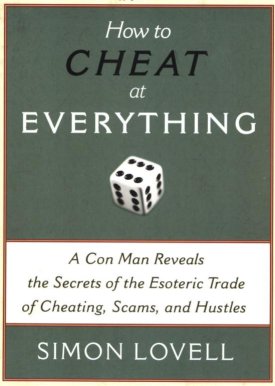 Simon Lovell’s “How to Cheat at Everything: A Con Man Reveals the Secrets of the Esoteric Trade of Cheating, Scams and Hustles,” is a veritable encyclopedia of cons, scams, tricks and rip-offs. Lovell is a magician by trade, and much of the book is given over to detailed sleight-of-hand HOWTOs for palming, greasing, fixing and cheating cards, dice, coins, and so on. Truth be told, this section bogged down a little for me — unlike, say, The Big Con, which tries to give a representative sample of the world’s con-games, Lovell is bent on detailing all of them. But this is more than made up for by the charming, breezy anaecdotes about rip-off bar-bets, boiler-room operations, and so on. I picked this up as reference for stories — con-jobs are great fiction fodder — but found myself absorbing its message in pro-active self-defense. Reading this thing cover-to-cover can leave you feeling pretty damned paranoid. Link Simon Lovell’s “How to Cheat at Everything: A Con Man Reveals the Secrets of the Esoteric Trade of Cheating, Scams and Hustles,” is a veritable encyclopedia of cons, scams, tricks and rip-offs. Lovell is a magician by trade, and much of the book is given over to detailed sleight-of-hand HOWTOs for palming, greasing, fixing and cheating cards, dice, coins, and so on. Truth be told, this section bogged down a little for me — unlike, say, The Big Con, which tries to give a representative sample of the world’s con-games, Lovell is bent on detailing all of them. But this is more than made up for by the charming, breezy anaecdotes about rip-off bar-bets, boiler-room operations, and so on. I picked this up as reference for stories — con-jobs are great fiction fodder — but found myself absorbing its message in pro-active self-defense. Reading this thing cover-to-cover can leave you feeling pretty damned paranoid. Link
posted by Cory Doctorow at 10:59:50 AM permalink | blogs’ comments
The Big Con
by David W. Maurer
- reviewed by Cory Doctorow “The Big Con” was published in 1940, and is widely considered to be the definitive work on confidence tricksters (the film The Sting was based on it). Maurer was a linguist, primarily, who published definitive works on underworld argot (pickpockets, fortune tellers, etc), but when it came time to do the same thing for con artists, Maurer found himself unable to simply provide a glossary of terms: the amount of explanation necessary meant that he found himself writing a full-blown sociological study of con games. While con-games have existed since the dawn of time, until the turn of the century they were “short-cons” (cons in which the mark is taken for any money he has with him), “played against the wall” (performed without special props or groups of confederates). With the advent of the “big con” (cons in which the mark is taken for every cent he has, including the value of his house and business), con artistry began to merge with stagecraft. Big con men make use of a “big store” (an ersatz shop set up exclusively for the benefit [?] of the mark), complete with a “boodle” (a small army of confederates who impersonate police officers, customers, managers, employees, bankers, security guards, etc). In the 1920s, the big store was used to take off marks for sums in excess of $200,000 — the modern equivalent of several million. The big con is a operatic drama with a massive budget and a cast of accomplished actors, played for a single person: the mark. The three classic big cons — The Rag, The Payoff, The Wire — have the archetypal quality of a classic myth. They’re truly works of art. Maurer was a good friend to hundreds of con men, who confided in him extensively. His verbatim transcripts of their colourful boasts are utterly spellbinding. The big cons are complex stories, ones in which the mark is introduced to an opportunity to participate in a semi-legal scheme (a fixed horse-race, insider stock trading) that requires a certain amount of intelligence to grasp. The mark is given “convincers” (substantial payoffs that are later recouped in the big score), and is gradually led to a point where he is willing return home (the “send”) and empty his bank account, liquidate his assets, and return, with the promise of taking off enough winnings to support him in style for the rest of his life. This is done so skillfully, so subtly, that the mark never suspects that he is being taken. When he finally coughs up the entire sum, it is “lost” through a piece of miscommunication (“I told you to bet on that horse to place, not to win! We’re broke!”) that is again done so skillfully that the mark never suspects that he has been taken. Indeed, a mark will often go home, borrow all he can and return — only to lose it again. Crucial to a big con is that it is played with a mark who is on the road. He is approached on an ocean-liner, an airplane, a train, by a “roper” and gradually led into the scam. Once he steps off the train, virtually every person he meets will be in on the con. Imagine that! It’s like The Game and other paranoid films in which it develops that everyone except the hero is participating in a giant conspiracy. The question I’m left with, having finished this, is where is the big con today? The classic big con mark is smart, wealthy, on the road, and accustomed to earning large sums through speculative ventures. Sure sounds like a dot-com millionaire to me. b i o :
Cory Doctorow won the John W. Campbell Award for Best New Science Fiction Writer at the 2000 Hugo Awards. He is the co-founder and Chief Evangelist of openCOLA, Inc.
http://www.boingboing.net/ |
|
| How to Cheat at Everything Simon Lovell’s “How to Cheat at Everything: A Con Man Reveals the Secrets of the Esoteric Trade of Cheating, Scams and Hustles,” is a veritable encyclopedia of cons, scams, tricks and rip-offs. Lovell is a magician by trade, and much of the book is given over to detailed sleight-of-hand HOWTOs for palming, greasing, fixing and cheating cards, dice, coins, and so on. Truth be told, this section bogged down a little for me — unlike, say, The Big Con, which tries to give a representative sample of the world’s con-games, Lovell is bent on detailing all of them. But this is more than made up for by the charming, breezy anaecdotes about rip-off bar-bets, boiler-room operations, and so on. I picked this up as reference for stories — con-jobs are great fiction fodder — but found myself absorbing its message in pro-active self-defense. Reading this thing cover-to-cover can leave you feeling pretty damned paranoid. Link
posted by Cory Doctorow at 10:59:50 AM permalink | blogs’ comments http://www.boingboing.net/ |
|
| Humor How Microsoft would design iPod packaging  Entertaining video showing how Microsoft would re-designed Apple’s elegant and understated packaging for the iPod. Link (Thanks, Scott!) The video of the redesigned iPod packaging first appeared last year. Later it was confirmed by Microsoft spokesman Tom Pilla that their own packaging team created. Entertaining video showing how Microsoft would re-designed Apple’s elegant and understated packaging for the iPod. Link (Thanks, Scott!) The video of the redesigned iPod packaging first appeared last year. Later it was confirmed by Microsoft spokesman Tom Pilla that their own packaging team created.
Reader comment: Andrew says: The video of the redesigned iPod packaging first appeared last year. Later it was confirmed by Microsoft spokesman Tom Pilla that their own packaging team created it. “Microsoft spokesman Tom Pilla on Tuesday confirmed with iPod Observer that his company initiated the creation of the iPod packaging parody video that was first reported last month. “It was an internal-only video clip commissioned by our packaging [team] to humorously highlight the challenges we have faced RE: packaging and to educate marketers here about the pitfalls of packaging/branding,” he said via e-mail.” From iPod Observer 3/14/06:
http://www.boingboing.net/ |
|


Comments (1)
WOW — LOTS OF NEWS —