 | Luxury condo projects outpace demand
Luxury condo projects outpace demand |
| Luxury condo projects outpace demand
Luxury condo projects outpace demand |
| 'The Presidential Recordings': L.B.J.'s Chat Room
Gregory Nemec |
| New Leader, Tough Issues for Court in Transition
Dennis Brack/Bloomberg News |
Outbreak of Violence Kills More Than a Hundred Iraqis in 2 Days

Akram Saleh/Getty Images
A car bomb detonated near a market in southern Iraq today, killing at least eight people, the latest in a string of attacks.
September 30, 2005
Outbreak of Violence Kills More Than a Hundred Iraqis in 2 Days
By SABRINA TAVERNISE
BAGHDAD, Iraq, Sept. 30 - A car bomb detonated today near a fruit and vegetable market in Hilla, a Shiite town south of Baghdad, killing at least eight people and wounding 41, the second strike in two days of bloodletting that has left 110 people dead.
The bomb was remotely detonated about 10:15 a.m., in the al-Sharia market in central Hilla and tore into a crowded area of people shopping for food. The attack was almost identical to three others that took place just 16 hours before in Balad, north of Baghdad.
In those bombings, two of which were also in a crowded marketplace frequented mostly by Shiites, the death toll rose sharply overnight and by this afternoon had reached 102, including 18 children, according to Dr. Qasim al-Qaisi, the manager of Balad Hospital. In all, 150 people were wounded, he said.
Al Qaeda in Mesopotamia, the radical Islamist group run by the Jordanian Abu Musab al-Zarqawi, claimed responsibility for the Balad attacks, Agence France-Presse reported.
The steady stream of gruesome attacks, aimed mostly at civilians in Shiite areas, has surged in recent weeks. Sunni Arab radicals, led by Mr. Zarqawi, are pursuing a strategy of attacks against Shiites in an attempt to start a war between Iraq's two largest sects.
Iraq is preparing to hold a national referendum on a new constitution on Oct. 15, a document that most Sunni Arabs here strongly oppose, and American military officials have warned that the violence is likely to increase up to the day of the vote.
In Hilla, 60 miles south of Baghdad, the explosives were packed into a Mercedes and then parked near the market, police officials said. Of the eight who died, two were children under the age of 10, and two more were women, said Dr. Baha al-Din Eqbal, a doctor in the Hilla Hospital. Three of the patients were wounded critically and Dr. Eqbal said he expected they would be dead by Saturday morning.
Images broadcast on Iraqi television showed scenes grief and pain. Women in black abaya robes wailed outside a local morgue, their bodies rocking back and forth. Bodies were covered in ordinary household blankets. Men in dishdashas wandered through charred remains of shops and past a burned-out hulk of a car.
Footage of the bombing site in Balad showed a large swath of a city block that had been destroyed. Rescue workers stepped around pools of blood.
In Hilla and Balad, Iraqis spoke angrily into television cameras, demanding the government take tougher action against those carrying out the bombings. A man in Hilla who was not identified by name shouted, "Where is the security, where are the policemen?" In Balad, another man said, "We ask, where is the government?"
Many Shiites have expressed frustration with the government, led by Prime Minister Ibrahim al-Jafaari, a religious Shiite, saying it has not taken decisive enough steps against those who carry out attacks.
Anger at the blast appeared to reinforce political convictions among Shiites that the constitution, which was drawn up largely by Shiite and Kurdish political parties, would help secure their rights. The Associated Press quoted a hotel owner in Balad, Abu Waleed, as saying, that "this is a criminal act and the constitution is going to succeed in spite of them." Seven people staying in his hotel were killed in the blast, he said.
Also in Balad, crowds gathered and chanted: "With our souls, with our blood, we sacrifice ourselves for the constitution."
In Hilla, which has been the target of some of the most devastating bombings since the American invasion, including one in February that left 122 people dead, another car bomb went off today, outside an American military base in the northern part of the city about 30 minutes after the first one. There were no reports of casualties.
Copyright 2005 The New York Times Company Home Privacy Policy Search Corrections XML Help Contact Us Work for Us Site Map Back to Top

This is a very long archive of 24 articles on Able Danger associated with the analysis published Sep 2, 2005 at 911Truth.org. Please begin by accessing the index there:
http://www.911truth.org/article.php?story=20050830191215604
Where you will find short versions with key excerpts, linking back to the full articles here. Thanks.
--------------------------------------------------------------------------------
Original http://nytimes.com/2005/08/09/politics/09intel.html
NY TIMES, August 9, 2005
Four in 9/11 Plot Are Called Tied to Qaeda in '00
By DOUGLAS JEHL
WASHINGTON, Aug. 8 - More than a year before the Sept. 11 attacks, a small, highly classified military intelligence unit identified Mohammed Atta and three other future hijackers as likely members of a cell of Al Qaeda operating in the United States, according to a former defense intelligence official and a Republican member of Congress.
In the summer of 2000, the military team, known as Able Danger, prepared a chart that included visa photographs of the four men and recommended to the military's Special Operations Command that the information be shared with the Federal Bureau of Investigation, the congressman, Representative Curt Weldon of Pennsylvania, and the former intelligence official said Monday.
The recommendation was rejected and the information was not shared, they said, apparently at least in part because Mr. Atta, and the others were in the United States on valid entry visas. Under American law, United States citizens and green-card holders may not be singled out in intelligence-collection operations by the military or intelligence agencies. That protection does not extend to visa holders, but Mr. Weldon and the former intelligence official said it might have reinforced a sense of discomfort common before Sept. 11 about sharing intelligence information with a law enforcement agency.
A former spokesman for the Sept. 11 commission, Al Felzenberg, confirmed that members of its staff, including Philip Zelikow, the executive director, were told about the program on an overseas trip in October 2003 that included stops in Afghanistan and Pakistan. But Mr. Felzenberg said the briefers did not mention Mr. Atta's name.
The report produced by the commission last year does not mention the episode.
Mr. Weldon first spoke publicly about the episode in June, in a little-noticed speech on the House floor and in an interview with The Times-Herald in Norristown, Pa. The matter resurfaced on Monday in a report by GSN: Government Security News, which is published every two weeks and covers domestic-security issues. The GSN report was based on accounts provided by Mr. Weldon and the same former intelligence official, who was interviewed on Monday by The New York Times in Mr. Weldon's office.
In a telephone interview from his home in Pennsylvania, Mr. Weldon said he was basing his assertions on similar ones by at least three other former intelligence officers with direct knowledge of the project, and said that some had first called the episode to his attention shortly after the attacks of Sept. 11, 2001.
The account is the first assertion that Mr. Atta, an Egyptian who became the lead hijacker in the plot, was identified by any American government agency as a potential threat before the Sept. 11 attacks. Among the 19 hijackers, only Khalid al-Mihdhar and Nawaf al-Hazmi had been identified as potential threats by the Central Intelligence Agency before the summer of 2000, and information about them was not provided to the F.B.I. until the spring of 2001.
Mr. Weldon has long been a champion of the kind of data-mining analysis that was the basis for the work of the Able Danger team.
The former intelligence official spoke on the condition of anonymity, saying he did not want to jeopardize political support and the possible financing for future data-mining operations by speaking publicly. He said the team had been established by the Special Operations Command in 1999, under a classified directive issued by Gen. Hugh Shelton, then the chairman of the Joint Chiefs of Staff, to assemble information about Al Qaeda networks around the world.
"Ultimately, Able Danger was going to give decision makers options for taking out Al Qaeda targets," the former defense intelligence official said.
He said that he delivered the chart in summer 2000 to the Special Operations Command headquarters in Tampa, Fla., and said that it had been based on information from unclassified sources and government records, including those of the Immigration and Naturalization Service.
"We knew these were bad guys, and we wanted to do something about them," the former intelligence official said.
The unit, which relied heavily on data-mining techniques, was modeled after those first established by Army intelligence at the Land Information Warfare Assessment Center, now known as the Information Dominance Center, at Fort Belvoir, Va., the official said.
Mr. Weldon is an outspoken figure who is a vice chairman of both the House Armed Services Committee and the House Homeland Security Committee. He said he had recognized the significance of the episode only recently, when he contacted members of the military intelligence team as part of research for his book, "Countdown to Terror: The Top-Secret Information That Could Prevent the Next Terrorist Attack on America and How the C.I.A. Has Ignored It."
Mr. Weldon's book prompted one veteran C.I.A. case officer to strongly dispute the reliability of one Iranian source cited in the book, saying the Iranian "was a waste of my time and resources."
Mr. Weldon said that he had discussed the Able Danger episode with Representative Peter Hoekstra, the Michigan Republican who is chairman of the House Intelligence Committee, and that at least two Congressional committees were looking into the episode.
In the interview on Monday, Mr. Weldon said he had been aware of the episode since shortly after the Sept. 11 attack, when members of the team first brought it to his attention. He said he had told Stephen J. Hadley, then the deputy national security adviser, about it in a conversation in September or October 2001, and had been surprised when the Sept. 11 commission report made no mention of the operation.
Col. Samuel Taylor, a spokesman for the military's Special Operations Command, said no one at the command now had any knowledge of the Able Danger program, its mission or its findings. If the program existed, Colonel Taylor said, it was probably a highly classified "special access program" on which only a few military personnel would have been briefed.
During the interview in Mr. Weldon's office, the former defense intelligence official showed a floor-sized chart depicting Al Qaeda networks around the world that he said was a larger, more detailed version similar to the one prepared by the Able Danger team in the summer of 2000.
He said the original chart, like the new one, had included the names and photographs of Mr. Atta and Marwan al-Shehhi, as well as Mr. Mihdhar and Mr. Hazmi, who were identified as members of what was described as an American-based "Brooklyn" cell, as one of five such Al Qaeda cells around the world.
The official said the link to Brooklyn was meant as a term of art rather than to be interpreted literally, saying that the unit had produced no firm evidence linking the men to the borough of New York City but that a computer analysis seeking to establish patterns in links between the four men had found that "the software put them all together in Brooklyn."
According to the commission report, Mr. Mihdhar and Mr. Hazmi were first identified in late 1999 or 2000 by the C.I.A. as Qaeda members who might be involved in a terrorist operation. They were tracked from Yemen to Malaysia before their trail was lost in Thailand. Neither man was put on a State Department watch list before they flew to Los Angeles in early 2000. The F.B.I. was not warned about them until the spring of 2001, and no efforts to track them were made until August 2001.
Neither Mr. Shehhi nor Mr. Atta was identified by the American intelligence agencies as a potential threat, the commission report said. Mr. Shehhi arrived in Newark on a flight from Brussels on May 29, 2000, and Mr. Atta arrived in Newark from Prague on June 3 that year.
The former intelligence official said the first Able Danger report identified all four men as members of a "Brooklyn" cell, and was produced within two months after Mr. Atta arrived in the United States. The former intelligence official said he was among a group that briefed Mr. Zelikow and at least three other members of the Sept. 11 commission staff about Able Danger when they visited the Afghanistan-Pakistan region in October 2003.
The official said he had explicitly mentioned Mr. Atta as a member of a Qaeda cell in the United States. He said the staff encouraged him to call the commission when he returned to Washington at the end of the year. When he did so, the ex-official said, the calls were not returned.
Mr. Felzenberg, the former Sept. 11 commission spokesman, said on Monday that he had talked with some of the former staff members who participated in the briefing.
"They all say that they were not told anything about a Brooklyn cell," Mr. Felzenberg said. "They were told about the Pentagon operation. They were not told about the Brooklyn cell. They said that if the briefers had mentioned anything that startling, it would have gotten their attention."
As a result of the briefing, he said, the commission staff filed document requests with the Pentagon for information about the program. The Pentagon complied, he said, adding that the staff had not hidden anything from the commissioners.
"The commissioners were certainly told of the document requests and what the findings were," Mr. Felzenberg said.
Philip Shenon and Eric Schmitt contributed reporting for this article.
Copyright 2005 The New York Times. Used here for information purposes under fair-use provisions, please see Fair-Use Notice, below.
--------------------------------------------------------------------------------
Original http://www.nytimes.com/2005/08/11/politics/11intel.html
NY TIMES, August 11, 2005
9/11 Commission's Staff Rejected Report on Early Identification of Chief Hijacker
By DOUGLAS JEHL and PHILIP SHENON – NY Times
WASHINGTON, Aug. 10 - The Sept. 11 commission was warned by a uniformed military officer 10 days before issuing its final report that the account would be incomplete without reference to what he described as a secret military operation that by the summer of 2000 had identified as a potential threat the member of Al Qaeda who would lead the attacks more than a year later, commission officials said on Wednesday. The officials said that the information had not been included in the report because aspects of the officer's account had sounded inconsistent with what the commission knew about that Qaeda member, Mohammed Atta, the plot's leader.
But aides to the Republican congressman who has sought to call attention to the military unit that conducted the secret operation said such a conclusion relied too much on specific dates involving Mr. Atta's travels and not nearly enough on the operation's broader determination that he was a threat.
The briefing by the military officer is the second known instance in which people on the commission's staff were told by members of the military team about the secret program, called Able Danger.
The meeting, on July 12, 2004, has not been previously disclosed. That it occurred, and that the officer identified Mr. Atta there, were acknowledged by officials of the commission after the congressman, Curt Weldon of Pennsylvania, provided information about it.
Mr. Weldon has accused the commission of ignoring information that would have forced a rewriting of the history of the Sept. 11 attacks. He has asserted that the Able Danger unit, whose work relied on computer-driven data-mining techniques, sought to call their superiors' attention to Mr. Atta and three other future hijackers in the summer of 2000. Their work, he says, had identified the men as likely members of a Qaeda cell already in the United States.
In a letter sent Wednesday to members of the commission, Mr. Weldon criticized the panel in scathing terms, saying that its "refusal to investigate Able Danger after being notified of its existence, and its recent efforts to feign ignorance of the project while blaming others for supposedly withholding information on it, brings shame on the commissioners, and is evocative of the worst tendencies in the federal government that the commission worked to expose."
Al Felzenberg, who served as the commission's chief spokesman, said earlier this week that staff members who were briefed about Able Danger at a first meeting, in October 2003, did not remember hearing anything about Mr. Atta or an American terrorist cell. On Wednesday, however, Mr. Felzenberg said the uniformed officer who briefed two staff members in July 2004 had indeed mentioned Mr. Atta.
Both Mr. Weldon's office and commission officials said they knew the name, rank and service of the officer, but they declined to make that information public.
Mr. Weldon and a former defense intelligence official who was interviewed on Monday have said that the Able Danger team sought but failed in the summer of 2000 to persuade the military's Special Operations Command, in Tampa, Fla., to pass on to the Federal Bureau of Investigation the information they had gathered about Mr. Atta and the three other men. The Pentagon and the Special Operations Command have declined to comment, saying they are still trying to learn more about what may have happened.
Maj. Paul Swiergosz, a Pentagon spokesman, said Wednesday that the military was working with the commission's unofficial follow-up group - the 9/11 Public Discourse Project, which was formed by the panel's members when it was disbanded - to try to clarify what had occurred.
Mr. Felzenberg said the commission's staff remained convinced that the information provided by the military officer in the July 2004 briefing was inaccurate in a significant way.
"He wasn't brushed off," Mr. Felzenberg said of the officer. "I'm not aware of anybody being brushed off. The information that he provided us did not mesh with other conclusions that we were drawing" from the commission's investigation.
Mr. Felzenberg said staff investigators had become wary of the officer because he argued that Able Danger had identified Mr. Atta, an Egyptian, as having been in the United States in late 1999 or early 2000. The investigators knew this was impossible, Mr. Felzenberg said, since travel records confirmed that he had not entered the United States until June 2000.
"There was no way that Atta could have been in the United States at that time, which is why the staff didn't give this tremendous weight when they were writing the report," Mr. Felzenberg said. "This information was not meshing with the other information that we had."
But Russell Caso, Mr. Weldon's chief of staff, said that "while the dates may not have meshed" with the commission's information, the central element of the officer's claim was that "Mohammed Atta was identified as being tied to Al Qaeda and a Brooklyn cell more than a year before the Sept. 11 attacks, and that should have warranted further investigation by the commission."
"Furthermore," Mr. Caso said, "if Mohammed Atta was identified by the Able Danger project, why didn't the Department of Defense provide that information to the F.B.I.?"
Mr. Felzenberg confirmed an account by Mr. Weldon's staff that the briefing, at the commission's offices in Washington, had been conducted by Dietrich L. Snell, one of the panel's lead investigators, and had been attended by a Pentagon employee acting as an observer for the Defense Department; over the commission's protests, the Bush administration had insisted that an administration "minder" attend all the panel's major interviews with executive branch employees. Mr. Snell referred questions to Mr. Felzenberg.
The Sept. 11 commission issued its final report on July 22, 2004. Mr. Felzenberg noted that the interview with the military officer had taken place in the final, hectic days before the commission sent the report to the printers, and said the meeting reflected a willingness by the commission to gather facts, even at the last possible minute.
"Lots of stuff was coming in over the transom," Mr. Felzenberg said. "Lots of stuff was flying around. At the end of the day, when you're writing the report, you have to take facts presented to you." Former Commissioner Spokesperson had this to say about the Commission's leaving Able Danger details out of their report: "Lots of stuff was coming in over the transom," Mr. Felzenberg said. "Lots of stuff was flying around. At the end of the day, when you're writing the report, you have to take facts presented to you."
Copyright 2005 The New York Times. Used here for information purposes under fair-use provisions, please see Fair-Use Notice, below.
--------------------------------------------------------------------------------
Original http://www.nytimes.com/2005/08/16/politics/16cnd-intel.html
August 16, 2005
Officer Says Pentagon Barred Sharing Pre-9/11 Qaeda Data With F.B.I.
By PHILIP SHENON
WASHINGTON, Aug. 16 - A military intelligence team repeatedly contacted the F.B.I. in 2000 to warn about the existence of an American-based terrorist cell that included the ringleader of the Sept. 11 attacks, according to a veteran Army intelligence officer who said he had now decided to risk his career by discussing the information publicly. The officer, Lt. Col. Anthony Shaffer, said military lawyers later blocked the team from sharing any of its information with the F.B.I.
Colonel Shaffer said in an interview that the small, highly classified intelligence program known as Able Danger had identified by name the terrorist ringleader, Mohammed Atta, as well three of the other future hijackers by mid-2000, and had tried to arrange a meeting that summer with agents of the F.B.I.'s Washington field office to share the information.
But he said military lawyers forced members of the intelligence program to cancel three scheduled meetings with the F.B.I. at the last minute, which left the bureau without information that Colonel Shaffer said might have led to Mr. Atta and the other terrorists while the Sept. 11 plot was still being planned.
"I was at the point of near insubordination over the fact that this was something important, that this was something that should have been pursued," Colonel Shaffer said of his efforts to get the evidence from the intelligence program to the F.B.I. in 2000 and early 2001.
He said he learned later that lawyers associated with the Defense Department's Special Operations Command had canceled the F.B.I. meetings because they feared controversy if Able Danger was portrayed as a military operation that had violated the privacy of civilians who were legally in the United States. "It was because of the chain of command saying we're not going to pass on information - if something goes wrong, we'll get blamed," he said.
The Defense Department did not dispute the account from Colonel Shaffer, a 42-year-old native of Kansas City, Mo., who is the first military officer associated with the so-called data-mining program to come forward and acknowledge his role.
At the same time, the department said in a statement that it was "working to gain more clarity on this issue" and that "it's too early to comment on findings related to the program identified as Able Danger." The F.B.I. referred calls about Colonel Shaffer to the Pentagon.
The account from Colonel Shaffer, a reservist who is also working part-time for the Pentagon, corroborates much of the information that the Sept. 11 commission has acknowledged that it received about Able Danger last July from a Navy captain who was also involved with the program but whose name has not been made public.
In a statement issued last week, the leaders of the Sept. 11 commission said the panel had concluded that the intelligence program "did not turn out to be historically significant." The statement said that while the commission did learn about Able Danger in 2003 and immediately requested Pentagon files about the program, none of the documents turned over by the Defense Department referred to Mr. Atta or any of the other hijackers.
Colonel Shaffer said that his role in Able Danger was as the program's liaison with the Defense Intelligence Agency in Washington, and that he was not an intelligence analyst. The interview with Colonel Shaffer on Monday night was arranged for The New York Times and Fox News by Representative Curt Weldon, the Pennsylvania Republican who is vice chairman of the House Armed Services Committee and a champion of data-mining programs like Able Danger.
Colonel Shaffer's lawyer, Mark Zaid, said in an interview that he was concerned that Colonel Shaffer was facing retaliation from the Defense Department - first for having talked to the Sept. 11 commission staff in October 2003 and now for talking with news organizations.
Mr. Zaid said that Colonel Shaffer's security clearance had been suspended last year because of what the lawyer said were a series of "petty allegations" involving $67 in personal charges on a military cellphone. He noted that despite the disciplinary action, Colonel Shaffer had been promoted this year from the rank of major.
Colonel Shaffer said he had decided to allow his name to be used in news accounts in part because of his frustration with the statement issued last week by the commission leaders, Thomas H. Kean and Lee H. Hamilton.
The commission said in its final report last year that American intelligence agencies had not identified Mr. Atta as a terrorist before Sept. 11, 2001, when he flew an American Airlines jet into one of towers of the World Trade Center in New York.
A commission spokesman did not return repeated phone calls for comment. A Democratic member of the commission, Richard Ben Veniste, the former Watergate prosecutor, said in an interview today that while he could not judge the credibility of the information from Colonel Shaffer and others, the Pentagon needed to "provide a clear and comprehensive explanation regarding what information it had in its possession regarding Mr. Atta."
"And if these assertions are credible," he continued, "the Pentagon would need to explain why it was that the 9/11 commissioners were not provided this information despite request for all information regarding to Able Danger."
Colonel Shaffer said that he had provided information about Able Danger and its identification of Mr. Atta in a private meeting in October 2003 with members of the Sept. 11 commission staff when they visited Afghanistan, where he was then serving. Commission members have disputed that, saying they do not recall hearing Mr. Atta's name during the briefing and that the terrorist's name did not appear in documents about Able Danger that were later turned over by the Pentagon.
"I would implore the 9/11 commission to support a follow-on investigation to ascertain what the real truth is," Colonel Shaffer said in the interview this week. "I do believe the 9/11 commission should have done that job: figuring out what went wrong with Able Danger."
"This was a good news story because, before 9/11, you had an element of the military - our unit - which was actually out looking for Al Qaeda," he continued. "I can't believe the 9/11 commission would somehow believe that the historical value was not relevant."
Colonel Shaffer said that because he was not an intelligence analyst, he was not involved in the details of the procedures used in Able Danger to glean information from terrorist databases. Nor was he aware, he said, which databases had supplied the information that might have led to the name of Mr. Atta or other terrorists so long before the Sept. 11 attacks.
But he said he did know that Able Danger had made use of publicly available information from government immigration agencies, from internet sites and from paid search engines such as Lexis Nexis.
"We didn't that Atta's name was significant" at the time, he said, adding that "we just knew there were these linkages between him and these other individuals who were in this loose configuration" of people who appeared to be tied to an American-based cell of Al Qaeda.
Colonel Shaffer said he assumed that by speaking out publicly this week about Able Danger, he might effectively be ending his military career and limiting his ability to participate in intelligence work in the government. "I'm proud of my operational record and I love what I do," he said. "But there comes a time - and I believe the time for me is now -- to stand for something, to stand for what is right."
Copyright 2005 The New York Times. Used here for information purposes under fair-use provisions, please see Fair-Use Notice, below.
--------------------------------------------------------------------------------
Original http://www.nytimes.com/2005/08/23/politics/23intel.html
NY Times, August 23, 2005
Second Officer Says 9/11 Leader Was Named Before Attacks
By PHILIP SHENON
WASHINGTON, Aug. 22 - An active-duty Navy captain has become the second military officer to come forward publicly to say that a secret intelligence program tagged the ringleader of the Sept. 11 attacks as a possible terrorist more than a year before the attacks.
The officer, Scott J. Phillpott, said in a statement on Monday that he could not discuss details of the military program, which was called Able Danger, but confirmed that its analysts had identified the Sept. 11 ringleader, Mohamed Atta, by name by early 2000. "My story is consistent," said Captain Phillpott, who managed the program for the Pentagon's Special Operations Command. "Atta was identified by Able Danger by January-February of 2000."
His comments came on the same day that the Pentagon's chief spokesman, Lawrence Di Rita, told reporters that the Defense Department had been unable to validate the assertions made by an Army intelligence veteran, Lt. Col. Anthony Shaffer, and now backed up by Captain Phillpott, about the early identification of Mr. Atta.
Colonel Shaffer went public with his assertions last week, saying that analysts in the intelligence project were overruled by military lawyers when they tried to share the program's findings with the F.B.I. in 2000 in hopes of tracking down terrorist suspects tied to Al Qaeda.
Mr. Di Rita said in an interview that while the department continued to investigate the assertions, there was no evidence so far that the intelligence unit came up with such specific information about Mr. Atta and any of the other hijackers.
He said that while Colonel Shaffer and Captain Phillpott were respected military officers whose accounts were taken seriously, "thus far we've not been able to uncover what these people said they saw - memory is a complicated thing."
The statement from Captain Phillpott , a 1983 Naval Academy graduate who has served in the Navy for 22 years, was provided to The New York Times and Fox News through the office of Representative Curt Weldon, a Pennsylvania Republican who is vice chairman of the House Armed Services Committee and a longtime proponent of so-called data-mining programs like Able Danger.
Asked if the Defense Department had questioned Captain Phillpott in its two-week-old investigation of Able Danger, another Pentagon spokesman, Maj. Paul Swiergosz, said he did not know.
Representative Weldon also arranged an interview on Monday with a former employee of a defense contractor who said he had helped create a chart in 2000 for the intelligence program that included Mr. Atta's photograph and name.
The former contractor, James D. Smith, said that Mr. Atta's name and photograph were obtained through a private researcher in California who was paid to gather the information from contacts in the Middle East. Mr. Smith said that he had retained a copy of the chart until last year and that it had been posted on his office wall at Andrews Air Force Base in Maryland. He said it had become stuck to the wall and was impossible to remove when he switched jobs.
In its final report last year, the Sept. 11 commission said that American intelligence agencies were unaware of Mr. Atta until the day of the attacks.
The leaders of the Sept. 11 commission acknowledged on Aug. 12 that their staff had met with a Navy officer last July, 10 days before releasing the panel's final report, who asserted that a highly classified intelligence operation, Able Danger, had identified "Mohamed Atta to be a member of an Al Qaeda cell located in Brooklyn."
But the statement, which did not identify the officer, said the staff determined that "the officer's account was not sufficiently reliable to warrant revision of the report or further investigation" and that the intelligence operation "did not turn out to be historically significant."
With his comments on Monday, Captain Phillpott acknowledged that he was the officer who had briefed the commission last year. "I will not discuss the issues outside of my chain of command and the Department of Defense," he said. "But my story is consistent. Atta was identified by Able Danger by January-February of 2000. I have nothing else to say."
Copyright 2005 The New York Times. Used here for information purposes under fair-use provisions, please see Fair-Use Notice, below.
--------------------------------------------------------------------------------
Original http://www.nytimes.com/2005/09/01/politics/01intel.html
NY Times, September 1, 2005
Senate Panel Plans Hearing Into Reports on Terrorist
By PHILIP SHENON
WASHINGTON, Aug. 31 - The Senate Judiciary Committee announced Wednesday that it was investigating reports from two military officers that a highly classified Pentagon intelligence program identified the Sept. 11 ringleader as a potential terrorist more than a year before the attacks.
The committee's chairman, Senator Arlen Specter, Republican of Pennsylvania, said in an interview that he was scheduling a public hearing on Sept. 14 "to get to the bottom of this" and that the military officers "appear to have credibility."
The senator said his staff had confirmed reports from the two officers that employees of the intelligence program tried to contact the Federal Bureau of Investigation in 2000 to discuss the work of the program, known as Able Danger.
The officers, Capt. Scott J. Phillpott of the Navy and Lt. Col. Anthony Shaffer of the Army, have said the intelligence program identified the terrorist ringleader, Mohamed Atta, by early 2000. Colonel Shaffer, a reservist, has said three meetings with F.B.I. agents in 2000 to discuss Able Danger were canceled on the order of military lawyers.
Senator Specter's announcement came as the Pentagon said again on Wednesday that while it was not disputing the officers' reports, it could find no documentation to back up what they were saying.
"Not only can we not find documentation, we can't find documents to lead us to the documentation," said Maj. Paul Swiergosz, a Pentagon spokesman.
Other Pentagon officials have suggested that the memories of Captain Phillpott and Colonel Shaffer are flawed and that Mr. Atta could not have been identified before the attacks, a view shared by members of the independent commission that investigated the Sept. 11 attacks.
But Colonel Shaffer and military officials involved in the intelligence program say it may not be surprising that documents were destroyed, since the project became controversial within the Pentagon because of potential privacy violations.
"I don't know what kind of documentation they'd be looking for," Senator Specter said of Defense Department investigators. "At this point, you have responsible officials at D.O.D. who have made some pretty serious statements and that ought to be investigated."
The existence of the intelligence program is potentially embarrassing to the Pentagon since it would suggest that the Defense Department developed information about the Sept. 11 hijackers long before they attacked in 2001 but did not share the information with law enforcement or intelligence agencies that could have acted on it.
Senator Specter did not provide a witness list for the Sept. 14 hearing, although he suggested that Captain Phillpott and Colonel Shaffer would testify, along with J. D. Smith, a former Pentagon contractor who worked on the program and has backed up the officers' accounts about the identification of Mr. Atta.
The senator said that if Mr. Atta and other Sept. 11 terrorists were identified before the attacks, "it would be a very serious breach not to have that information passed along."
"We ought to get to the bottom of it," Mr. Specter said.
Copyright 2005 The New York Times. Used here for information purposes under fair-use provisions, please see Fair-Use Notice, below.
--------------------------------------------------------------------------------
Original http://www.nytimes.com/aponline/national/AP-Sept-11-Hijackers.html
NY TIMES, September 2, 2005
Pentagon Finds More Who Recall Atta Intel
By THE ASSOCIATED PRESS
WASHINGTON (AP) -- Pentagon officials said Thursday they have found three more people who recall an intelligence chart that identified Sept. 11 mastermind Mohamed Atta as a terrorist one year before the attacks on New York and Washington. But they have been unable to find the chart or other evidence that it existed.
Last month, two military officers, Army Lt. Col. Anthony Shaffer and Navy Capt. Scott Philpott, went public with claims that a secret unit code-named Able Danger used data mining -- searching large amounts of data for patterns -- to identify Atta in 2000. Shaffer has said three other Sept. 11 hijackers also were identified.
In recent days Pentagon officials have said they could not yet verify or disprove the assertions by Shaffer and Philpott. On Thursday, four intelligence officials provided the first extensive briefing for reporters on the outcome of their interviews with people associated with Able Danger and their review of documents.
They said they interviewed at least 80 people over a three-week period and found three, besides Philpott and Shaffer, who said they remember seeing a chart that either mentioned Atta by name as an al-Qaida operative or showed his photograph. Four of the five recalled a chart with a pre-9/11 photo of Atta; the other person recalled only a reference to his name.
The intelligence officials said they consider the five people to be credible but their recollections are still unverified.
''To date, we have not identified the chart,'' said Pat Downs, a senior policy analyst in the office of the undersecretary of defense for intelligence. ''We have identified a similar chart but it does not contain the photo of Mohamed Atta or a reference to him or a reference to the other (9/11) hijackers.''
She said more interviews would be conducted, but the search of official documents is finished.
Downs and the other officials said they could not rule out that the chart recalled by Shaffer, Philpott and three others had been destroyed in compliance with regulations pertaining to intelligence information about people inside the United States. They also did not rule out that the five simply had faulty recollections.
Navy Cmdr. Christopher Chope, of the Center for Special Operations at U.S. Special Operations Command, said there were ''negative indications'' that anyone ever ordered the destruction of Able Danger documents, other than the materials that were routinely required to be destroyed under existing regulations.
Shaffer, who is now a civilian employee of the Defense Intelligence Agency, also has publicly asserted that military lawyers stopped the Able Danger staff from sharing the information on Atta with the FBI out of concern about gathering and sharing information on people in the United States legally.
Chope said there is no evidence that military lawyers blocked the sharing of Able Danger information with the FBI.
Chope also said the nature of Able Danger has been misrepresented in some news stories. He said it was created as a result of a directive in early October 1999 by the chairman of the Joint Chiefs of Staff to U.S. Special Operations Command to develop a campaign plan against transnational terrorism, ''specifically al-Qaida.''
He called it an internal working group with a core of 10 staffers at Special Operations Command. Philpott was the ''team leader,'' he said. ''Able Danger was never a military unit,'' and it never targeted individual terrorists, he said. It went out of existence when the planning effort was finished in January 2001, he said.
Able Danger's purpose was to ''characterize the al-Qaida network,'' Chope said, and determine the terror network's vulnerabilities and linkages at a time when U.S. officials were unaware that al-Qaida members were operating inside the United States.
''The effort was never: Determine which individuals we ought to roll up,'' he said. ''Did Osama bin Laden's name come up? Of course it did.'' But it was not primarily aimed at identifying individual terrorists, he added.
Of the five people who told Pentagon interviewers they recalled a pre-9/11 chart that either named Atta or showed his photograph, two were on the staff of U.S. Special Operations Command: Philpott and an unidentified civilian analyst. Besides Shaffer, the others were an unidentified private contractor and an analyst with the Army's Land Information Warfare Activity, Downs said.
Copyright 2005 The New York Times/Associated Press. Used here for information purposes under fair-use provisions, please see Fair-Use Notice, below.
--------------------------------------------------------------------------------
Other News Reports
--------------------------------------------------------------------------------
Original http://sfgate.com/cgi-bin/article.cgi?file=/n/a/2005/08/09/national/w154220D27.DTL
San Francisco Chronicle, August 09, 2005
Congressman: Defense Knew 9/11 Hijackers
By KIMBERLY HEFLING -- Associated Press -- Tuesday, August 9, 2005
(08-09) 17:43 PDT WASHINGTON, (AP) -- The Sept. 11 commission will investigate a claim that U.S. defense intelligence officials identified ringleader Mohammed Atta and three other hijackers as a likely part of an al-Qaida cell more than a year before the hijackings but didn't forward the information to law enforcement.
Rep. Curt Weldon, R-Pa. and vice chairman of the House Armed Services and Homeland Security committees, said Tuesday the men were identified in 1999 by a classified military intelligence unit known as "Able Danger." If true, that's an earlier link to al-Qaida than any previously disclosed intelligence about Atta. Sept. 11 commission co-chairman Lee Hamilton said Tuesday that Weldon's information, which the congressman said came from multiple intelligence sources, warrants a review. He said he hoped the panel could issue a statement on its findings by the end of the week.
"The 9/11 commission did not learn of any U.S. government knowledge prior to 9/11 of surveillance of Mohammed Atta or of his cell," said Hamilton, a former Democratic congressman from Indiana. "Had we learned of it obviously it would've been a major focus of our investigation."
The Sept. 11 commission's final report, issued last year, recounted numerous government mistakes that allowed the hijackers to succeed. Among them was a failure to share intelligence within and among agencies.
According to Weldon, Able Danger identified Atta, Marwan al-Shehhi, Khalid al-Mihdar and Nawaf al-Hazmi as members of a cell the unit code-named "Brooklyn" because of some loose connections to New York City.
Weldon said that in September 2000 Able Danger recommended that its information on the hijackers be given to the FBI "so they could bring that cell in and take out the terrorists." However, Weldon said Pentagon lawyers rejected the recommendation because they said Atta and the others were in the country legally so information on them could not be shared with law enforcement.
Weldon did not provide details on how the intelligence officials identified the future hijackers and determined they might be part of a cell.
Defense Department documents shown to an Associated Press reporter Tuesday said the Able Danger team was set up in 1999 to identify potential al-Qaida operatives for U.S. Special Operations Command. At some point, information provided to the team by the Army's Information Dominance Center pointed to a possible al-Qaida cell in Brooklyn, the documents said.
However, because of concerns about pursuing information on "U.S. persons" — a legal term that includes U.S. citizens as well as foreigners admitted to the country for permanent residence — Special Operations Command did not provide the Army information to the FBI. It is unclear whether the Army provided the information to anyone else.
The command instead turned its focus to overseas threats.
The documents provided no information on whether the team identified anyone connected to the Sept. 11 attack.
If the team did identify Atta and the others, it's unclear why the information wasn't forwarded. The prohibition against sharing intelligence on "U.S. persons" should not have applied since they were in the country on visas — they did not have permanent resident status.
Weldon, considered something of a maverick on Capitol Hill, initially made his allegations about Atta and the others in a floor speech in June that garnered little attention. His talk came at the end of a legislative day during a period described under House rules as "special orders" — a time slot for lawmakers to get up and speak on issues of their choosing.
The issue resurfaced Monday in a story by the bimonthly Government Security News, which covers national security matters.
Defense Secretary Donald H. Rumsfeld said he was unaware of the intelligence until the latest reports surfaced.
But Pentagon spokesman Bryan Whitman said the 9/11 Commission looked into the matter during its investigation into government missteps leading to the attacks and chose not to include it in the final report.
Hamilton said 9/11 Commission staff members learned of Able Danger during a meeting with military personnel in October 2003 in Afghanistan, but the staff members do not recall learning of a connection between Able Danger and any of the four terrorists Weldon mentioned.
Associated Press reporter John J. Lumpkin contributed to this report.
Copyright 2005 The San Francisco Chronicle. Used here for information purposes under fair-use provisions, please see Fair-Use Notice, below.
--------------------------------------------------------------------------------
Original http://www.sptimes.com/2005/08/10/Worldandnation/Reports__911_clue_hid.shtml
St. Petersburg Times
Reports: 9/11 clue hid in Tampa
A lawmaker says a Special Operations Command unit identified terrorist Mohammed Atta before the attacks.
By PAUL DE LA GARZA, Times Staff Writer
Published August 10, 2005
TAMPA - Congress and the Sept. 11 Commission have launched multiple investigations into reports that the Special Operations Command in Tampa held back information that could have foiled the 9/11 plot, officials said Tuesday.
The fast-paced developments were in response to information provided by Rep. Curt Weldon, R-Pa., vice chairman of the Armed Services Committee and the Homeland Security Committee. Weldon said a secret military unit known as "Able Danger" discovered a year before the attacks that ringleader Mohammed Atta and three other future hijackers were in the United States. Weldon said the unit - created at SOCom under a classified directive in 1999 to take out al-Qaida targets - identified Atta and the others as likely members of the organization.
In fall 2000, the unit recommended SOCom share the information with the FBI, Weldon said in an interview Tuesday. But lawyers at either the Pentagon or SOCom determined the men were in the country legally, Weldon said. He said he based his information on intelligence sources.
When members of Able Danger made their presentation at command headquarters at MacDill Air Force Base, Weldon said, the legal team "put stickies on the faces of Mohammed Atta on the chart," to reinforce that he was off-limits.
"They said, "You can't talk to Atta because he's here on a green card,"' Weldon said.
Had SOCom shared the information with the FBI, Weldon said, 9/11 might not have happened.
"The outcome would have been seriously affected."
In a statement Tuesday, SOCom said Able Danger developed information about al-Qaida "as part of an effort to deter transnational terrorist organizations."
"We do not have any information about whether Able Danger identified Atta or other 9/11 hijackers, or about a recommendation to provide information to the FBI," SOCom said.
SOCom is responsible for the nation's secret commando units, and has played a central role in the war on terror since 9/11.
A former spokesman for the Sept. 11 Commission said that members of its staff were told about the program but that the briefers did not mention Atta's name. The commission report produced last year did not mention Able Danger's findings.
On Tuesday, commission co-chairman Lee Hamilton said that Weldon's information, which the congressman said came from multiple intelligence sources, warrants a review.
He said he hoped the panel could issue a statement on its findings by the end of the week.
"The 9/11 Commission did not learn of any U.S. government knowledge prior to 9/11 of surveillance of Mohammed Atta or of his cell," said Hamilton, a former Democratic congressman from Indiana. "Had we learned of it obviously it would have been a major focus of our investigation."
At least two congressional committees have begun looking into the episode.
Rep. C.W. Bill Young, chairman of the Defense Appropriations Subcommittee, said he, too, had asked the Pentagon for information about the Able Danger program.
The Indian Shores Republican said that in hindsight, it was easy to say that one thing or another could have disrupted the hijackers.
"There should have been better sharing of information," he said.
Young said that passage of the Patriot Act and appointment of John Negroponte as intelligence czar, which gives one person access to all information generated by the intelligence community, would help resolve future problems.
"The tools weren't as good then as they are today," Young said.
Sounding agitated by what he perceived as a missed opportunity, Weldon made a distinction between the military lawyers and Special Operations Forces, whom he praised. Gen. Pete Schoomaker, the Army chief of staff, was SOCom commander at the time.
The small military unit developed the information using mostly open sources, not classified channels, Weldon said.
Weldon revealed the Able Danger findings in a little-noticed speech on the floor of the House in June. On Monday, Government Security News, a biweekly publication that covers homeland security, published a cover story on the subject, generating another article in the New York Times.
Until now, Atta had not been identified publicly as a threat to the United States before the terrorist attacks on Sept. 11, 2001.
According to Weldon, the military unit identified a terrorist cell in Brooklyn, N.Y., in September 2000.
The individuals identified as members of the cell were Atta, Marwan al-Shehhi, Khalid Almihdhar and Nawaf Alhamzi.
In late 1999 or 2000, the CIA had identified Almihdhar and Alhamzi as terrorist members who might be involved in a terrorist operation.
The duo arrived in Los Angeles in early 2000, but the FBI was not warned about them until spring 2001. No efforts were made to track them until a month before the terrorist attacks.
In the article published by Government Security News, a former defense intelligence official who worked with Able Danger said he alerted SOCom about the unit's findings. The publication said it interviewed the source in Weldon's office.
"The documents included a photo of Mohammed Atta supplied by the U.S. Immigration and Naturalization Service and described Atta's relationship with Osama bin Laden," the article said.
"The officer was very disappointed when lawyers working for Special Ops decided that anyone holding a green card had to be granted essentially the same legal protections as any U.S. citizen.
"Thus, the information Able Danger had amassed about the only terrorist cell they had located inside the United States could not be shared with the FBI, the lawyers concluded."
Former Sen. Bob Graham, one-time chairman of the Senate Intelligence Committee, said he was not familiar with the Able Danger program.
However, the Florida Democrat said he was not surprised by Weldon's account.
"If it's true," Graham said, "it would be yet another example of a missed opportunity to learn about the plot and to blow it up before 9/11."
Information from the Associated Press was used in this report.
Copyright 2005 The St. Petersburg Times. Used here for information purposes under fair-use provisions, please see Fair-Use Notice, below.
--------------------------------------------------------------------------------
Original http://www.timesherald.com/site/news.cfm?newsid=15032471&BRD=1672&PAG=461
(Pennsylvania) Times Herald
Weldon wants answers on Atta
By: KEITH PHUCAS, Times Herald Staff
08/13/2005
NORRISTOWN - Ten days before publication of the 9/11 Commission report, commission staff discounted information from a military officer linking Sept. 11 hijacker Mohammed Atta to a terror cell believed to be operating in New York City more than a year before the terrorist attacks.
According to a statement released Friday by The 9/11 Public Discourse Project, the two commission staff members who interviewed the officer in July 2004 concluded his story about a Defense Department intelligence counterterrorism program, called Able Danger, that worked to identify and target al-Qaida and other terrorists, was not credible. As a result, the information was not included in the commission's final report published July 22, 2004.
The 9/11 Public Discourse Project, formerly known as the 9/11 Commission, issued the statement late Friday to respond to charges made by Congressman Curt Weldon, R-7th Dist., this week that the commission failed to follow up after being tipped off three times about the defense operation.
The Times Herald broke the Able Danger story in its June 19 edition. The story eluded the national media until early last week.
A small group of Defense Intelligence Agency employees ran the Able Danger operation from fall 1999 to February 2001 - just seven months before the terrorist attacks - when the operation was unceremoniously axed, according to a former defense intelligence official familiar with the program. The former official asked not to be identified.
In their efforts to locate terrorists, the operation's technology analysts used data mining and fusion techniques to search terabyte-sized data sets from open source material - such as travel manifests, bank transactions, hotel records, credit applications - and compared this material with classified information.
By charting the movements and transactions of suspected terrorists, the operation linked Atta to al-Qaida. Between fall 1999 and early 2000, the intelligence team concluded that Atta, and two others, were likely part of a terrorist cell in Brooklyn.
At that point, Able Danger wanted the FBI, assisted by Special Operations Command, to track the group. But to the team's surprise, SOCOM's legal counsel shot down the idea.
"I tried to broker meetings between Special Operations and the FBI, but SOCOM's lawyers squashed it," the former defense officials said.
According to the former official, the Special Operations attorneys told the team it couldn't perform surveillance on the suspected terrorist. The foreign nationals had green cards, and thus, had the same protections as American citizens from such scrutiny.
Special Operations had advised the FBI during the ill-fated seige of the Branch Davidian compound, in Waco, Texas, in 1993, that resulted in more than 80 deaths after Alcohol, Tobacco and Firearms agents raided the compound, Weldon and the official said.
Following the fiery debacle, all the federal participants in the siege, including SOCOM, were harshly criticized. Fear of suffering the fallout if Able Danger backfired, they said, explains the military's reluctance to help the FBI.
"We felt that they were terrorists, and we should have done something about it," the former intelligence officials said. "I believe we could have prevented 9/11."
Wednesday, after becoming exasperated with former 9/11 Commission staff who claimed it didn't know anything about Able Danger, Weldon fired off a harsh letter to former commission members demanding to know why the information had not been considered.
In Weldon's letter, he said his chief of staff actually handed a package on the defense program to one of the commissioners in a Capitol Hill congressional office building April 13, 2004. Also, the congressman criticized the staff for not returning calls from a defense intelligence official with information on the operation.
Scrambling to answer Weldon's claims, commission staff combed through its archives this week for information related to Able Danger.
In its Friday statement, The 9/11 Public Discourse Project said the commission was first told about Able Danger while commission members were visiting Afghanistan on Oct. 21, 2003. While there, Philip Zelikow, then executive director of the commission, and two senior staffers met with three intelligence officials working for the Defense Department. One official mentioned Able Danger and said it was shut down. According to documents the commission received from the Pentagon, Able Danger began in 1999.
In November 2003, commission staff requested Defense Department material about the operation and received documents in February 2004 that included diagrams of terrorist networks, according to the 9/11 project letter.
The commission, however, said it first heard Atta mentioned in discussions about Able Danger on July 12, 2004, during an interview with a Navy officer. The officer told senior commission staff member Deiter Snell and another staffer that he recalled briefly seeing Atta's name and photo in a chart belonging to a Defense Department employee, and said the material was dated "February through April 2000."
According to the commission, Atta first arrived in the United States on June 3, 2001, about three months before the airline he flew crashed into the World Trade Center.
The Navy officer, who said the chart showed Atta to be a member of a terrorist cell in Brooklyn, complained that the identities of other cell members had been removed from the document because Pentagon lawyers were concerned about the propriety of the military's role with the FBI in a domestic intelligence operation.
Eventually commission staffers found the military officer's description and explanation of Able Danger to be wanting and concluded the information was "not sufficiently reliable to warrant revision of the (9/11) report or further investigation."
Weldon is demanding to know why the Defense Department did not pass information about Able Danger on to the FBI in 2000 and why the commission's staff failed to pursue the matter. He has vowed to push for a full accounting of the controversy, according to a written response issued from his office Friday evening.
Since 1999 Weldon has called for fusing the government's intelligence agencies collection system so they could share information and more effectively thwart terrorist plots. Six years ago, he proposed the creation of a National Operations and Analysis Hub (NOAH) for this effort.
In 2004, President Bush established the National Counterterrorism Center to integrate all intelligence the U.S. possesses on terrorism and counterterrorism.
In a new book, "Countdown to Terror: The top-secret information that could prevent the next terrorist attack on America ... and how the CIA has ignored it," Weldon is critical of the CIA for failing to share intelligence information with other agencies and discrediting information he has offered the CIA.
The congressman said he first became aware of the tremendous intelligence collaboration possibilities after visiting the Army's Land Information Warfare Assistance Center, in Fort Belvoir, Va., where massive amounts of data was mined and fused to profile emerging threats.
Calls to communications director Al Felzenberg at the 9/11 Public Discourse Project by The Times Herald were not returned on Friday. A spokesman for John Lehman, a former 9/11 Commission member, said Lehman did not wish to comment on the matter.
Copyright © 2005 The Times Herald. Used here for information purposes under fair-use provisions, please see Fair-Use Notice, below.
--------------------------------------------------------------------------------
Original http://www.guardian.co.uk/september11/story/0,11209,1551268,00.html
The Guardian (UK)
US officer says Pentagon prevented al-Qaida reports reaching the FBI
Julian Borger in Washington
Thursday August 18, 2005
A US army intelligence officer went public yesterday with claims that a secret military unit had identified Mohammed Atta and three other al-Qaida members as a potential threat a year before they carried out the September 11 attacks in 2001.
Lieutenant Colonel Anthony Shaffer said the secret intelligence unit, codenamed Able Danger, had been prevented from passing on its information to the FBI by Pentagon lawyers concerned that the military should not be involved in surveillance of suspects inside the US.
The claim has focused new light on the Pentagon's part in intelligence failings before the 2001 attacks on New York and Washington and called into question last year's official report on the debacle.
Col Shaffer, a reservist now working part-time at the Pentagon, said he was risking his career by giving on-the-record interviews to the New York Times and television networks, but he said he had been frustrated by the dismissal of his account by the official inquiry into the September 11 attacks. He said information he provided to the investigative staff "never got to the commissioners".
The commission's final report last year did not mention Able Danger, despite being briefed on its work by Col Shaffer in October 2003 and by an unnamed navy captain in 2004. The two top commissioners, Thomas Kean and Lee Hamilton, defended that decision last week, arguing its role "did not turn out to be historically significant".
The commissioners issued a statement last week saying the claim that Mohammed Atta and other plotters had been identified before 2001 was not supported by official documents the commission had requested.
They said Atta had not been mentioned in the 2003 briefing on Able Danger in Afghanistan, and the allegation made by the naval officer in 2004, that Atta was attached to an al-Qaida cell in Brooklyn, was incompatible with official records of his movements.
Col Shaffer countered that the commission was never given all the relevant documentation by the Pentagon.
"I'm told confidently by the person who moved the material over, that the 9/11 commission received two briefcase-sized containers of documents. I can tell you for a fact that would not be one-twentieth of the information that Able Danger consisted of during the time we spent investigating," the intelligence officer told Fox News.
The Able Danger unit was created in 1999 under the Special Operations Command to carry out computer analysis of huge amounts of data on possible terrorist suspects.
Col Shaffer, who served as a liaison officer between Able Danger and the Defence Intelligence Agency, said that by mid-2000 the unit came up with a chart linking Mohammed Atta, the Egyptian lead hijacker, and three others, Khalid al-Mihdhar, Nawaf al-Hazmi and Marwan al-Shehhi, complete with photographs of the plotters. "I was at the point of near insubordination over the fact that this was something important, that this was something that should have been pursued," Col Shaffer told the New York Times.
Copyright 2005 The Guardian. Used here for information purposes under fair-use provisions, please see Fair-Use Notice, below.
--------------------------------------------------------------------------------
Original http://www.villagevoice.com/news/0534,mondo1,67096,6.html
Village Voice
Errors of Commission
The hijacking of the probe into the 9-11 hijackers
by James Ridgeway with Natalie Wittlin
August 23rd, 2005 11:49 AM
Whether or not U.S. military intelligence was prevented by Pentagon superiors from alerting the FBI to the presence of Mohammed Atta in 1998, there is little doubt the U.S. was well aware of the infamous hijacker by then. The Republican right wing is raising the Atta issue at a time when Bush is sinking in the polls, people are fed up with Iraq, and there are continuing questions about the administration's handling of 9-11 and the war on terror. One way to take some of the heat off is to shift the blame to Bill Clinton.
In his book Countdown to Terror, Republican Congressman Curt Weldon, vice chairman of the House Armed Services Committee, lays the blame for our lousy intelligence on Clinton: "Given the intelligence community's poor track record and the political corruption of the intelligence process during the Clinton administration, the intelligence community's failure to detect and stop the terrorist attacks on New York and Washington seems inevitable. "
By 1998, Atta was living in a Hamburg apartment (later found to be an Al Qaeda cell) and under surveillance by German intelligence. The Germans were passing along what they knew to the CIA. There are suggestions that Atta may have been known to U.S. intelligence as far back as 1993.
"No matter how piercing and appalling his insights, the desolation creeping over his outer world, the lurid lights and shadows of his inner world, the writer must live with hope, work in faith."
J.B. Priestley
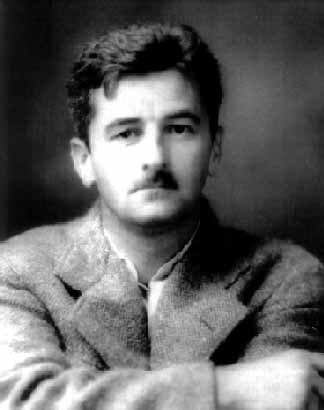
"I decline to accept the end of man."
William Faulkner: Nobel Prize Speech
Stockholm, Sweden
December 10, 1950
"All his life William Faulkner had avoided speeches, and insisted that he not be taken as a man of letters. 'I'm just a farmer who likes to tell stories.' he once said. Because of his known aversion to making formal pronouncements, there was much interest, when he traveled to Stockholm to receive the prize on December 10, 1950, in what he would say in the speech that custom obliged him to deliver. Faulkner evidently wanted to set right the misinterpretation of his own work as pessimistic. But beyond that, he recognized that, as the first American novelist to receive the prize since the end of World War II, he had a special obligation to take the changed situation of the writer, and of man, into account."
I feel that this award was not made to me as a man, but to my work--a life's work in the agony and sweat of the human spirit, not for glory and least of all for profit, but to create out of the materials of the human spirit something which did not exist before. So this award is only mine in trust. It will not be difficult to find a dedication for the money part of it commensurate with the purpose and significance of its origin. But I would like to do the same with the acclaim too, by using this moment as a pinnacle from which I might be listened to by the young men and women already dedicated to the same anguish and travail, among whom is already that one who will some day stand where I am standing.
Our tragedy today is a general and universal physical fear so long sustained by now that we can even bear it. There are no longer problems of the spirit. There is only one question: When will I be blown up? Because of this, the young man or woman writing today has forgotten the problems of the human heart in conflict with itself which alone can make good writing because only that is worth writing about, worth the agony and the sweat. He must learn them again. He must teach himself that the basest of all things is to be afraid: and, teaching himself that, forget it forever, leaving no room in his workshop for anything but the old verities and truths of the heart, the universal truths lacking which any story is ephemeral and doomed--love and honor and pity and pride and compassion and sacrifice. Until he does so, he labors under a curse. He writes not of love but of lust, of defeats in which nobody loses anything of value, and victories without hope and worst of all, without pity or compassion. His griefs grieve on no universal bones, leaving no scars. He writes not of the heart but of the glands.
William Faulkner
(1897-1962)

 Back to Thoughts Worth Thinking Page
| What ever happened to good old-fashioned, get-your-hands-dirty work?
This canned American life |
| HIGH COURT TAKES ANNA NICOLE
HIGH COURT TAKES ANNA NICOLE |
| "The Hammer."
Rep. Tom Delay, R-Texas, talks to reporters on Capitol Hill Wednesday after resigning as House majority leader. |
| "The Prize Winner of Defiance, Ohio"
The Prize Winner of Defiance, Ohio" |


Recent Comments