Month: September 2012

  • Life Beyond the Bar Scene: Star Struck And Other Sly Tales

    Life Beyond the Bar Scene: Star Struck And Other Sly Tales

    Submitted by Laurelin

    Edited by nicole_powers

    by Laurelin

    He looked just like he did on TV. Face, smooth and smiling, muscles pressing up against his huge T-shirt and his hat pulled down just enough so that I could still see his eyes. I had started to get up to refill my wine glass, but when I saw him I sunk back down, the air rushing from my lungs as though someone had just squeezed the life out of me. I could feel a flush traveling up my body and suddenly my face was burning, and I turned away so he wouldn’t see me. 

    I rarely meet celebrities. Like every other girl in the world I have dreamt what it would have been like to meet Leonardo DiCaprio, staying calm and collected so that he would shake my hand and look me in the eye. You imagine that if they could just meet you, you would be best friends, they might even fall in love with you, and everything would be right in the world. But that’s just in dreams. You will never meet Brad Pitt or Ben Affleck, and they will most certainly not fall in love with you. You are just you after all, a regular girl, who dates regular guys. You are common, and they are special. 

    He took his time walking around the room, signing autographs and taking pictures with everyone from old ladies to screaming teens to little kids. Still, I sat. I wonder what I’ll say when it’s my turn, would he remember me from a brief Twitter message I sent that he replied to? Will he think I’m crazy if I bring it up? He moves closer and as he approached I could finally stand and I shook my head, clearing the clouds. He is just a man after all. 

    I reached out my hand to find his and from somewhere in me comes a voice, and I said, “Hi, I’m Laurelin.” He smiled and inside I melted, but outside I must have seemed okay because he started asking me questions, then we laughed and he said that he did remember me from a year ago on Twitter. I made a snarky remark about his clothing and he thought I was funny. I sat back down in my seat and I watched him continue to sign autographs. I clutched the stem of my wine glass and I looked at our photo and I smiled. I’m taller than him. 

    When I looked up he was sitting next to me. 

    “Do you have a ticket for tonight?” he asked.

    “Yes,” I stammered, fumbling around for it. He must want to sign it; he signed everyone else’s. I found it and he took it, smoothly scribbling something on the back and pressing it into my palm. I looked down and I see a phone number. My blood ran cold and hot at the same time, and I thought, “Say something clever…”

    “Can I drunk dial you later?” I asked, smirking. 

    “Absolutely,” he said, and I die. The girls around me had their jaws on the floor, and as he left he smiled at me and waved. We started texting almost immediately, stopping only because the arena was growing dark and it was time for him to come out. 

    I think of how all summer I have had no one, nothing but an empty bed and a cat, and now, with the coming fall, the promise of something new. All of a sudden, out of the blue, the promise of something totally just… fun. I slid my phone into my pocket and headed to my seat to watch him. The place is packed, everyone screaming his name, and my phone buzzed one last time. 

    “Nice to meet you,” he said. “I would love to see you again.”

    I felt sick. I went home that night alone, and I crawled in bed with someone else. 

    “How was tonight?” my real life non-celebrity boy asks. I buried my face in his neck and hugged as tight as I could.

    “It was fine,” I said, “really fun.” 

    We fell asleep, and I knew I was right where I belonged.

    ***

    Live in Boston? Want to see Laurelin naked? Then head to the Coolidge Corner Theatre in Boston, MA at 11:59 PM on Saturday, September 22nd for the biggest Naked Girls Reading ever. This month’s nude reading event is called “They Might Be Giants: Tall Girls Reading Short Stories.” Laurelin a.k.a. Lizzie Havoc at 6’3″ is probably taller than you.


    Copyright. 2012 . suicidegirls.com
  • Vintage Business Motivational Posters from the 1920s & 1930s

    Vintage Business Motivational Posters from the 1920s & 1930s

    by BRETT & KATE MCKAY on SEPTEMBER 12, 2012 · 46 COMMENTS

    in A MAN’S LIFE

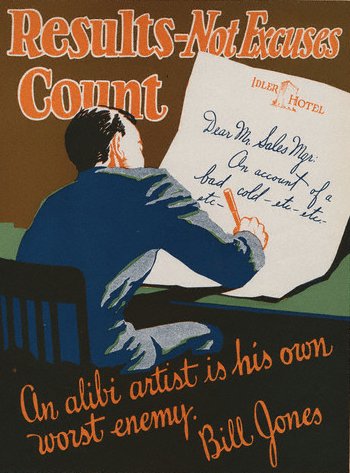
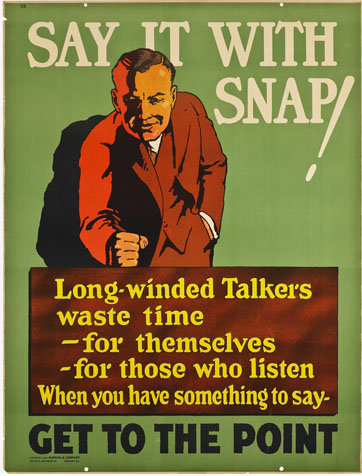
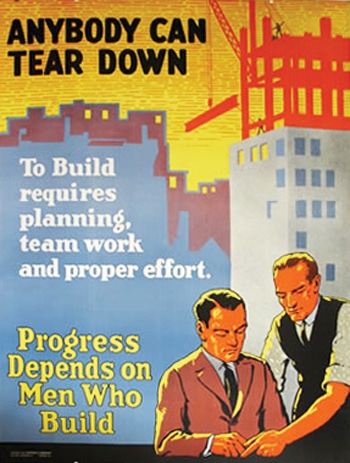
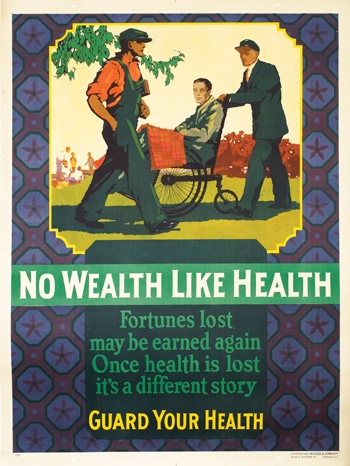
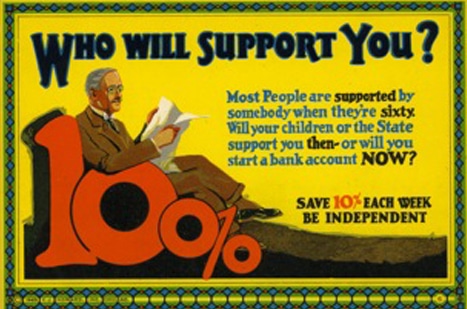
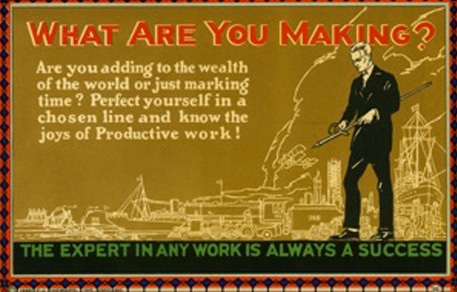
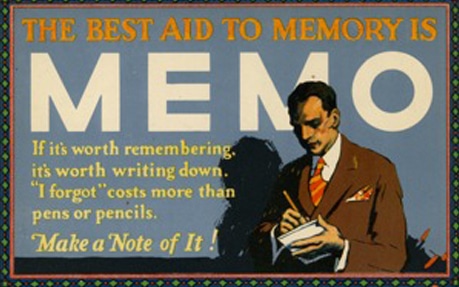
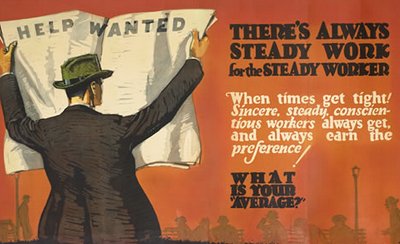
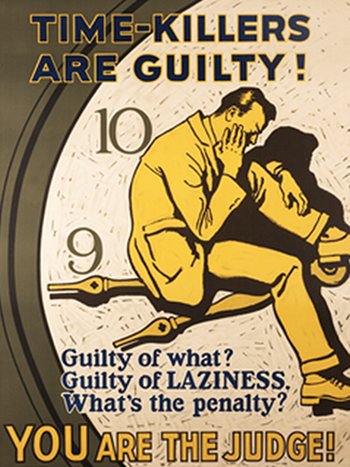
    Today’s business motivational posters — symbolized most prominently by “Sucessories” — are the butt of many a joke. But back in your grandpa’s day, they were an art form. Not only that, but motivational posters from the first few decades of the 20th century provide a window into America’s changing idea of manhood.

    During the late 19th and early 20th centuries, rapid industrialization in the West transformed all aspects of life, including our concept of manliness. As we discussed in our series on the Archetypes of American Manliness, for most of America’s early history, manhood was rooted in community and family ties, land ownership, and producerism. But as factories and industrial farming put small artisans and independent farmers out of business, men began leaving the family farm and shop in search for work in the burgeoning urban centers of America. Instead of the Genteel Patriarch or Heroic Artisan archetype defining manhood in America, a new archetype took center stage during this time of rapid change: the Self-Made Man.

    The Self-Made Man archetype of manliness represented a profound change in how Americans saw manhood. This was when the “pull yourself up by your bootstraps” ideal really took root in the country. Young men who wanted to be a success could no longer hang around the family farm and wait to inherit a piece of land from their fathers or apprentice at the village tannery before opening their own shop. Opportunities were waiting in new businesses and in new places far from home. But to grasp these opportunities required a new set of skills — while their fathers had wrestled with external obstacles in struggling to tame the land, young men looked inward and sought to master themselves. “Harder” skills became less important than personal qualities like thrift, hard work, persistence, and reliability.

    Men have always competed with each other for status, and the new way to the top was to climb the business ladder — to become a Titan of Industry and call your own shots.

    Helping men navigate this new economy and new definition of manhood were hundreds of self-help books and pamphlets that offered advice on how to be successful in life and in business. The most influential author to come out of this period was Orison Swett Marden who published 19 books with steely titles like Pushing to the FrontArchitects of Fate, and The Man You Long to Be (We actually included a few excerpts from Marden’s books in our Manvotionals anthology). Marden’s works redefined manhood in terms of character traits that led to personal success, and his books are filled with essays encouraging men to develop their manhood fully, and to test that manhood by hustling their way to the top.

    Which brings us to these motivational posters…

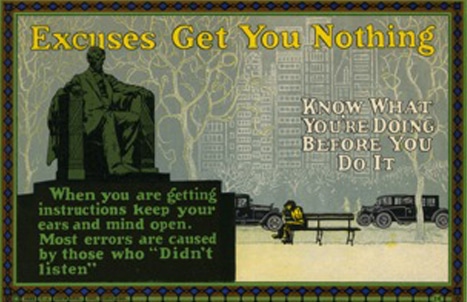
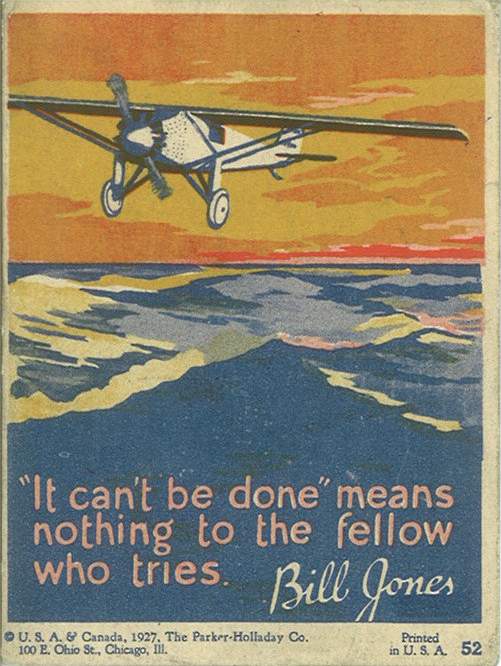
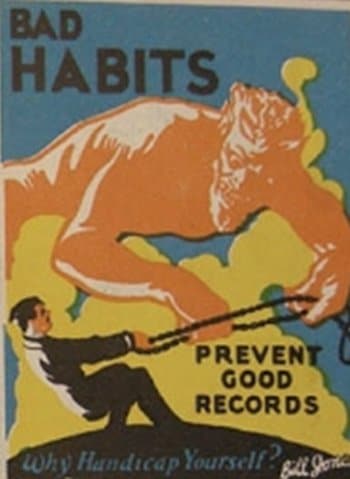
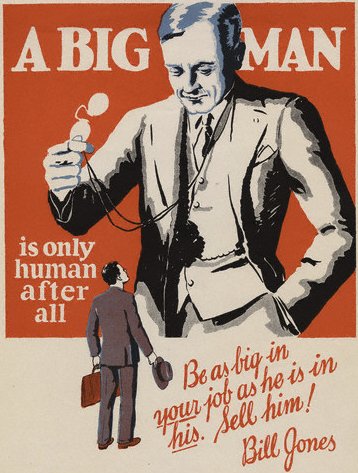
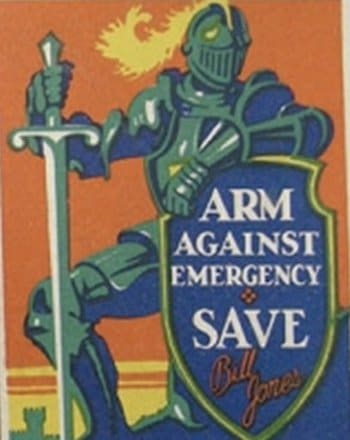
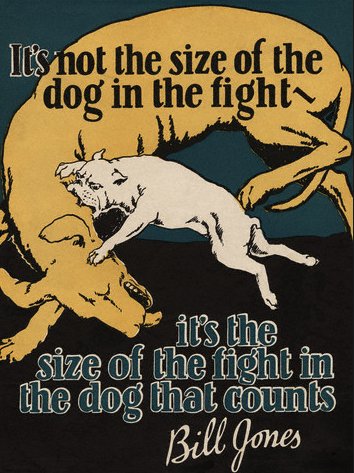
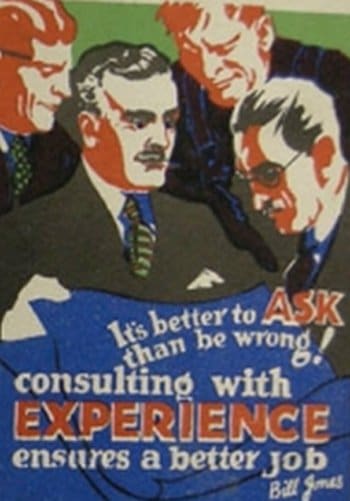
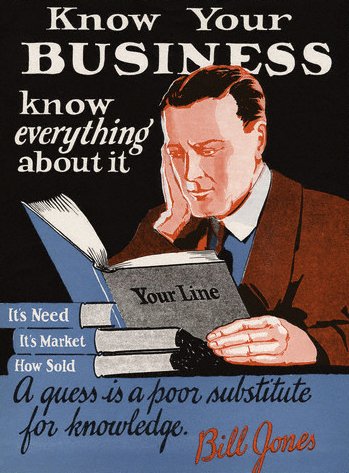
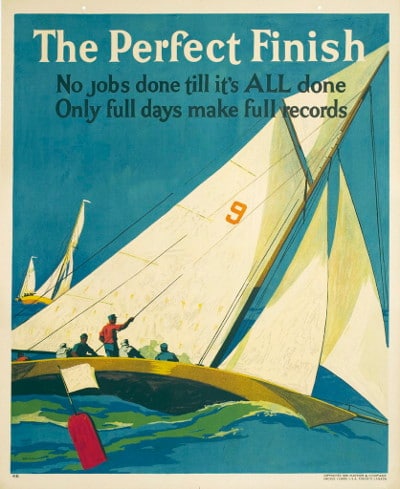
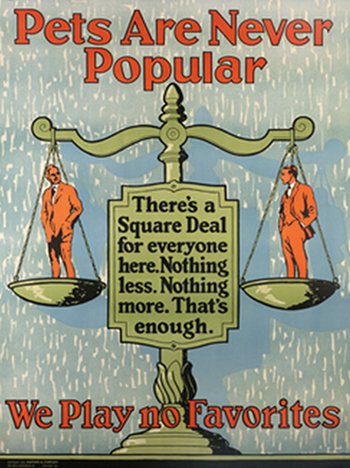
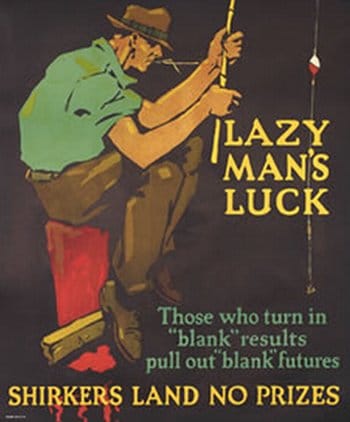
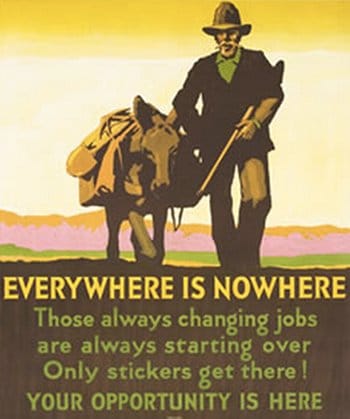
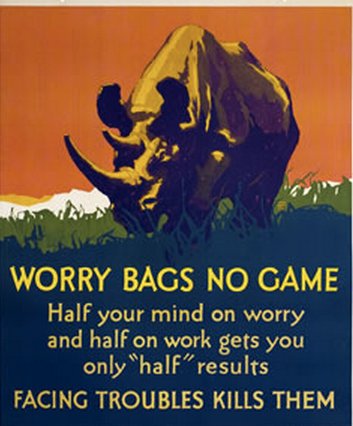
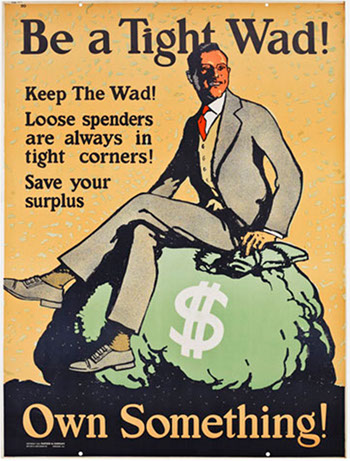
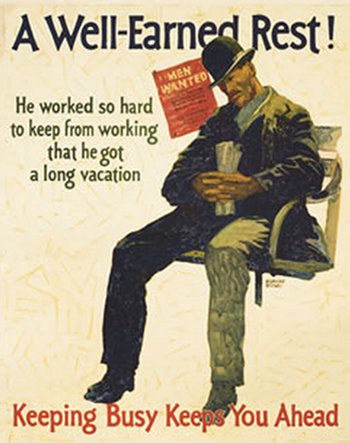
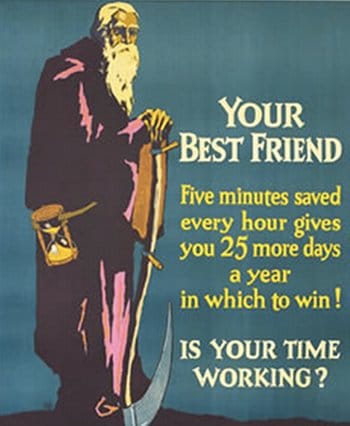
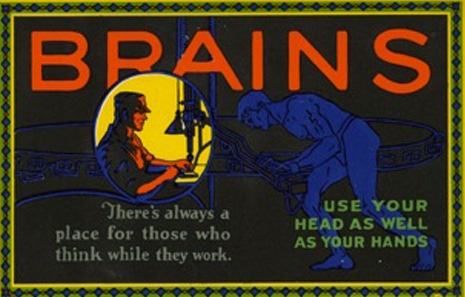
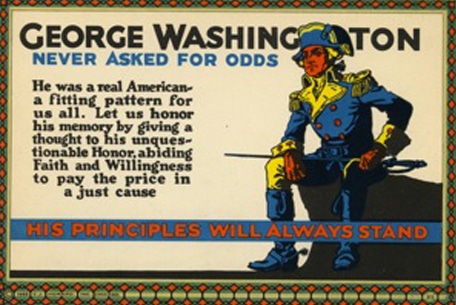
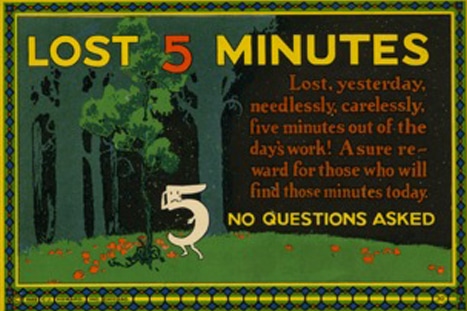
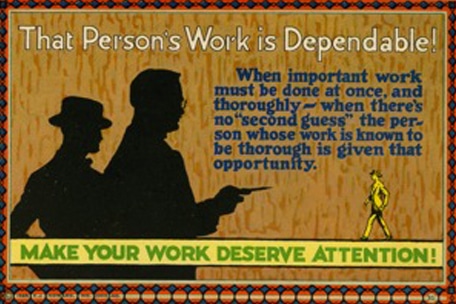
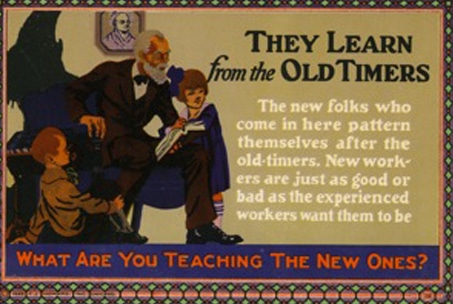
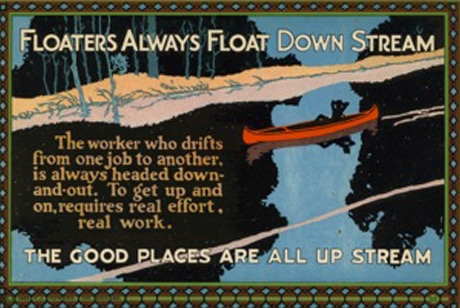
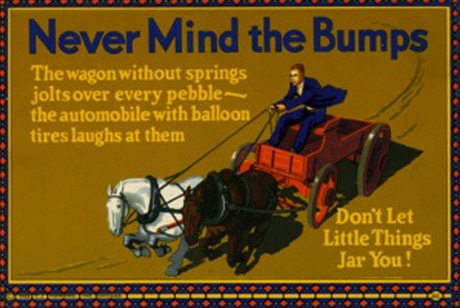
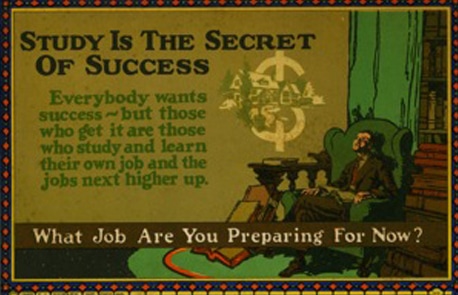
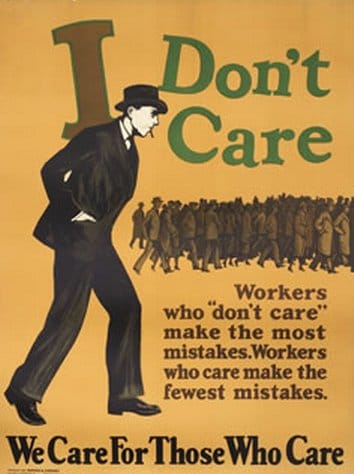
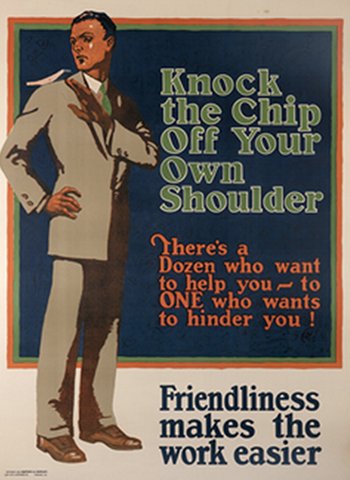
    This new, entrepreneurial definition of manhood reached a peak in the decade before the Great Depression. It was a time of idealism and optimism, and people were bullish both about the future of the economy and people’s ability to change their behavior and develop their character. Pithy maxims were popular (for example, Henry Ford was fond of saying, “Chop your own wood and it will warm you twice”), and it was felt that constructive encouragement could helps folks from any walk of life improve themselves. During this time, businesses began hanging beautifully illustrated posters with the same slogans that authors like Orison Swett Marden shared with readers a decade earlier. There were even trading cards with similar “go get-em” language that were handed out to employees like baseball cards. Business owners hoped that these posters and cards would help boost productivity and morale and inculcate uneducated and immigrant workers with the virile values needed to thrive in the world of business.

    Two (now defunct) printing companies — Parker-Holladay Company and Mather & Co. — were at the forefront of this burgeoning motivation business. Both companies created a line of motivational materials that business owners could subscribe to (new posters and cards would arrive each month) and hang up and hand out in the workplace. The two companies hired some of the best illustrators of the day such as Willard Frederick Elmes and Hal Depuy to create these handsome motivational posters.

    The Great Depression dealt a serious, if temporary, blow to the Self-Made Man archetype. With the crash in the market, and consequently in morale, the motivational craze fizzled, and the posters produced by Parker-Holladay and Mather & Co. became tattered ephemera that collected dust in antique stores and attics. Recently, however, there’s been a renewed interest in these unique pieces of 20th century history. Traveling exhibitions containing these vintage posters have criss-crossed the country and auction houses are selling them for thousands of dollars.

    I can understand the appeal. The vivid artwork and graphic design is top-notch, and while the copy is sometimes ham-fisted, I actually find it inspiring as a man — perhaps because I’m still a believer in the self-made ideal. The advice is pretty timeless and just as applicable today as it was then. The posters teach the sort of stuff your grandpa would tell you: simple, time-tested principles, that if lived, can lead to a life of success.

    Below we curated over 70 examples from this golden age of motivational posters. Prepare to be pumped up.

    Have You Met Bill Jones?

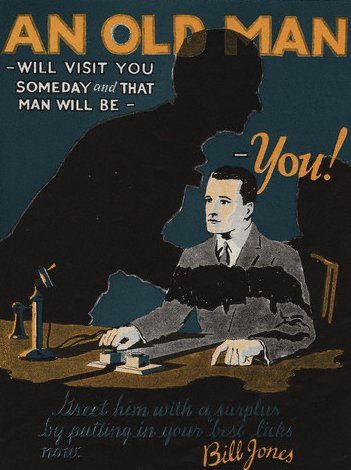
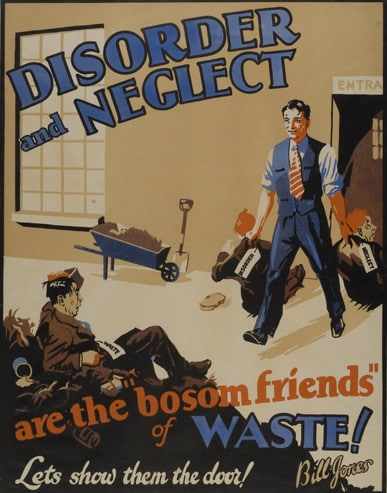
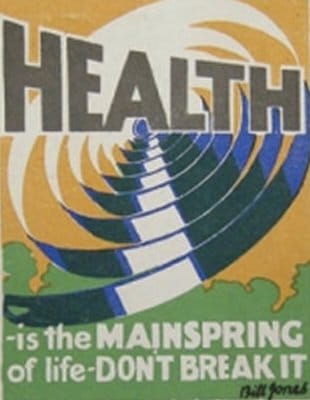
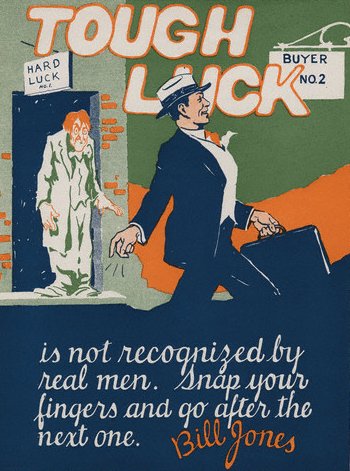
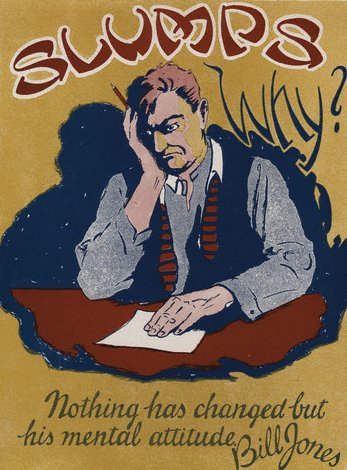
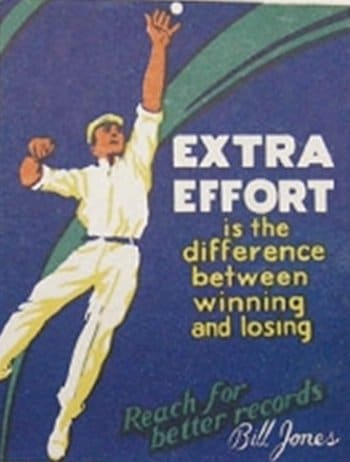
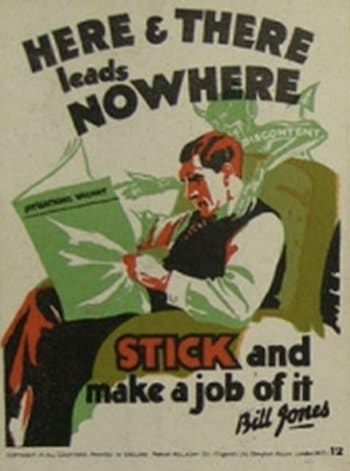
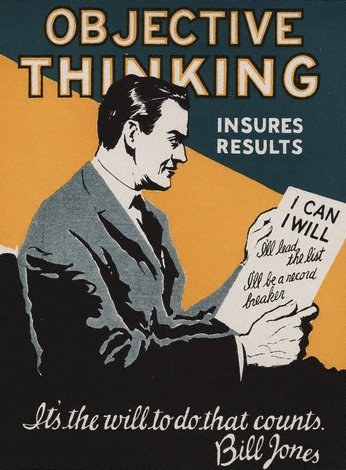
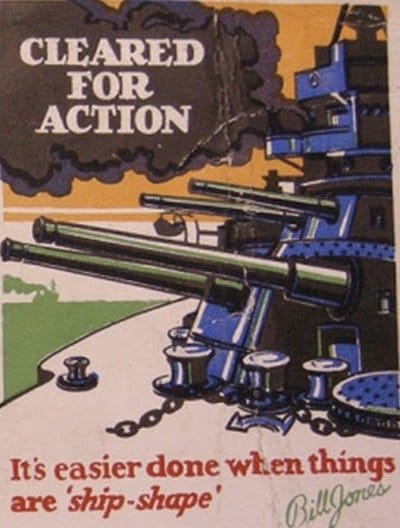
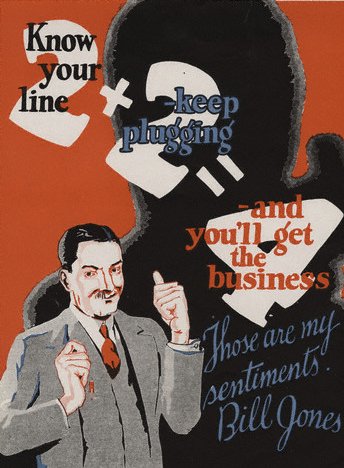
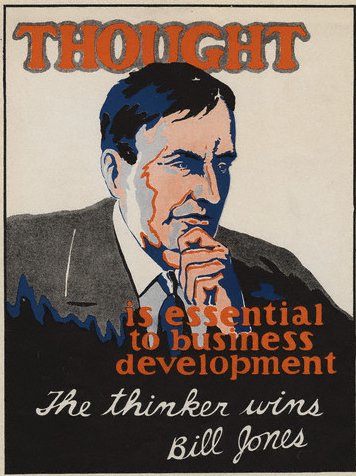
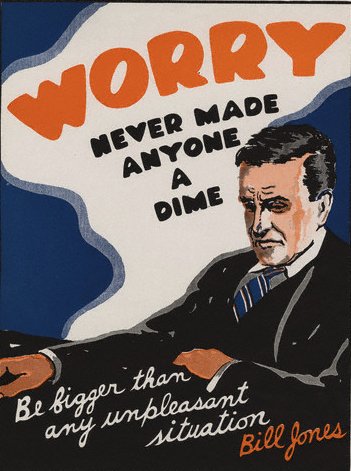
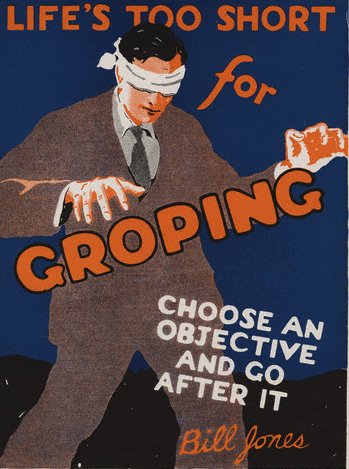
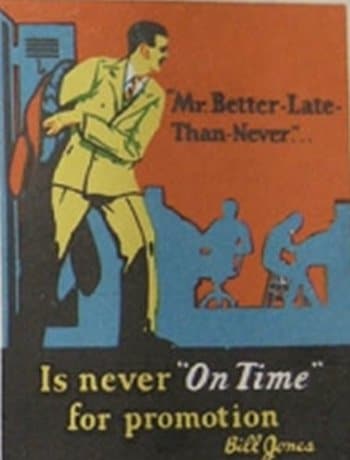
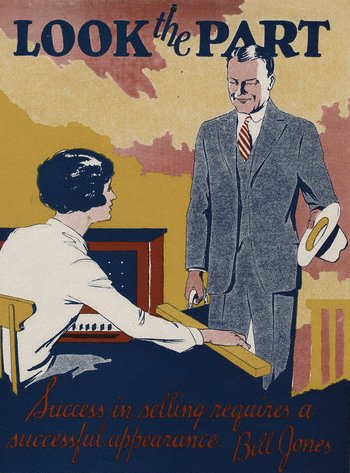
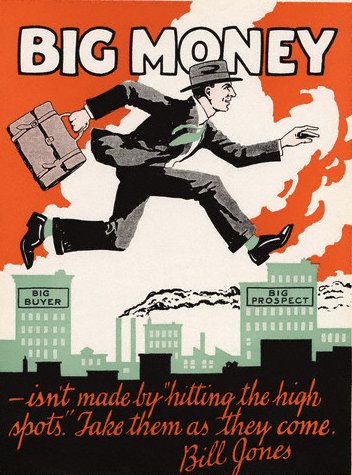
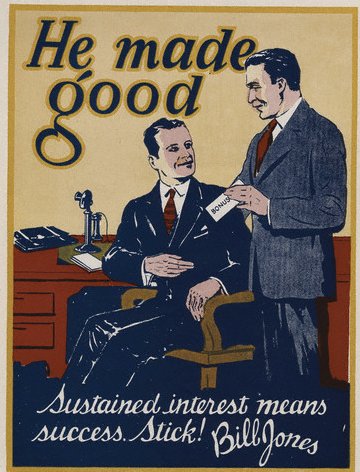
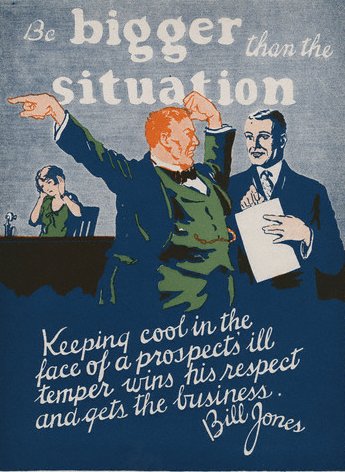
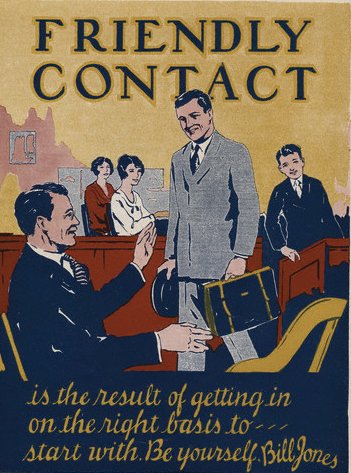
    During the 1920s, the British firm Parker-Holladay created a fictional character named Bill Jones. Mr. Jones’ dispensed his friendly advice to British clerical workers through colorful lithographic posters emblazoned with his get-right-to-the-point maxims. The firm exported Bill Jones to the United States and Canada where he urged employees to develop the pluck and can-do attitude that develops success.

    Mather & Company Work Incentive Posters

    Inspired by Parker-Holladay’s success with their Bill Jones series, a Chicago entrepreneur named Seth Seiders used his printing company, Mather & Co., to produce a line of “work incentive posters.” Like the “Bill Jones” series, Mather & Co.’s work incentive posters were designed to instill virtues like punctuality, teamwork, and thrift.

    Motivational posters from Mather & Co. have become a hot collector’s item today. Original posters are selling for more than a $1,000 a pop!

    Motivational Cards from the 1920s

    Recently, American art director Steven Heller published a set of motivational cards from the same time period as the Parker-Holladay and Mather & Co. materials on his blog. There isn’t much information about which company produced these, but the artwork and copy is somewhat similar to what you’ll find from Mather & Co. Lots of great items there. Teddy Roosevelt even graces one of the cards.


    Related Posts


    Copyright. 2012. The Art of Manliness.com
  • The Typical Twitter User

    This Week On Twitter: The Typical Twitter Usre, Twitter As A Business Tool And Social Marketing 101

    By Shea Bennett on September 9, 2012 10:00 AM

    Need a little weekend reading? We’ve compiled our top ten Twitter stories of the week, which includes the latest statistics about the typical Twitter user, how Twitter is the top social network amongst Fortune 500 companies, what social consumers want from brands (but what they’re actually getting from marketers), how Twitter is helping students and a visual that asks if we’re sharing too much online.
    Here are our top 10 Twitter stories of the week.

    1. The Typical Twitter User Is A 37 Year Old Female [STATS]

    The population might be aging, but not on Twitter: according to the latest statistics, Twitter users are, on average, two years younger than they were in 2010.

    2. 73% Of Fortune 500s Have An Active Twitter Account [STATS]

    In an effort to understand how the top companies in America use social media, the University of Massachusetts has conducted an annual survey of the digital presence of the Fortune 500. And this year, Twitter is the most popular social network among the titans of industry, beating out Facebook, blogging and Pinterest.

    3. What Social Consumers Want From Brands (And What They Actually Get From Marketers) [INFOGRAPHIC]

    Did you know that while more than three-quarters (76 percent) of marketers feel that they know what their consumers want, only about one-third (34 percent) have actually asked? This divide, coined as the perception gap by industry analyst Brian Solis, naturally presents a problem for brands looking to maximize user engagement and conversion rates on platforms such as Twitter and Facebook. For optimum results, marketers need to put their egos to one side and reach out directly to their audience – or suffer the consequences.

    4. How Twitter Is Helping Students Graduate With Technology [INFOGRAPHIC]

    Did you know that 84 percent of schools have used Twitter to send up-to-date announcements to students? Moreover, studies have shown that students who use Twitter in the classroom achieve a higher GPA by an average of 0.5 points, and professors are now far more likely to allow laptops in the classroom than they are calculators – 98 percent of classrooms now have internet access, and 91 percent of college faculty engage in social media as part of their course work.

    5. Facebook, Twitter, Google+, Pinterest – Are You Sharing Too Much Online? [INFOGRAPHIC]

    Are you sharing too much online? Social media has empowered users to connect with friends and family, demand better products and customer service from brands and change the world, but as we become more comfortable with these tools we are exponentially relaxing any initial concerns we might have had with security. Namely, as platforms such as Twitter and Facebook become an everyday part of our lives, sharing otherwise private information about ourselves to these channels becomes the norm which, in some cases, can be hazardous. It pays to remember that with social media you’re always on camera, and anything you say or do can – and, unfortunately, often will – be used against you.

    6. 92% Of U.S. Companies Have Used Social Networks For Recruitment [INFOGRAPHIC]

    Social media has revolutionized the business world and has quickly established itself as the primary source of recruitment for companies worldwide, and with good reason – it’s cost-effective, fast and scalable, allowing organizations of all shapes and sizes to source potential hires and easily profile their characters. Indeed, 92 percent of U.S. companies have used social networks to find new talent, and almost three-quarters (73 percent) of those surveyed have made successful hires through these channels.

    7. Last Tweet From Car Crash Victim Is About Tweeting While Driving

    We all know that texting while driving kills – yet drivers, especially young drivers, do it all the time. And now we have a story of five young men dead in a one-car crash and a couple of tweets from one of the victims, a passenger, bragging about drinking and tweeting while driving.

    8. Forget Embedding Tweets, Now You Can Embed An Entire Timeline

    Are you a fan of embedding tweets in posts? If so, you’ll LOVE Twitter’s new offering because it allows you to embed an entire timeline, never mind just a tweet. If you don’t know how to embed tweets (or what that even means), check out this post where we explain what embedding is and how to do it before continuing on.

    9. Wedding Vows Exchanged On Twitter. Seriously, This Happened

    In what is quite possibly the most ridiculous (and obviously, effective) PR stunt when it comes to Twitter, to date, a couple in Turkey used Twitter to exchange wedding vows. No, they were not stationed far away from each other for work or country or some other necessity. And they were not exchanging vows remotely to combat some last-minute snafu. They were sitting right next to each other in the church. Yes, bang your head against your desk and read on.

    10. HootSuite Acquires Seesmic

    HootSuite, the social media management system, has acquired Seesmic, who were innovators in mobile, desktop and web applications for social media, for an undisclosed amount. Seesmic chief executive Loic Le Meur had to lay off half of his staff back in March, and this buyout from HootSuite is partially a talent acquisition for the remaining roster. Users of Seesmic software will be slowly ported over to HootSuite, who say that this buyout will “further reinforce HootSuite’s position in the upper left quadrant of the Twitter Partner graph”.

    Did you know we have a newsletter? Sign-up to receive a daily digest of all things Twitter, sent straight to your inbox. Click here to sign up for the AllTwitter Newsletter.

     
  • Vintage PopSci: Reporter Climbs World Trade Center Construction Site in 1971

    The Future Then

    “They will soar 1,350 feet, higher than anything man has ever built”
    By Rose PastorePosted 09.11.2012 at 11:51 am0 Comments

    From supply platform at 109th floor, Gannon peers down at lower Manhattan skyline: 1971

    Two years before the official opening of the Twin Towers in 1973, PopSci reporter Robert Gannon visited the 110-story construction site – and nearly chickened out. To reach the top of the world’s tallest building, Gannon had to climb wobbly wooden ladders lashed to metal beams (while the builders teased him for his “hippie mustache.”) “More and more open spaces in the building’s skeleton, my boggled mind noted. I looked across to New Jersey. The day was one of those rare clear ones when New York City shimmers in the crystal air.”

    When he finally crawled to the edge, with mid-winter winds blowing straight through his coat, Gannon looked 100 feet down at the Empire State Building and thought the city “lay like a balsa, three-dimensional model of lower Manhattan… a plane flew around a toy Statue of Liberty stuck into a smudge of mud.”

    Read on for more from “Topping Out the World’s Tallest Building.”


    Gannon, wearing white hard hat, is silhouetted against completed tower. Second tower can be seen at left:


    Wooden ladders like this one took Gannon from the 102nd floor to the 110th. They wobbled, the nervous author reports:


    Gene Taylor (right) talks to Gannon at the top. Pine tree (rear right) symbolizes topping out:


    Worker’s fire at 104th floor lets author thaw frozen hands for note-taking. Temperature: 19 degrees. Wind: Raw.:


    Artist’s rendering of WTC:


    Read the full story in our May 1971 issue: Topping Out the World’s Tallest Building.


    Copyright. 2012. PopSci.com. All Rights Reserved

  • Andy Murray’s home town Dunblane watches historic win

    Andy Murray’s home town Dunblane watches historic win

    Continue reading the main story

    Dunblane locals watch the gameToo tense – Murray is urged on to win his first grand slam at the US Open

    Continue reading the main story

    1/5

    The home town of grand slam champion Andy Murray was in ecstatic mood after his win at the US Open.

    Thousands in Dunblane, near Stirling, stayed up into the early hours to watch the 25-year-old bag the historic victory.

    Murray beat Serbia’s Novak Djokovic in a thrilling five-set match.

    At the Dunblane Hotel almost 100 people erupted into mass celebration and chanted “There’s only one Andy Murray” when the final ball was hit.

    Murray has become the first Scot to win a grand slam and the first British man to win such a title since 1936.

    Continue reading the main story

    Andy Murray’s 2012

    • Semi Finalist at the Australian Open
    • Quarter Finalist at the French Open
    • Finalist at Wimbledon
    • Olympic Champion at London 2012
    • US Open Champion

    He had appeared in four other grand slam finals – losing them all.

    The tennis ace triumphed in the New York Flushing Meadow’s stadium fresh from winning a gold medal at the London Olympics.

    The US final, which lasted more than five hours, was much anticipated by Dunblane.

    At the Dunblane Hotel, tennis fan Gavin Noland, 63, said: “Andy is Dunblane’s hero, not just Dunblane, the whole of Scotland and the rest of Britain.

    “He was magnificent. I’ve been following him from the very beginning.

    Continue reading the main story

    Analysis

    image of Andrew BlackAndrew BlackBBC Scotland news

    “Dunblane Sports Club is where it all began for Andy Murray – he started playing tennis here as a young boy and despite his international success it’s said his heart still lies here.

    “As news of Andy’s victory spread throughout his home town of Dunblane this morning, local school children braved the cold morning to come to the sports club to play tennis. Many of them also spoke of being inspired by the tennis ace to improve their game and perhaps even emulate his success.

    “Andy Murray has brought every trophy he has ever won back to Dunblane Sports Club to show aspiring tennis players. In his absence, coaches at the sports club placed a large cardboard cut out of Andy on the open air tennis courts.

    “In the build-up to the match, someone put up a banner at the side of the tennis court declaring ‘good luck Andy’ later that was replaced with another banner stating ‘well done Andy’.”

    “I think he’s coming into his game, just since winning the Olympics he’s taken off like a meteorite.”

    Another supporter Dave Whitton, 62, said: “I’m just so happy for Andy – no tears this time, just complete joy and happiness, which is not only just for him but for the people of Dunblane and the whole of Scotland.”

    Referring to the Dunblane massacre in 1996, when gunman Thomas Hamilton shot dead 16 primary school children and their teacher, Mr Whitton said: “It’s a town where, as you’ll probably know, things have happened. But this brings a moment of joy and happiness instead of other things that have happened.

    “We share in his happiness today emotionally.

    “Like a true Scotsman we always live in hope whether it’s football or tennis. I’ve followed all his games as has my daughter who lives in London, we’ve been texting each other all night and I’m sure she’ll have a tear in her eye.”

    The supporters were with Murray all the way, celebrating and commiserating every point won and lost.

    The bar kept its doors open late to allow the patrons to see the end of the game, and dished out popcorn and hot dogs.

    ‘Making history’

    Graham Neeson, 53, from Glasgow, was visiting a friend in Perth and started watching the game there before leaving to get the last train home.

    However, he hopped off at Dunblane, to make sure he could see “history in the making”.

    He said: “I wouldn’t have got home in time to watch the whole thing so I thought, where better to jump off than the epicentre of Murrayland – Dunblane.

    “I’ll need to stay overnight at the hotel now and get the morning train, but it’s been worth it. I couldn’t miss history in the making.

    “I had him down as favourite to win before the final even started. I’m really over the moon for him and there’s such a good atmosphere about the town.”

    More on This Story

    Related Stories

    Copyright. 2012. BBC.com. All Rights Reserved

  • The World as I See It. An Essay By Albert Einstein

    "The World As I See It" by Einstein

    Einstein at his home in Princeton, New Jersey
    “How strange is the lot of us mortals! Each of us is here for a brief sojourn; for what purpose he knows not, though he sometimes thinks he senses it. But without deeper reflection one knows from daily life that one exists for other people — first of all for those upon whose smiles and well-being our own happiness is wholly dependent, and then for the many, unknown to us, to whose destinies we are bound by the ties of sympathy. A hundred times every day I remind myself that my inner and outer life are based on the labors of other men, living and dead, and that I must exert myself in order to give in the same measure as I have received and am still receiving…

    “I have never looked upon ease and happiness as ends in themselves — this critical basis I call the ideal of a pigsty. The ideals that have lighted my way, and time after time have given me new courage to face life cheerfully, have been Kindness, Beauty, and Truth. Without the sense of kinship with men of like mind, without the occupation with the objective world, the eternally unattainable in the field of art and scientific endeavors, life would have seemed empty to me. The trite objects of human efforts — possessions, outward success, luxury — have always seemed to me contemptible.

    “My passionate sense of social justice and social responsibility has always contrasted oddly with my pronounced lack of need for direct contact with other human beings and human communities. I am truly a ‘lone traveler’ and have never belonged to my country, my home, my friends, or even my immediate family, with my whole heart; in the face of all these ties, I have never lost a sense of distance and a need for solitude…”

    “My political ideal is democracy. Let every man be respected as an individual and no man idolized. It is an irony of fate that I myself have been the recipient of excessive admiration and reverence from my fellow-beings, through no fault, and no merit, of my own. The cause of this may well be the desire, unattainable for many, to understand the few ideas to which I have with my feeble powers attained through ceaseless struggle. I am quite aware that for any organization to reach its goals, one man must do the thinking and directing and generally bear the responsibility. But the led must not be coerced, they must be able to choose their leader. In my opinion, an autocratic system of coercion soon degenerates; force attracts men of low morality… The really valuable thing in the pageant of human life seems to me not the political state, but the creative, sentient individual, the personality; it alone creates the noble and the sublime, while the herd as such remains dull in thought and dull in feeling.

    “This topic brings me to that worst outcrop of herd life, the military system, which I abhor… This plague-spot of civilization ought to be abolished with all possible speed. Heroism on command, senseless violence, and all the loathsome nonsense that goes by the name of patriotism — how passionately I hate them!

    “The most beautiful experience we can have is the mysterious. It is the fundamental emotion that stands at the cradle of true art and true science. Whoever does not know it and can no longer wonder, no longer marvel, is as good as dead, and his eyes are dimmed. It was the experience of mystery — even if mixed with fear — that engendered religion. A knowledge of the existence of something we cannot penetrate, our perceptions of the profoundest reason and the most radiant beauty, which only in their most primitive forms are accessible to our minds: it is this knowledge and this emotion that constitute true religiosity. In this sense, and only this sense, I am a deeply religious man… I am satisfied with the mystery of life’s eternity and with a knowledge, a sense, of the marvelous structure of existence — as well as the humble attempt to understand even a tiny portion of the Reason that manifests itself in nature.”

    Albert Einstein (signature)

  • Mow Yard. Drop Off Kids. Take a Drive on Mars. Exploring Other Planets

    Monica Almeida/The New York Times

    Matt Heverly and Vandi Tompkins, rover drivers, looking at the latest data from Mars with Justin Linn, a mission controller.

    Damian Dovarganes/Associated Press

    Senator Dianne Feinstein and Jean-Lou Chameau of the California Institute of Technology with Bobak Ferdowsi of NASA


    September 8, 2012
     

    Mow Yard. Drop Off Kids. Take a Drive on Mars.


    By 


    PASADENA, Calif. — Matt Heverly, 36, started a recent workday as any young father might: up at 5:30, gulping coffee, fixing a bottle for the baby. He threw on jeans and a T-shirt and drove his two sons to day care. He stopped to get the brakes on his Toyota checked and swung by the bank.

    Then he went to the office … to drive a $2.5 billion robot on Mars.

    Mr. Heverly leads a team of 16 drivers at NASA’s Jet Propulsion Laboratory here. Together, they are responsible for steering a six-wheeled, plutonium-powered rover called Curiosity across the Red Planet’s Gale Crater. Equipped with futuristic tools like a laser that can vaporize rock, the 2,000-pound robot arrived on Mars on Aug. 6, and Mr. Heverly took the wheel — or computer keyboard, actually — on Aug. 22.

    “Driving” a rover might be a misleading term. There is no joystick or accelerator, for a start. Mr. Heverly and his teammates tell the vehicle where to go next by entering hundreds of computer commands.

    Also, the driving is not done in real time: during the Martian night, the team plans where to send Curiosity next and sends instructions via radio transmission as the Mars day begins. Then the drivers go home, back to life on Earth, with all of its “don’t forget to take out the garbage” mundanity.

    “You have to try not to think about what’s happening out there, which is, of course, completely impossible,” Vandi Tompkins, 39, one of the drivers, said with caffeinated exuberance.

    “The rover may be executing a successful drive based on your instructions,” she said, “or you may have just sent a national asset over a cliff.”

    Or, as Mr. Heverly put it, “Last night I drove on Mars, today I mowed the lawn — it’s completely surreal.”

    Curiosity’s drivers are only a small group within NASA’s Mars exploration program, which investigates the Martian climate and geology and oversees an older, more rudimentary rover, Opportunity. Several thousand people work on the Mars program, but it was 30 or so Curiosity team members who struck a worldwide chord last month when NASA shared video of their reaction to the rover’s landing.

    Wearing matching blue polo shirts for the occasion, the team members were seen listening for a mission controller’s confirmation of success — “We are wheels down on Mars. Oh, my God!” — and breaking out in raucous cheers and high-fives. Bobak Ferdowsi, a flight director who sports a mohawk with red, white and blue streaks, now says, wincing, “We all looked like Smurfs.”

    Maybe a little. But it was the group’s esprit de corps that left the lasting impression. A spoof video, “We’re NASA and We Know It,” recorded to the beat of the song “Sexy and I Know It,” now has 2.4 million views on YouTube. Mr. Ferdowsi, now known online as Mohawk Guy, has 53,000 Twitter followers, up from a couple of hundred before the mission. (The Martian landscape is “pretty amazeballs,” he wrote in a post on Aug. 23.)

    People inside Building 264 here, part of the Space Flight Operations Facility, have long had a sense of humor about themselves — at one rocket launching, a group of scientists wore Spockears. “It’s just that before social media, nobody was really watching,” Mr. Ferdowsi said. “I’m still kind of amazed at the attention. I don’t think there’s anything all that interesting about me.”

    In many ways, this is like any other office: gray industrial carpeting, fluorescent lighting, cramped cubicles that are mostly undecorated, unless you count empty cans of Red Bull. A small pantry has packages of dried fruit snacks. There is the occasional potluck dinner and an office softball team; at a recent game, everyone wore fake mohawks to tease Mr. Ferdowsi.

    On the elevator, people say things like “Can you press seven? I’m going to Jupiter.” They are not kidding. The seventh floor is home to Juno, a mission to the solar system’s largest planet. (Mars is on six and four.)

    There is also a quiet cockiness. “We definitely win the coolest job contest at cocktail parties,” said John Wright, 56, a Curiosity driver who had reported to work in a baseball cap, a T-shirt and shorts.

    “What do you do? Oh, you’re an investment banker? Isn’t that special,” Mr. Wright continued. “I drive on Mars.”

    The job can be grueling. For at least the first three months of Curiosity’s multiyear exploration, the drivers will be living and working on Mars time. The Martian day, called a Sol, is longer than a day on Earth by 39 minutes and 35 seconds, which adds up quickly; morning on Earth becomes night on Mars within a couple of weeks. For the drivers, keeping this schedule is like moving two time zones to the west every three days, tossing them into a perpetual state of jet lag.

    “I’m kind of so sleep-deprived at this point that I’m beyond the point where caffeine helps,” Mr. Heverly said.

    Mr. Heverly became a driver in an amusingly simple way. He started working at the Jet Propulsion Laboratory seven years ago after obtaining a master’s degree in robotics from Boston University. “And one day they literally sent out an e-mail that said, ‘Does anybody want to drive a rover?’ ” he said. He raised his hand (“Like, duh”) and, after a year of training, began commanding Opportunity. He worked with that rover for four years before switching to Curiosity.

    Who decides who gets to drive and when? Drivers are scheduled by supervisors several weeks in advance, with attention paid to having some of each of people who specialize in certain rover functions: mobility, arm, turret. Up to half a dozen drivers work any one shift.

    Workdays have a rigorous time structure. Curiosity beams down a report at 4 p.m. Mars time (one recent Thursday, that meant 1:44 p.m. Pacific time) of how its drive went. A group of analysts has 15 minutes to figure out if everything succeeded, a self-imposed deadline to get the planning for the next day’s drive moving quickly.

    Scientists — there are about 400 working on the Mars mission — evaluate the data, which usually includes pictures from onboard cameras. Drivers arrive and meet with scientists to discuss where the rover should head next, perhaps 15 feet toward an indentation in the soil that looks interesting. Because they are essentially driving Curiosity blind, they initially have to move slowly, a maximum of 30 feet a day; eventually they will be able to cover about 300 feet a day.

    Once a plan has been formulated, drivers stare at the images they have of the Martian terrain with 3-D glasses to scout for potential pitfalls (“How afraid are we of that rock?”) and use computer animation to simulate a route. Then they enter hundreds of commands to execute the next day’s drive, which can require calibration of movement in gradations of centimeters. They message the rover, hoping that it understands and that no one entered an incorrect code.

    Mr. Heverly, turning white, recalled “a nightmare scenario” with Opportunity. One day, scientists decided that they wanted the rover to back up. Based on the commands Mr. Heverly entered, Opportunity understood that it needed to return to a spot a few feet back.

    “But instead of simply backing up, it decided to drive around the entire planet to get there,” Mr. Heverly said. Luckily, an automated safety function kicked in and stopped the rover before it could go very far.

    “It was a really scary and really humbling day,” Mr. Heverly said. “It gives a whole new meaning to ‘What did you do at the office today, honey?’ ”


    Copyright. 2012, The New York Times Company. All Rights Reserved

  • Italian Grand Prix 2012: Lewis Hamilton rounds off dream weekend with victory at Monza as Jenson Button retires

    Lewis Hamilton set aside speculation over his future to take victory in the Italian Grand Prix and refresh his hopes of Formula One world title glory.

    Thumbs up: after an interesting week, Hamilton was all smiles after winning the Italian Grand Prix Photo: REUTERS


    By Telegraph Sport

    3:06PM BST 09 Sep 2012

    Comments9 Comments


    After crashing out at the first corner of last Sunday’s Belgian Grand Prix along with championship leader Fernando Alonso, and amid the saga of his contract negotiations with McLaren, Hamilton conjured a superb drive at Monza to claim his third win of the season and 20th of his career.

    The Briton finished 4.3 seconds ahead of Sauber’s Sergio Perez in second place, with Alonso giving the Ferrari fans plenty to cheer with third to establish a 37-point gap in the standings ahead of new second-placed man Hamilton.

    The start was routine enough for Hamilton, a straightforward getaway, with no drama alongside Button after McLaren yesterday celebrated the 62nd front-row lockout, and a new F1 record.

    Instead, it was Ferrari’s Felipe Massa who proved to be the biggest thorn in Hamilton’s side as the Brazilian attacked going into the first chicane.

    Hamilton, however, just did enough to keep his old rival at bay, the duo avoiding a collision after becoming entangled on numerous occasions last season.