Copyright. 2011. Reuters News Service. All Rights Reserved


Sophy Hollington
The Trouble With Work
Those who still have jobs are working longer for less, and don’t like their bosses. Can we do better?

Fahad Shadeed/Reuters
Women in Saudi Arabia endure strict gender separation, including a ban against driving.
King Abdullah of Saudi Arabia on Sunday granted women the right to vote and run in future municipal elections, the biggest change in a decade for women in a puritanical kingdom that practices strict separation of the sexes, including banning women from driving.
Saudi women, who are legally subject to male chaperones for almost any public activity, hailed the royal decree as an important, if limited, step toward making them equal to their male counterparts. They said the uprisings sweeping the Arab world for the past nine months — along with sustained domestic pressure for women’s rights and a more representative form of government — prompted the change.
“There is the element of the Arab Spring, there is the element of the strength of Saudi social media, and there is the element of Saudi women themselves, who are not silent,” said Hatoon al-Fassi, a history professor and one of the women who organized a campaign demanding the right to vote this spring. “Plus, the fact that the issue of women has turned Saudi Arabia into an international joke is another thing that brought the decision now.”
Although political activists celebrated the change, they also cautioned how deep it would go and how fast, given that the king referred to the next election cycle, which would not be until 2015. Some women wondered aloud how they would be able to campaign for office when they were not even allowed to drive. And there is a long history of royal decrees stalling, as weak enactment collides with the bulwark of traditions ordained by the Wahhabi sect of Islam and its fierce resistance to change.
In his announcement, the king said that women would also be appointed to the Majlis Al-Shura, a consultative council that advises the monarchy on matters of public policy. But it is a toothless body that avoids matters of royal prerogative, like where the nation’s oil revenue goes.
“We refuse to marginalize the role of women in Saudi society,” the king said in an address to the Shura, noting during the five minutes he spent on the subject that senior religious scholars had endorsed the change.
Even under the new law, it was unclear how many women would take part in elections. In many aspects of life, men — whether fathers, husbands or brothers — prevent women from participating in legal activities. Public education for women took years to gain acceptance after it was introduced in 1960.
King Abdullah, the 87-year-old monarch who has a reputation for pushing reforms opposed by some of his half-brothers among the senior princes, said the monarchy was simply following Islamic guidelines, and that those who shunned such practices were “arrogant.”
Some analysts described the king’s choice as the path of least resistance. Many Saudis have been loudly demanding that all 150 members of the Shura be elected, not appointed. By suddenly putting women in the mix, activists feared, the government might use the excuse of integration to delay introducing a nationally elected council.
Political participation for women is also a less contentious issue than granting them the right to drive, an idea fiercely opposed by some of the most powerful clerics and princes. Even as the king made the political announcement, activists said that one prominent opponent of the ban, Najla al-Hariri, was being questioned Sunday for continuing her stealth campaign of driving.
Mrs. Hariri has been vociferous in demanding the right as a single mother who cannot afford one of the ubiquitous foreign chauffeurs to ferry her children to school. In recent weeks, a woman even drove down King Fahd Expressway, the main thoroughfare through downtown Riyadh, activists said.
Municipal elections in the kingdom are scheduled for Thursday, but the campaign is almost over and the king said that women would be able to nominate themselves and vote “as of the next session.” Introduced in 2005, the municipal councils have proved disappointing for those who had hoped they would create more political change.
Saudi Arabia remains an absolute monarchy. Fouad al-Farhan, once jailed briefly for his blog critical of the monarchy, led a slate of young Saudis from the cosmopolitan commercial capital of Jidda, determined to run in this year’s municipal elections to use whatever democratic openings they might afford for change. When the final list of candidates was posted weeks ago, his name had been unceremoniously removed — without anyone from the Jidda governorate run by Prince Khalid al-Faisal calling him to explain, Mr. Farhan said.
Despite the snail’s pace of change, women on Sunday were optimistic that the right to vote and run would give them leverage to change the measures, big and small, that hem them in.
“It is a good sign, and we have to take advantage of it,” said Maha al-Qahtani, one of the women who defied the ban on driving this year, said of the king’s announcement. “But we still need more rights.”
Women require the permission of a male sponsor, or “mahram,” to travel or undertake much of the commercial activity needed to run a business. They inhabit separate and often inferior spaces in restaurants, banks and health clubs, when they are allowed in at all.
Women were granted the right to their own national identification cards in 2001, the last major step that many hoped would lead to greater public freedom, but it failed to materialize. The Saudi judiciary, a conservative bastion, has yet to allow female lawyers, a new phenomenon, to argue in court. And a royal decree issued earlier this year that women should be allowed to work in public to sell lingerie has not been enacted — leaving Saudi women to buy their bras from male clerks, who mostly hail from South Asia.
Social media, heavily used in Saudi Arabia to start with, lit up with the announcement, with supporters endorsing it as “a great leap forward,” as one Twitter post put it. Some conservatives inveighed against it.
“Muslim scholars believe it is un-Islamic to allow women to participate in the Shura council,” wrote Mohammad al-Habdan, one such scholar.
In March, King Abdullah announced $130 billion in public spending over the next decade on measures like affordable housing, hoping for social peace after the first governments in the region were toppled. But uprisings have continued to challenge Arab governments.
Around the Persian Gulf, many citizens of the wealthy monarchies jealously track the rights and largess granted in neighboring states. On Saturday, 19 men and one woman were elected to a legislative body in the United Arab Emirates. Last summer, Qatar granted a notable 60 percent pay raise to all state employees.
Such regional and domestic pressures weighed on the Saudi monarchy to make some type of gesture. The one King Abdullah chose was less sweeping than many political activists had wanted, but one they hoped was a sign of more to come.
“It is not something that will change the life of most women,” said Fawaziah Bakr, an education professor in Riyadh, noting that she had just held a monthly dinner for professional women who were buzzing with excitement about the change.
“We are now looking for even more,” Mrs. Bakr said. “The Arab spring means that things are changing, that the political power has to listen to the people. The spring gave us a clear voice.”
Nada Bakri contributed reporting from Beirut, Lebanon.
Copyright. 2011. The New York Times Company. All Rights Reserved
However grumpy people are when they wake up, and whether they stumble to their feet in Madrid, Mexico City or Minnetonka, Minn., they tend to brighten by breakfast time and feel their moods taper gradually to a low in the late afternoon, before rallying again near bedtime, a large-scale study of posts on the social media site Twitter found.
Drawing on messages posted by more than two million people in 84 countries, researchers discovered that the emotional tone of people’s messages followed a similar pattern not only through the day but also through the week and the changing seasons. The new analysis suggests that our moods are driven in part by a shared underlying biological rhythm that transcends culture and environment.
The report, by sociologists at Cornell University and appearing in the journal Science, is the first cross-cultural study of daily mood rhythms in the average person using such text analysis. Previous studies have also mined the mountains of data pouring into social media sites, chat rooms, blogs and elsewhere on the Internet, but looked at collective moods over broader periods of time, in different time zones or during holidays.
“There’s just a torrent of new digital data coming into the field, and it’s transforming the social sciences, creating new lenses to look at all sorts of behaviors,” said Peter Sheridan Dodds, a researcher at the University of Vermont who was not involved in the new research. He called the new study “very exciting, because it complements previous findings” and expands on what is known about how mood fluctuates.
He and other outside researchers also cautioned that drawing on Twitter had its hazards, like any other attempt to monitor the fleeting internal states labeled as moods. For starters, Twitter users are computer-savvy, skew young and affluent, and post for a variety of reasons.
“Tweets may tell us more about what the tweeter thinks the follower wants to hear than about what the tweeter is actually feeling,” said Dan Gilbert, a Harvard psychologist, in an e-mail. “In short, tweets are not a simple reflection of a person’s current affective state and should not be taken at face value.”
The study’s authors, Scott A. Golder and Michael W. Macy, acknowledge such limitations and worked to correct for them. In the study, they collected up to 400 messages from each of 2.4 million Twitter users writing in English, posted from February 2008 through January 2010.
They analyzed the text of each message, using a standard computer program that associates certain words, like “awesome” and “agree,” with positive moods and others, like “annoy” and “afraid,” with negative ones. They included so-called emoticons, the face symbols like “:)” that punctuate digital missives.
The researchers gained access to the messages through Twitter, using an interface that allows scientists as well as software developers to work with the data.
The pair found that about 7 percent of the users qualified as “night owls,” showing peaks in upbeat-sounding messages around midnight and beyond, and about 16 percent were morning people, who showed such peaks very early in the day.
After accounting for these differences, the researchers determined that for the average user in each country, positive posts crested around breakfast time, from 6 a.m. to 9 a.m.; they fell off gradually until hitting a trough between 3 p.m. and 4 p.m., then drifted upward, rising more sharply after dinner.
To no one’s surprise, people’s overall moods were lowest at the beginning of the workweek, and rose later, peaking on the weekend. (The pattern of peak moods on days off held for countries where Saturday and Sunday are not the weekend.)
The pattern on weekend days was shifted about two hours later — the morning peak closer to 9 a.m. and the evening one past 9 p.m., most likely because people sleep in and stay up later — but the shape of the curve was the same.
“This is a significant finding because one explanation out there for the pattern was just that people hate going to work,” Mr. Golder said. “But if that were the case, the pattern should be different on the weekends, and it’s not. That suggests that something more fundamental is driving this — that it’s due to biological or circadian factors.”
The researchers found no evidence for the winter blues, the common assumption that short winter days contribute to negative moods. Negative messages were as likely during the winter as in the summer.
But positively rated messages tracked the rate at which day length changed: that is, they trended upward around the spring equinox in late March, and downward around the fall equinox in late September. This suggests that seasonal mood changes are due more to a diminishing of positive emotions in anticipation of short days, the authors say.
Dr. Dodds, the University of Vermont researcher, has been doing text analysis of Twitter messages worldwide as well, to get a reading on collective well-being, among other things. He said the new study comported well with his own recent analysis. “We find that swearing goes up with negative mood in the very same way,” he said. “It tracks beautifully with the pattern they’re showing.”
Social scientists analyzing digital content agree that, for all its statistical appeal, the approach still needs some fine-tuning. On Twitter, people routinely savage others with pure relish and gush sarcastically — and the software is not sophisticated enough to pick up these subtleties.
“I suspect that if you counted the good and bad words people said during intercourse, you’d mistakenly conclude that they were having an awful time,” Dr. Gilbert said.
Copyright. 2011. The New York Times Company. All Rights Reserved
F1: Vettel victorious in Singapore GP mayhem
Hannah Taylor, F1 Correspondent
This page has been viewed: 364 times
As round 14 of the 2011 Formula One season got underway for the Singapore Grand Prix, Reigning World Champion and polesitter Sebastian Vettel led from the start and passed the chequered flag as the winner at the end of the race.
The Red Bull driver achieved his 19th career victory, after an eventful 61 laps, which he completed under the lights of the Marina Bay Street Circuit. Despite getting through the safety car period, driving in the searing heat, passing traffic and managing his tyres, Vettel was prevented from being crowned the 2011 World Champion today.
Vettel expressed his feelings on the outcome of the race today and explained how it went.
Podium: race winner Sebastian Vettel, Red Bull Racing, second place Jenson Button, McLaren Mercedes, third place Mark Webber, Red Bull Racing
Photo by:motorsport.com
“All in all it is a fantastic result. I really love this track and I love the challenge here – it’s one of the longest races of the season, but the car was fantastic and engine-wise everything was great… I’m very pleased and for the championship it looks like we have another chance at the next race,” commented Vettel.
Second placeman Jenson Button drove a strong race and was gradually catching the leader during the Grand Prix. However, the McLaren driver got stuck in traffic in the final few laps, which meant he could not get close enough to put Vettel under pressure at the front.
Vettel’s Australian team mate Mark Webber finished in third place overall, after battling for position at times with several midfield runners.
After the five lights had gone out to mark the beginning of the race, Vettel was true to form and maintained pole position. Unfortunately the Red Bull team had mixed fortune at the start despite locking out the front row for the fifth time this season. Webber was not quite so lucky as he got going, and he dropped a few places on the first few laps.
Likewise, Lewis Hamilton in the second McLaren also suffered the same fate. The 2008 World Champion had a bad time and slipped down the field to eighth place after he and Webber were scrapping for position. However, the tables soon turned in favour of Hamilton, when he seemed to get back on track and find his feet. The Englishman found himself on the tail of Mercedes driver Michael Schumacher.
The pair already have a track record for battling for position with each other in Monza. Hamilton lost out to the seven times World Champion two weeks ago though, when he was stuck behind him for 27 laps of the race. Hamilton was potentially in a good position even two laps on into today’s race. Despite his puncture in qualifying yesterday, he still had a new set of option tyres, which could put him ahead of Schumacher depending on his race strategy.
Schumacher’s team mate Nico Rosberg was also in the limelight early on in the race. The German took the scenic route at one point as he went into the run off area at Turn one. He soon got back on track and was not punished by the stewards for this when the team reported that as he had not gained an advantage this was okay. This discussion came about after Rosberg was battling for position with Ferrari’s Felipe Massa. Initially, Massa was ahead maintaining his place and Rosberg took it from him momentarily. The pair then resumed their original positions without a problem.
Nico Rosberg, Mercedes GP F1 Team
Photo bymotorsport.com
Before the action on the track had barely begun, there had been lots of ups and downs for some drivers. To add to the incidents that had already occurred, Hispania Racing’s Daniel Ricciardo was spotted without his front wing. The Australian was gingerly making his way back to the pits to repair the damage on lap two.
The early scrap for position between Hamilton and Schumacher reappeared on lap four. Hamilton was doing well to maintain seventh place from the German, as he had previously passed him to snatch it. From this point on Hamilton seemed to be on a charge, as his next opponent was Schumacher’s team mate, Rosberg. Hamilton successfully took sixth place from Rosberg on lap four, and did so with ease using his DRS.
Meanwhile, a little further in front of the pack, Ferrari’s Fernando Alonso and Webber were fighting over third place on lap six. Webber who was just behind the Spaniard and running in fourth place, soon reported via the team radio that his KERS was not working very well. This indicated that Webber might have been vulnerable to both prancing horse cars and Alonso would have been able to extend the gap between him and Webber. Massa was just behind Webber in fifth place as well, so the Brazilian driver may have been able to catch him.
Unlike Webber’s uncomfortable situation, Vettel and Button seemed to be in control of first and second position early on in the race. On the other hand, Vettel was pulling away from the Englishman as the gap between the pair had increased to 8.2secs on lap seven.
The few laps that followed seemed to concern battles for position rather than incidents, which developed later on. Where the midfield were concerned, Toro Rosso’s Sebastien Buemi was holding on to 15th place, and keeping Sauber’s Kamui Kobayashi at bay for the time being.
There was also an interesting in team battle developing with Force India. Rookie to Formula One this season Paul di Resta had taken a gamble and chosen to start on the soft tyre, while his German team mate Adrian Sutil selected the supersoft compound. As the duo decided not to take any further runs in Q3 yesterday, they had the choice of tyres to put on their cars today. Di Resta was setting similar lap times as his team mate in the first stage of the race. The news that the Scotsman was running well on the soft compound would have been good for the rest of the field to know. As a result of this, they would be aware that either tyre would have worked okay.
Paul di Resta, Force India F1 Team
Photo bymotorspor.com
On lap 10 the drivers’ first round of pit stops arrived. Rosberg was one of the first to blink. He seemed to be in a good position, as he did not do too many runs in qualifying, and still had a new set of option tyres available to him.
Alonso also decided to make his first visit for a tyre change at this time, along with Schumacher on the same lap as his team mate. Their pit stop phase meant they had to pay an early price, and climb back up the field after their tyre change. Unlike the drivers who had not made a pit stop though, the likes of Alonso and Schumacher were on a fresh set of tyres with lots of grip. Nevertheless, Alonso rejoined the race in 11th place, and Schumacher was a bit further behind in 17th position.
Webber was among those who held off from making their pit stop early. While some chose to change their tyres, Webber was out on track and took third place from Alonso. Massa also added to Alonso’s misery at this point, as he was nearly on his team mate’s tail and running in fifth place.
However, it was not too long before Massa and Hamilton went head to head and had a pit stop race. On lap 11 the pair went up against each other, but Massa had the upper hand. Hamilton experienced a slight delay during his tyre change, and Massa got out of the pits before him. Once the pair got back to racing on the track, they had a literal head to head as they made contact on lap 12. It occurred at the same spot where Hamilton crashed with Webber in the race last year. Fortunately, Hamilton had a lucky escape today. His car only suffered front wing damage, which meant he could still continue in the Grand Prix. Massa was also a victim as a result of the contact and had a right rear puncture. He was the first of the two to revisit the pits to repair the damage, while Hamilton seemed to hold on for a couple of laps. It was then reported on lap 14 that the stewards were going to investigate the incident between the two drivers. On the following lap the stewards issued Hamilton with a drive through penalty, as a result of causing a collision. Consequently, after serving the penalty he rejoined the race in 16th place.
While Hamilton experienced a few problems, Marussia Virgin Racing’s Timo Glock made an early exit from the race. Unfortunately, he had a disagreement with a barrier, which meant he would take no further part in today’s action on the track. The German driver had to abandon his car at the escape road at Turn 20 on lap 11.
As the incidents on the track began to unfold Webber had made his stop and rejoined in sixth place. Vettel and Button who had been holding the first two places well also made their pit stops on lap 15. Both drivers had smooth tyre changes that were problem free, and as a result they maintained their previous track positions.
Michael Schumacher, Mercedes GP F1 Team and Kamui Kobayashi, Sauber F1 Team
Photo by: motosport.com
Meanwhile, where the midfield runners were concerned, their battles for position were on going. Sutil managed to leap in front of Kobayashi to gain ninth place on lap 15. Kobayashi’s run of bad luck continued when Schumacher also successfully passed the feisty Japanese driver. It was a similar situation for Lotus Renault’s Vitaly Petrov, who did not have the best qualifying result yesterday. His situation was the same in the race today, as he was way down the field in 13th place and struggling for grip on lap 16. The Russian dropped one place further just a little while later, when Williams driver Pastor Maldonado took 13th place from him. Petrov then found himself in a Williams sandwich, as Rubens Barrichello was the other side of him in 15th position.
Towards the back of the field the squabbles continued for some time, when Buemi and Massa also got in on the act. The situation worsened for Petrov as he was way behind the other drivers. Maldonado was leading the mini battle in 11th place, ahead of Barrichello, Buemi and Massa.
On the other hand, it was a different story at the very front of the field. On lap 17 Vettel added another fastest lap of the race to his record, and set a speedy lap time of 1:53.269secs. As Vettel was oblivious to the battles for position behind him, Alonso and di Resta were fighting over third place. Di Resta decided to pit for a tyre change on lap 18, but Alonso pounced when he returned to the track. Alonso succeeded in passing him and snatching third place, which saw di Resta drop down to fourth position.
Rosberg who was only a place behind the pair’s squabble, was having his own troubles when he tackled the kerb at Turn 10. He experienced a bit of a bumpy ride of it at that part of the circuit, but could continue without damage to his car.
The midfield runners’ dispute over position resumed on lap 21. Massa was making his way through the field, and led Buemi to drop down to 13th place as he took 12th position from the Swiss driver. Hamilton was also successful in passing Kobayashi when he slotted into 14th place. Meanwhile Toro Rosso’s Jaime Alguersuari and Team Lotus driver Jarno Trulli were under investigation by the stewards, it was reported that the pair had made contact with each other.
Webber, who had struggled to catch Alonso earlier in the race, was faced with the same situation from lap 22. The battle between the two continued for a good few laps and Alonso was once again ahead. On this occasion though, Webber has closed the gap to just one second between them. Alonso seemed to feel the pressure slightly on lap 24 as he had a wobble and missed part of the chicane as the chase was on. Webber finally got his opportunity to pass the double World Champion on lap 26, when Alonso had to stop for a tyre change. Up until that point they were equal pegging and running on the soft compound of tyres. At this stage of the race Webber was then in third place and Alonso in fourth position.
Fernando Alosno and Mark Webber
Photo by: motorsport.com
It was a similar situation for Schumacher and Rosberg on lap 23, but an in team battle had formed here. When Rosberg had to pit for a tyre change, Schumacher was automatically promoted into fifth place.
Rather than pit stops being the time for some drivers to gain a place, Hamilton and Massa were to have a natural battle for position on lap 26. Sadly, Massa was the victim and lost 12th place to Hamilton as they came into the DRS zone at Turn seven. Massa then took the decision to make a pit stop, which could have indicated why he could not hold off Hamilton.
From this point on Hamilton seemed to be on a mission. He then managed to pass Barrichello on lap 26 and get into 10th place.
When Schumacher had to pit on lap 26 he handed Sutil fifth place, which created an in team battle between him and team mate di Resta. After a short while and being patient, di Resta passed Sutil on the following lap to take fifth place.
After making his pit stop and being on a fresh set of tyres, Schumacher demonstrated his racing experience, as he set the fastest lap of the race from ninth place. He set a time of 1:53.906secs. His effort was short lived when Alonso crossed the line to improve on this. Instead, he went one better and set a time of 1:52.550secs on the timesheets.
Before the main event of the Grand Prix occurred just minutes later, Sutil and Rosberg were scrapping for position on lap 29. Sutil was leading in sixth place, and Rosberg was chasing him in seventh position.
Rosberg then ran wide and lost a bit of time and nearly seventh place. He went down the inside of Sauber’s Sergio Perez, who was following him in eighth place. Perez then ran wide and seemed to brake early, which Schumacher, who was behind him in ninth position, did not anticipate. This resulted in Schumacher hitting Perez’s left rear tyre, and Schumacher was in mid air momentarily before he crashed into the barrier at Turn seven. Luckily, Schumacher managed to avoid collecting Rosberg in the process. However, the collision between Perez and Schumacher did warrant the deployment of the safety car on lap 30.
As a result of the safety car making an appearance, and doing so in the fourth consecutive Grand Prix at the circuit, it made it interesting for the front-runners, as they would be closer together again.
After the debris had been cleared and Schumacher’s car had been safely rescued, the race could get underway again. Fortunately, Perez suffered little damage to his car and was able to continue racing.
car of Michael Schumacher, Mercedes GP after his crash
Photo by: motosport.com
While Vettel set another fastest lap of the race and recorded a time of 1:51.139secs, his team mate Webber was scrapping for position with Alonso again. Webber managed a successful overtake on Alonso and took third place from him on lap 34. Since the safety car had been out on track, the DRS was disabled for a couple of laps, so the pass Webber made was a natural one over Alonso.
Meanwhile, the popularity of scrapping for position reappeared. On lap 35 it covered Sutil in seventh place, and Hamilton was trying to catch him in eighth position. Di Resta was slightly ahead of both of them in fifth place, and he was maintaining position from Rosberg who was in sixth place.
Hamilton’s persistence paid off on lap 37 as he found the opportunity to snatch seventh place from Sutil. The DRS was back in action at this point, so Hamilton was able to take advantage of this as well. Hamilton then went head to head with Sutil’s team mate di Resta and Rosberg on lap 39. With the DRS now available, Hamilton put it to use to pass Rosberg, then di Resta and Hamilton was then able to slot into fifth place.
As a result of some of the incidents that had already occurred, the race had kept the stewards busy and deciding whether to take action on them. There was another one for them to look into on lap 38, which concerned Kobayashi. He was under investigation by the stewards for ignoring the blue flags. When these are waved, it indicates to the drivers that the slower cars must allow the leaders to overtake. It only took two laps for the stewards to make a decision on the matter. On lap 40 Kobayashi was issued with a drive through penalty for ignoring the blue flags.
The stewards had more work ahead of them on lap 40, when they decided to investigate Rosberg and Perez. This followed the incident between the pair in the lead up to Schumacher crashing out of the race. It was then reported on lap 44 that the stewards would take no further action with the incident. On the other hand, in relation to Schumacher and Perez coming together, the stewards also found this of interest. It was reported a few laps later, that the stewards would look at it after the race.
Sergio Perez, Sauber F1 Team and Nico Rosberg, Mercedes GP F1 Team
Photo bymotorsport.com
While the on track antics concerning other drivers was brought to the attention of the stewards, Vettel was getting down to business and setting the pace in first place. On lap 40 he had increased his lead from Button by 12.5secs.
The race leader, Vettel decided to make another pit stop on lap 50. This came about after the likes of Massa, who was way down in 13th place; Webber, who was in fifth place; Hamilton, who was in fourth position; and Button who was in second place, had all made a stop before him.
During Vettel’s pit stop everything seemed to run like clockwork, until he missed colliding with Kovalainen. Vettel was already out of his pit box and making his way to the exit when Kovalainen suddenly came out of his pit box. The pair narrowly escaped a coming together by a whisker, but the stewards found the incident of interest. They decided to investigate it after the race for Kovalainen’s unsafe release from the pit box.
Towards the back of the field, where the newer teams were concerned, most of them seemed to stay out of the limelight in the race. This was with the exception of Glock who retired, Ricciardo who crashed into a barrier, and Kovalainen’s near collision with Vettel in the pits. Also Trulli’s race did not improve or go on for much longer. Sadly, the Italian had barely been back on track, when he was found to have a broken front wing. It was thought that he had some sort of incident between Turn one and three, which caused the damage and his retirement from the race on lap 51.
Aside from the problems already encountered by the drivers at the back of the pack, the remaining ones were having a healthy scrap for position on lap 47. At that point Trulli’s Finnish team mate was leading in 16th place, from Petrov and Alguersuari; the trio of drivers were fighting over 16th place at the time.
With 11 laps of the Grand Prix remaining, Hamilton dropped down to ninth place following his pit stop. He was gradually making his way back to the front of the field. Along the way on his mission to do so, he passed Perez to take eighth place, Sutil for seventh position, Rosberg for sixth place, and di Resta for fifth position.
As Vettel continued to fly away with the lead, and do so in style on lap 52 with a time of 1:48.688secs, he did actually have to slow down when he was overtaking traffic. On his way he passed the back markers, the likes of Petrov who was in 19th place then and Ricciardo who was in 20th position, both had to move aside for the leader to speed through.
Jenson Button, McLaren Mercedes
Photo by: motorsport.com
However, on lap 55 it seemed that Vettel had met his match. Second placeman, Button demonstrated his smooth but sleek driving style. The Englishman set the pace and went one better than Vettel. Button topped the timesheets with a lap time of 1:48.454secs, this impressive lap time meant that he was 2.2secs a lap faster than Vettel who was in first place.
Despite being on good form Button had to tackle the traffic like Vettel. Previously and with the fast lap time he had set, Button gained an advantage of 1.8secs over Vettel. Sadly, Button lost this when Barrichello and Maldonado got in his way. As a result of the two drivers delaying him slightly, Button lost two seconds from the in team battle going on.
During the penultimate lap there was still more action unfolding. Alguersuari made a swift exit out of the race, when he crashed into the barrier at Turn 18.
As the final lap of the Grand Prix was in progress, Massa took advantage of an opportunity to gain a place. The Brazilian driver managed to pass Perez to take ninth place from the Mexican. Following the overtake Massa performed, he had got close to Sutil and Rosberg. At that point there were three drivers abreast momentarily. The trio managed to organise themselves to finish one behind the other. Rosberg finished ahead of the other two drivers in seventh place, Sutil came next in eighth position and Massa had to settle for ninth place in the end. As a result of losing his position to Massa, Perez was the final driver to pick up a Championship point and rounded off the top 10.
With the midfield battles going on down to the final lap of the race, Vettel quietly crossed the finish line to take the victory. His winning lap time was a 1:59.06.757secs. This result now means that he just needs one point until he can become a double World Champion. In doing so, he will become the ninth driver in Formula One history to win back to back Drivers’ titles. In order to prevent Vettel from gaining the one point he needs, Button would have to win all of the remaining races without Vettel scoring a single point.
Pole winner Sebastian Vettel, Red Bull Racing, second place Mark Webber, Red Bull Racing, third place Jenson Button, McLaren Mercedes
Photo by:motorsport.com
In any case, Button came second in the Grand Prix today, and picked up his fourth consecutive podium finish so far this season. Webber managed to secure the last spot on the podium to take third place. Alonso just missed out on that position, despite winning at Singapore twice, and having all podium finishes there so far. Hamilton landed fifth place for himself, and just got ahead of di Resta who drove well today.
Outside of the top 10 point scoring positions, Maldonado finished in 11th place ahead of Buemi. Maldonado’s team mate Barrichello was just alongside Buemi to come across the line in 13th position. Kobayashi managed to get in front of Lotus Renault’s Bruno Senna, who seemed to have a quiet race and secured 15th place. The Brazilian driver pipped Kovalainen to the higher grid slot, who came next in 16th position. Both Lotus Renault drivers seemed to struggle in the race for pace, and especially Petrov over the whole weekend. He could only do enough to pick up 17th place for himself. Jerome d’Ambrosio was the sole Marussia Virgin Racing car to finish the race. He crossed the line to take 18th position. Both Hispania Racing cars were the last of the final race classification. As one of the rookies in the sport this season, Ricciardo did well to finish in front of his team mate and came in 19th place, while the Italian Vitantonio Liuzzi followed behind his Australian team mate in 20th position.
The four retirements from the race were, Alguersuari, Trulli, Schumacher and Glock.
Despite not being able to take the title as double World Champion today, Vettel has been able to extend his lead further. He leads from Button by a massive 309 points, and Button is now in second place with 185 points. Button’s position will certainly be contested by Alonso, who is now in third place and just one point behind him. Webber is just as close to Alonso though, as only two points separate the pair. Hamilton currently holds fifth place with 168 points.
On the other hand, the Constructors’ battle is not quite as close. Red Bull remain dominant at the top with 491 points, and McLaren are still holding second place with 353 points. Ferrari are next in third place and a little behind with 268 points.
Following today’s thrilling Singapore Grand Prix, Vettel will now have to wait patiently for two weeks, until he can aim to pick up the vital Championship point he needs. The drivers and teams have a bit of time to recover from the heat, and long distance endurance challenge, along with the incidents that had an impact today, before they take on their next race at the Japanese Grand Prix.
Singapore GP Full Results and current Championship Standings
2011-09-25 14:28 GMT
Copyright.2011 Motorsport.com All Rights Reseved
CAMBRIDGE, MASSACHUSETTS — Amazon.com, the books-to-diapers-to-machetes Internet superstore, is a perfect snapshot of the American Dream, circa 2011.
It grows by the hour, fueled by a relentless optimism that has made America America. First it sold books. Then it realized that buying printed words in bulk, sorting and shipping them was a transferable skill. It has since applied it to anything you could want.
In 2011, for example, I have bought the following from Amazon: a hard drive, an electric shaver, a Bluetooth headset, a coffee machine and some filters, a multivoltage adapter, four light bulbs, a rubber raft (don’t ask), a chalkboard eraser, an ice cream maker, a flash drive, roller-ball pen replacements, a wireless router, a music speaker, a pair of jeans and a shoe rack — and, oh yeah, some books. (Disclosure: A book and a long-form article I have written are sold on Amazon.)
Buying these things the traditional way would have meant driving around to many different stores and paying as much as twice the price for certain items. What’s more, Amazon knows me. It’s like family. It knows where I live, what I like, my credit card number. (Which, come to think of it, makes it closer than family.)
In a moment rife with talk of American decline, my Amazon experiences provide fleeting mood boosts. They remind me that, for now at least, this remains the most innovative society on earth.
And then my bubble burst.
Thanks to a methodical and haunting piece of journalism in The Morning Call, a newspaper published in Allentown, Pennsylvania, I now know why the boxes reach me so fast and the prices are so low. And what the story revealed about Amazon could be said of the country, too: that on the road to high and glorious things, it somehow let go of decency.
The newspaper interviewed 20 people who worked in an Amazon warehouse in the Lehigh Valley in Pennsylvania. They described, and the newspaper verified, temperatures of more than 100 degrees Fahrenheit, or 37 degrees Celsius, in the warehouse, causing several employees to faint and fall ill and the company to maintain ambulances outside. Employees were hounded to “make rate,” meaning to pick or pack 120, 125, 150 pieces an hour, the rates rising with tenure. Tenure, though, wasn’t long, because the work force was largely temps from an agency. Permanent jobs were a mirage that seldom came. And so workers toiled even when injured to avoid being fired. A woman who left to have breast cancer surgery returned a week later to find that her job had been “terminated.”
The image of one man stuck with me. He was a temp in his 50s, one of the older “pickers” in his group, charged with fishing items out of storage bins and delivering them to the packers who box shipments. He walked at least 13 miles, or 20 kilometers, a day across the warehouse floor, by his estimate.
His assigned rate was 120 items an hour, or one item every 30 seconds. But it was hard to move fast enough between one row and the next, and hard for him to read the titles on certain items in the lowest bins. The man would get on his hands and knees to rummage through the lowest bins, and sometimes found it easier to crawl across the warehouse to the next bin rather than stand and dip again. He estimated plunging onto his hands and knees 250 to 300 times a day. After seven months, he, too, was terminated.
In a statement this week, Amazon acknowledged the complaints and said that it was working to address them, including by installing air-conditioners.
The prevailing American story line right now is seething anger at politicians: that they’re corrupt, or heartless, or socialist, or dumb. But the Amazon story, and many other recent developments, suggest that the problem is significantly deeper.
Far beyond official Washington, we would seem to be witnessing a fraying of the bonds of empathy, decency, common purpose. It is becoming a country in which people more than disagree. They fail to see each other. They think in types about others, and assume the worst of types not their own.
It takes some effort these days to remember that the United States is still one nation.
It doesn’t feel like one nation when a company like Amazon, with such resources to its name, treats vulnerable people so badly just because it can. Or when members of a presidential debate audience cheer for a hypothetical 30-year-old man to die because he lacks health insurance. Or when schoolteachers in Chicago cling to their union perks and resist an effort to lengthen the hours of instruction for children that the system is failing. Or when an activist publicly labels the U.S. military, recently made safe for open homosexuals, a “San Francisco military.” Or when most of the television pundits go on with prefabricated scripts to eviscerate their rivals, instead of doing us the honor of actually thinking.
The more I travel, the more I observe that Americans are becoming foreigners to each other. People in Texas speak of people in New York the way certain Sunnis speak of Shiites, and vice versa in New York. Many liberals I know take for granted that anyone conservative is either racist or under-informed. People who run companies like Amazon operate as though it never occurred to them that it could have been them crawling through the aisles. And the people who run labor unions possess little empathy for how difficult and risky and remarkable it is to build something like Amazon.
What is creeping into the culture is simple dehumanization, a failure to imagine the lives others lead. Fellow citizens become caricatures. People retreat into their own safe realms. And decency, that great American virtue, falls away.
Join an online conversation at http://anand.ly
Copyright. 2011. The New York Times Company. All Rights Reserved


SAN FRANCISCO — Earlier this year, Daniel Ek, the CEO of the music service Spotify, was in a car with Mark Zuckerberg. Ek was visiting the Facebook founder in California while the two companies were working together on what eventually would be part of the massive announcement made by Zuckerberg today at his company’s F8 developer’s conference. It’s an initiative that will unleash new waves of applications on Facebook that will greatly enhance the power of the service — already a major part of people’s lives — by adding a limitless stream of lifestyle data that people can use to share and, ultimately, define themselves with a profile built on a stunning amount of personal information.
The Swedish-based Ek doesn’t like to drive in the United States, so they were getting dinner provisions in Zuckerberg’s car. Ek’s mobile phone rang. The call was from American Express. Its representative told Ek it had detected bogus charges on his account and had cut off his card. It had already issued him another one. Ek asked how they knew this, and he was told that the charges were made in Florida. By examining Ek’s recent card activity — data which provides a personal, even intimate view of a person’s life — American Express had seen his flight to California, and felt confident to make the move.
Ek told his friend what happened. “Cool,” said Mark Zuckerberg.
Zuckerberg’s reaction to Ek’s little story comes as no surprise to anyone who has followed Facebook. Some people worry about negative consequences from all the information stored on them in places like credit card registries; others look for the benefits that come when others can use that information to help them. Zuckerberg is the spiritual leader of the latter camp. The company has always been straightforward in its mission to encourage people to share information.
Facebook believes that when people share within its system, without fretting about the data they generate, his company can deliver tangible benefits. (Just as American Express made productive use of Ek’s information.) People will become closer with each other, be able to express themselves, and generally participate in a community of friends and contacts more deeply and fruitfully than they could hope to do so in the physical world. It is an idealistic vision, but self-interest is involved as well. Facebook stores all the data that people share with their buddies, family, business associates and people they sat next to on an airplane once and impulsively friended. And it can use that to allow advertisers to micro-target their sales pitches.
Over the company’s brief history — it has taken only seven years to weave itself into the fabric of life for 800 million people — Facebook has added features that entice its users to share more. Sometimes it encounters objections and in a couple cases, Facebook has made strategic retreats, but generally its users wind up embracing the changes. Mark Zuckerberg’s instinct that people like to share seems sound.
But Thursday at its huge F8 developer’s conference Facebook is taking what might be its biggest step yet in fulfilling the vision. It annouced the culmination of “The Open Graph,” an initiative that will allow thousands of developers to make social applications tightly woven into the Facebook system, much more so than with the existing platform. Media applications in categories like music, news, and video will not only be able to instantly make their content more valuable as friends share what they’re reading, watching and listening to with each other, but the media itself will seem to be part of Facebook. Though media apps are prominent among the F8 launch partners, however, Facebook expects people to write programs that involve every imaginable aspect of life.
In other words, Facebook will be its own not-so-little internet, one on which people do the same things they have always done, but in a social way and, of course, on Facebook. What’s more, all those activities people perform with these apps — listening to a Bjork tune, reading about same-sex marriage laws, cooking Arroz con Pollo, running four miles, donating to Amnesty International — will be stored permanently and made accessible (if the user allows it) on a greatly enhanced profile page that will essentially become a remote-control autobiography.

Combined with other Facebook recent announcements — “friend lists” that help you classify your contacts into groups, a Ticker that gives updates from your cohorts as they happen, and changes in the newsfeed to make it more reflective of what your close friends are doing — Facebook is not so subtly doubling down on its ambitions to enable people to shed the pre-digital cloak of isolation and treat their life as a 24/7 reality show, broadcast to those in their social spheres.
A few weeks ago, Zuckerberg explained the Open Graph to me in a private walk around Facebook’s Palo Alto headquarters (he seems happiest when explaining himself while perambulating). When I ask for a taut definition of the term, he can’t produce one. Unpacking some of the jargon he used to get the idea across, I figure out it’s basically a term Facebook uses as shorthand for we’re going to integrate far more apps, much more deeply into Facebook, and they will less annoying than they were the first time around.
“The Open Graph came from the idea that there’s no way that Facebook is ever going to build all these services ourself,” Zuckerberg says. “So therefore we should enable an ecosystem of developers to build great experiences.” Apparently the first implementation of the idea was the “Like” button, which allows users not only on Facebook but on other websites to indicate approval of something by a mouse-twitch. In barely one year the button has become not just a valuable part of Facebook but a cultural icon, evoking over 3 billion clicks a day. “Our studies show that people are using the ‘Like’ button primarily as a form of self-expression,” says Carl Sjogreen, head of the product platform management team. “So we staring thinking about how we could make that experience much richer.”
What Facebook came up with is a double-barrelled plan. First is the generation of applications that made profound use of all of Facebook’s key features. The previous generation of Facebook apps had limited access to all of a user’s information, and focused much of their attention simply on getting people to sign up. People found their newsfeeds stuffed with notices that friends had joined this or that application. It got as bad as spam. The apps themselves were consigned to boxes on the screen, not fully integrated into all of Facebook. “This was all we could do,” says former platform head of Facebook Dave Morin. “We had 20 million users then and 150 people working at Facebook.”
Worse, once users tried the apps, they were often unsatisfying. “The most successful things were games, and that’s not what Facebook had in mind,” says Joe Green, a former Facebooker who co-founded Causes, one of the few major apps in that class that didn’t flame out. “There are all these areas of human life that have not experienced the revolution of social,” he says. Now, he predicts, they will.
Facebook has plenty to offer those developers. So much so that even social networks that have tried to compete with Facebook in narrow ways have now decided to join up with the giant. “There are 35 million people on Facebook who have friend status with [the much smaller number of] friends who are signed up on our application — but many have not heard of us,” says Travis Katz, the CEO of Gogobot, a travel recommendation site. He expects that some of those millions will discover his site when Facebook reports that their friends have posted albums of their London trips, or tips on Chicago restaurants.
Bill Nguyen, the CEO of Color — a much touted social photo iPhone app that flopped on launch, reworked his entire business plan after getting briefed on the Open Graph. ”When we started our business, we saw ourselves as a Post-PC developer,” he says “Now we’re a Facebook developer.” He is hugely impressed at how Color’s new Facebook app can take advantage of all of the service’s features. (The app in question is a real-time video stream from people’s iPhones—it allows people connected on Facebook to participate in instant “visits” that lets them see the world from the camera of the friend’s iPhone.) “Today feels like the first day of the iPhone,” Nguyen says, anticipating a wave of social apps just as significant as the mobile apps that Apple’s phone unleashed.

The second part of the equation how Facebook itself is changing to accommodate the anticipated wave of new activity it will log through those applications. Even before F8, Facebook announced a series of new features or alterations in anticipation of today’s major news. Many of the familiar components of Facebook are going to be different, and new ones will be added. The Newsfeed will be now populated with a different mix of “stories” (Facebook’s term for those short items in the feed). “Lightweight” stories–Joe Blow friended Sally Smith–appear in a stream called The Ticker. Not so apparent yet is an alteration under the hood with smarter algorithms, called “Graph Rank,” that will allow new applications to flourish without spammng the newsfeed so you won’t get notified every time one of your close friends listens to a song or works out in the gym.
Friend Lists are also an important component. This is the application that a lot of people have noticed is similar to the Google+ Circles feature. A lot of people have noticed in the last week that Facebook has been aggressively requesting them to hone the list of their closest friends. This can be useful in the same sense that Circles is — helping them share personal items with only those they trust. But while Google sees Circles mainly as a filter that enables users to maintain privacy, Facebook is using its close friends list as a launching pad for new applications that let people share within a tighter social circle. “It’s perfect for us,” says Dave Morin, who’s now CEO of Path, a mobile social app built for sharing only among a small cohort. In another example, Causes will use the list to enable people to dun their closest friends for contributions to their favorite charities.
But the biggest shift, and what may be the most controversial, centers on the Facebook profile. It not only will look different — a large cover picture (users pick it) makes it look more like a stylish website than the bland resume of the original — but it serves a much deeper function.

Chris Cox, Facebook’s VO of Product
“With the current profile, you look at my wall, you look at my photos, you’re done — there’s nothing else to do,” says Chris Cox, Facebook’s VO of Product. He compares it to the first five minutes with a stranger, when you simply find out the basics about a person — where they work, where they went to school, who they know. Even the more extensive information that Facebook has added over the years only adds up to five more minutes of conversation, where you might learn what the person was been doing very recently.
The new model is what Cox calls a “foundational narrative timeline.” In a sense, Facebook is letting you write your autobiography in real time. But no writing is involved — instead your work will be in curating the vast amounts of personal information generated by your activity in Facebook and all those social applications utilizing the Open Graph. What tunes were you listening to in March 2008? How much did you exercise? What was your trip to Mexico like? When did you start your relationship with Brenda?
On the Timeline, Facebook will gather and organize the massive amount of data generated by the apps you use to tell your story, minute by minute, day by day, year by years. And each application will have a tab that allows sanctioned visitors to burrow into your very specific actions in this specialty or that. The Spotify tab might allow you to check out which songs you’ve been obsessed with lately or whether or how much you really listen to hip-hop. And the Washington Post Social Reader tab will give a rundown of what news stories you’ve been following. (What used to be known as The Wall is demoted to just a tile on the new, Timelline-dominated profile.)
Cox says that instead of that brief conversation you used to get by scanning the previous version of the profile, visiting the profile will be the equivalent of going to a bar to have a long overdue five-hour soul exchange. “It’s that conversation where you play the jukebox till it runs out, the bar closes, and you walk about and say, ‘Man, that was really deep,’” he says.
The profile will be “a visual scrapbook of your life,” says Cox. At his F8 keynote Zuckerberg goes farther, calling it “the story of your life.” Visitors come by to learn about who you are in detail — it will almost be like being left alone in someone’s apartment and being able to check out their bookshelves, CD’s, refrigerator and even their pedometer — but people will actually spend endless time on their own profiles, not only organizing them but eventually hanging out there to reminisce about the past.
“You can really put a lot more of your life into Facebook,” says Dave Morin. And all of that is information that Facebook will store and potentially make use of. “Our primary business model and it always will be, is advertising,” says Dan Rose, Facebook’s VP of Platforms and Partnerships. “Our platform makes Facebook more interesting so people spend more time on it, because I’m learning about my friends and I’m sharing things about myself and I’m discovering new things. And it also makes it possible for us to put an ad in front of you that’s likely to be interesting to you.”
With a huge new source of personal information, Facebook can now serve some of most micro-targeted ads in history. You could probably call them nano-targeted ads.
Will users balk at all that information about them in the hands of a private company? Zuckerberg is used to that line of questioning, and clearly doesn’t think it’s interesting. He notes that Facebook will offer users multiple means to shield certain activities from some or all of their friends. This includes a clear permission form when you install an app. Then there’s an eyes-only activity stream that people can edit. They can limit sharing to certain lists of friends. And they can hold off on sharing a particular item.
Of course, traditionally very few software consumers alter the default settings of a product — and in the Open Graph the default setting seems to allow all your friends to see this stuff. Those who want to change it will have to spend time using Facebook’s tools to set who sees what.
Zuckerberg’s strongest argument is that, duh, this is Facebook. The service for sharing.
“The whole point of this is that you use this app instead of whatever you were using before — because you want to discover things about your friends and share your activities with them,’ he says. “We’re not trying to make everyone use this stuff. Everyone has to make a choice up front to use it, and I think they’ll be signing up pretty clearly because they want their friends to be able to see this stuff. They were probably be a set of people whose reaction is just, ‘Wow, I don’t want any service to know all of the stuff that I listen to, just because it is a lot of information.’ But our belief is that people own their data and they should be able to share it or put it wherever they want.”
Facebook is particularly confident that people are eager to share the media they consume—what they read, what they watch, and particularly what they listen and dance to. Naturally, the best showcase for that are the music applications rolling out today. “Music is such a great example for us because it’s so tied to people’s identities,” says Facebook CTO Bret Taylor. “People wear T shirts with their favorite artists on them—in high school I had patches on my backpack of the punk bands I listened to.”
Facebook has long flirted with ideas to integrate music into the system, but Zuckerberg was particularly taken with Spotify, the Swedish-based service that offers both subscription and free versions. But though Facebook began working with Spotify last year of figuring out how to make music part of the Open Graph, its idea was to invite multiple services — indeed the launch partners besides Spotify include Rhapsody, MOG, Rdio, and even smaller ventures like the hot real-time listening experience Turntable.fm and a recent Y Combinator startup called Earbits.
This allows Facebook to get all the information about what people listen to without actually having to run a music service itself. Since Facebook offloads the actual streaming to its partners, there’s no need to negotiate licenses with music industry honchos. When people see on their newsfeed that friends have been listening to a new Wilco tune, a single click on the song title actually plays the song, through the third-party service. (It feels like it’s playing on Facebook.) If you’re not a member of the service, you automatically get signed up, via your Facebook information. This makes Facebook the prime way that these services will now sign up new users and the Open Graph has sparked a gold-rush level frenzy among the various services, who see a limited window to lay claim to the all-or-nothing network effects that will ultimately funnel users into a very few favored services. “It’s like going from Route 66 to a major highway,” says MOG CEO David Hyman.
The frontrunner in this race is Spotify, a service perfectly tailored to the new Facebook platform, especially since it has a free version that most of its users prefer. While specifying that he is playing no favorites, Facebook’s Dan Rose cites two aspects of Spotify that might give it an advantage over its rivals. “One is, they certainly have gone the deepest and farthest in making their product social from the ground up. And second, they have a business model that may be really aligned to the social discovery and serendipity that our platform is designed to enable. If I see that you’re listening to a song or an album or an artist and I want to hear it, I can do that with very little friction using Spotify.”

This has forced the other services to consider changing their own business plans to accommodate the new social age of music. For instance, David Hyman now is offering free option for MOG users who promiscuously spread their song choices — and lure more signups for MOG. When you join you are assigned a “gas tank” with a certain amount of songs in it — if you share promiscuously and your sharing winds up with your friends playing songs, MOG will top your tank. “The amount of free music you can get is based on how many friends you have,” he says. “If you’re really viral, you’ll never have to pay.” If it works, he says MOG could have a “Zynga-like viral effect” that benefits his company the same way Facebook catapulted the social gaming firm into stardom.
News articles might seem like a less promising category for social apps. Yet one of the most ambitious products launching at F8 is the Washington Post Social Reader. “Social is really important to the future of news,” says Don Graham, the CEO of the Washington Post (and a Facebook board member.) Basically, it lets users see what their friends read and vice versa, and the articles are not only from the Post and its properties like Slate and Foreign Policy, but partners like AP, Reuters, Mashable, SB Nation and Wetpaint. The equivalent of a front page drawn from this trove of journalism isn’t determined by a group of editors in a conference room determining importance of articles, but how popular those articles are among one’s friends. ”There will be some people who won’t want to do it, but for those who try it, it’s fun,” Graham says. Graham himself says that while he was the least likely person to take to such an approach, he is getting hooked on the test version he’s been using.
“Seeing news based on what your friends are reading is interesting,” says Vijay Ravindran, chief digital officer of the Washington Post. He says that when setting up how the Social Reader would work, his team asked, “What would Facebook do?” That helped them put the social aspect at the center, and the application is smart enough to figure out which articles you read aren’t so expressive (everyone probably will read about the hurricane coming through town) and which give useful hints to your unique interests (reading about Penn State football games might indicate your loyalty — and reading about Rick Santorium might indicate a possible vote). For now, the Social Reader doesn’t have its own privacy settings — it’s relying on Facebook’s inline controls — but Ravindran says that high on the coming feature list is a “hide” button for articles you don’t want others to know you’re reading.
Movies are part of the launch, too, notably with the participation of Netflix. As with some of the music and news services, users will get to see what friends have streamed, and vice versa. Oddly, Netflix once had a social element to its website. It was called Netflix friends, and it was not a success. According to the company, only two percent of its users made use of the feature. The obvious reason is that people were uncomfortable sharing what movies they watched. Netflix has another explanation. “We were ahead of our time,” says spokesperson Joris Evers. “Today people are more used to sharing their lives online.”

Netflix’s Facebook app will only be available overseas; users in the United States will have to do without. The reason, explains Evers, is the 1998 Video Privacy Protection Act. After information leaked out about Supreme Court nominee Robert Bork’s movie rentals, Congress imposed a strict privacy clamp on information about video-consumption, and the language in that act seems at odds with the Netflix app. The company is urging people to write their representative to adopt draft legislation that fixes the problem.
On one hand this is certainly an anomaly — there’s a big difference between a video store sharing your files with an investigator and a Facebook user consciously linking his or her video account to a social network. On the other hand, Netflix can’t offer its Facebook service—the one that works exactly the way all the other apps do — because the United States Congress believes it is an abuse of privacy.
When that law was passed in 1988 of course, legislators had no idea that an entire generation would regard sharing their activities and interests online as second nature. It does seem that millions already accept the tradeoff of traditional privacy to get the bounty of friend recommendations, updates on one’s social world, and opportunities for personal branding by one’s preferences. Facebook is wed to the premise that such activity is at the essence of what makes us human, and moving out of the darkness to share what you do, what you like and who you are is a liberating, enriching, and fun.
The Open Graph puts Facebook closer than ever to making this vision real, and Mark Zuckerberg is already reaping the benefits of his expanded platform. For months now he has been testing Open Graph applications among the small group of Facebookers and other insiders who have access to it. I ask him what he likes best about it.
“The thing I actually find the most interesting is discovering stuff about my friends,” he told me. “Which is why we created this in the first place.”
What has he learned about his friends?
“There’s these interesting patterns that happen in the world, and that person isn’t necessarily going to post an update about it,” he says. “You see who is into what. One day you see someone watching a few hours of TV in a row, and you’re just like, ‘Oh, this person must be sick at home today.’”
That brings up an interesting point. Here is Mark Zuckerberg, the head of Facebook, noticing from his employee’s activity on the Open Graph that instead of contributing to the social revolution, they are indulging in a “Breaking Bad” marathon. In such a case, does he call up and ask whether he planned to come to work that day?”
Zuckerberg thinks for a moment. “I ask them how they’re feeling,” he says.
One day in the not distant future, he might not have to ask. Depending on the right app and the right settings, Zuckerberg could be able to go to the employee’s Facebook profile page and check out his vital statistics from there. Cool.
See Also:
 Steven Levy’s deep dive into Google, In The Plex: How Google Thinks, Works And Shapes Our Lives, was published in April, 2011. Steven also blogs at StevenLevy.com.
Photographs of Mayor Michael R. Bloomberg’s town house in Manhattan appeared on the Web site of his longtime decorator, Jamie Drake, until Monday afternoon.
He has been known to serve tuna on crackers during cocktail hour. He prefers diners to power-breakfast spots like the Regency. His sartorial style remains buttoned down, with a salmon-color crew neck and matching socks about as gaudy as it gets.
But Michael R. Bloomberg, the billionaire mayor of New York, is certainly no everyman, jetting around the world in his own private plane and giving away hundreds of millions in charity. And when it comes to real estate, his tastes run to the positively baronial, especially with two of his properties — a town house on East 79th Street and one in Cadogan Square in London — and, perhaps soon, a $20 million Georgian mansion in Southampton, a 35-acre estate known as Ballyshear.
Throughout his tenure, the mayor has taken pains to protect his private life, refusing to divulge his weekend whereabouts, blocking aviation Web sites from tracking the movements of his private planes and swearing reporters to secrecy before granting access to his homes. Yet examples of the grandeur in which he lives had, until Monday, been in plain sight on the Web site of his longtime decorator, Jamie Drake, who is known for exuberance and has overseen rooms for Madonna as well as restorations at Gracie Mansion and City Hall.
The photographs represent a strikingly public display of his most intimate spaces: one image captures his workout room, another shows a brown commode with a pink orchid nearby.
Labeled only “Townhouse, NYC,” and “Townhouse, London,” without naming their owner, the images offer a virtual tour of two of Mr. Bloomberg’s residences, all done up with important art and expensive antiques in the English Regency style.
“It’s certainly not a budget-deficit look,” said Marian McEvoy, an author and former editor in chief of House Beautiful and Elle Décor. “This is not somebody who is interested in appearing less successful than he is, and rightly so. He appreciates, obviously, fine furniture and good art.”
Indeed, the houses are Old World and lavish, in stark contrast to the sleek, glassy modernism of the headquarters of the company he founded, Bloomberg L.P. The houses have plenty of space for the frequent parties Mr. Bloomberg gives for members of the social, business, cultural, academic or political circles that can help advance his agenda.
The mayor’s chief spokesman, Stu Loeser, declined to discuss the properties or their furnishings, and Mr. Drake did not respond to phone or e-mail messages seeking comment. Mr. Loeser would not say whether Mr. Bloomberg was aware that the photos were online, but they were removed from Mr. Drake’s site Monday afternoon.
In the New York town house, the photos show that visitors are greeted by what appeared to be, in the eyes of one antiques dealer, a Dutch old master painting, an English Regency table that could be worth $90,000 and sconces that could go for $40,000 each. In another room sits what the dealer said was a $1 million Georgian Chippendale couch beneath what appeared to be an 18th-century portrait by a prominent painter like Joshua Reynolds or Thomas Gainsborough, which might be worth $450,000. Throughout the house are more sconces and chandeliers valued in the five or six figures, the dealer said.
Another room holds an antique snooker table that is worth at least $50,000, another expert said. Billowing drapes, an Egyptian marble foyer and French Savonnerie carpets all add to the centuries-old opulence. Three bathrooms, each appointed in a different fashion, are pictured.
“Michael wants to live large, like a 19th-century railroad baron,” Graydon Carter, the editor of Vanity Fair magazine and a longtime friend of Mr. Bloomberg, told The New York Times in 2001. “He sees himself as very much like the Carnegies or Mellons.”
Still, some who have been to the house say they quickly became adjusted to it because Mr. Bloomberg is so comfortable there and such an engaging host.
“You don’t realize you’re in a very expensive town house — by the time we had dinner and conversation with people it was like being anywhere else, like a friend’s house,” Scott M. Stringer, the Manhattan borough president, said of his one visit there. “I’ve had breakfast with him at the Viand coffee shop, and this was a step up.”
In London, where Mr. Bloomberg’s house sits on Cadogan Square and features a spiraling, filigreed central staircase, mahogany doors and marble columns, the overall feel is similar, with expensive Georgian furnishings and fixtures. Mr. Drake, on his Web site, described his approach to the design without identifying the client: “For the across-the-pond residence of a New York-based businessman, we reveled in the possibilities of eclecticism. Iconic, American contemporary art jolts awake the international mix of exquisite furnishings.”
There is a portrait of Benjamin Franklin over a fireplace that an expert said could be by Jean-Baptiste Greuze (although others said it could be a later copy), but some of the art is much more contemporary, including a Marilyn Monroe work by Andy Warhol and a double flag and series of numbers by Jasper Johns, representing a divergence from how he described his taste in 2001.
“I like lots of old masters,” he said then. “I have some portraits, Italian. I don’t like the ones, when you’ve got a head on a plate, no, that medieval religious stuff that is so serious and so overdone.
“Would I prefer to have Jasper Johns and de Kooning and Warhol stuff all around? I don’t know. That says less to me.”
Whether Mr. Bloomberg’s style will continue to evolve is not yet clear, though the Southampton house he is said to be buying, with 22,000 square feet, could offer an opportunity for change. He has also been buying up apartments in the building next door on 79th Street and combining them with his house, and one friend said he might eventually modernize both properties.
But, as physical manifestations of Mr. Bloomberg’s personality, they all are likely to remain lavish. Winifred Gallagher, a behavioral science writer and the author of a coming book, “New: Understanding Our Need for Novelty and Change,” described the town houses as shown on Mr. Drake’s site as statement homes, saying they were “strong expressions of identity and very strong signifiers of status.”
She said that it was “a sort of postmodern version of the 16th-century Italian merchant prince or maybe the 19th-century American robber baron,” and that the owner was “someone who can afford to express his wealth and taste and bold personality with the best that money can buy, the best art, the best design.”
Judging by the furnishings and layout, she said, she would expect the person living there to be a chief executive type: confident, extroverted, decisive, optimistic, independent-minded and preferring company to solitude. “This,” she said, “is not the broody, artistic Abraham Lincoln type.”
Michael Barbaro contributed reporting.
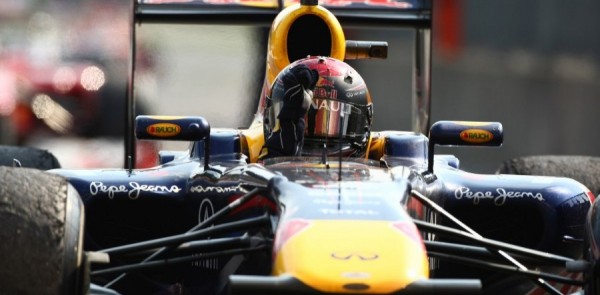
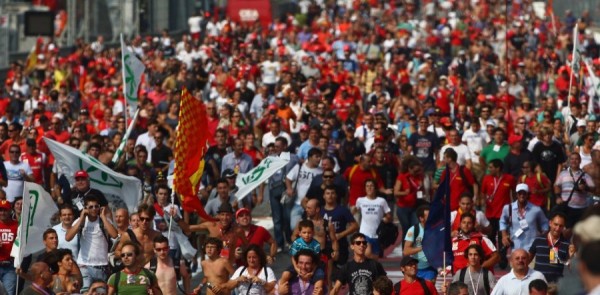
It couldn’t have been a better day for Sebastian Vettel at the Autodromo Nazionale Monza during round 13 of the Formula One championship this weekend, but although the 24-year old Red Bull driver didn’t literally lead the race from start to finish, he surely slapped his rivals in the face by winning and completely controlling the Italian Grand Prix. A happy team principal Christian Horner commented, “A phenomenal race today. To win in Monza is a dream come true and it was a really dominant performance by Sebastian today. We had great pit work, strong strategy and Seb made a really brave overtaking move to retake the lead from Fernando after the safety car. Thereafter it was a very controlled and well executed race.”

Photo by:motorsport.com
And that about sums up the race, or as Julius Caesar said 2100 years ago: “Veni, vidi, vici (I came, I saw, I conquered). Red Bull have been giving another demonstration of Vettel’s dominance, but it was not a prefect weekend for the Austrian team, as Mark Webber failed to score points and was out of the race after attempting to take fifth place from Felipe Massa.
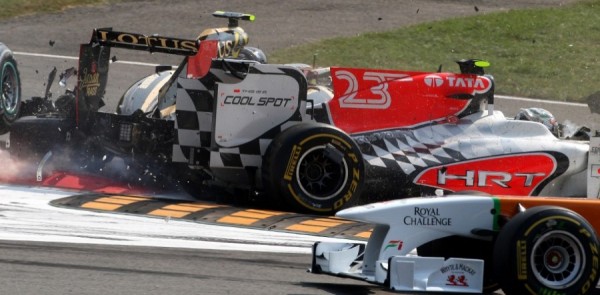
Vettel started from pole, but Fernando Alonso took him by surprise and squeezed his way past the German with a brilliant move, and the Ferrari driver was the first to enter the Variante del Rettifilo. “The start was not that good, Fernando was suddenly there and I didn’t know where he was coming from – it took me a while to see we were three going into Turn 1,” Vettel admitted. After the safety car came out after Vitantonio Liuzzi had caused havoc midfield by T-boning Vitaly Petrov and Nico Rosberg, Vettel had some time to think about how to get his leading position back.
By the time the safety car entered the pit lane again, Vettel had positioned himself close behind the Ferrari and with an equally brilliant and daring move took back his leading position by overtaking the Spaniard at the Variante della Roggia. “I kept second place and then after the restart, I was able to pass Alonso. He didn’t give me much room there, but it was just enough, so it was very enjoyable,” Vettel said. From then on it became business as usual for the 2010 champion, he started building a gap and a few laps later he was already five seconds ahead of Alonso.
As said not a perfect weekend for Red Bull, Webber who left from fifth place on the grid already lost two places as both Massa and Michael Schumacher had passed him on the first lap. “”I didn’t get the best start, me and Jenson were together, so I lost a few spots there,” Webber said. And added, “Then there was the restart after the safety car; I got a good one that time and managed to pass Jenson straight away.” So far so good, but one lap later he made a mistake trying to overtake Massa halfway the first chicane. He maneuvered his Red Bull on the inside of Massa’s Ferrari, then realized he wasn’t really ahead of him but by then it was too late and when Massa turned in he ran over the front wing of Webber’s car, while the Brazilian himself ended up facing the track in the wrong direction.

Photo bymotorsport.com
“I was trying to get the inside line for Turn 2. I probably wasn’t quite far enough to get completely inside, but when I tried to come out of the move the kerbing on the inside is obviously pretty high; as soon as I touched that I unfortunately made contact with Felipe and that was that,” Webber explained. On his way back to the pit lane the inevitable happened, what was left of his front wing got stuck under his car, “I couldn’t turn the car or brake. I went straight out of Parabolica and that was the end of my race.”
Again an excellent result for Button, who apparently was the only one who could match Vettel’s pace on race day, but he had a very bad start and lost a lot of time, and eventually had to settle for second place. Button about his poor start, “It’s frustrating to have had a problem at the start with the clutch, because it cost me dearly. I dropped back to sixth, then, at the restart, I had no way of keeping Mark back, because his straight line speed was so strong, so I slipped back to seventh.”
He then lost another four or five seconds as he had to slow down at Turn 1 to find a way past Webber and Massa who had tangled in front of him. But when he got going again he didn’t waste much time when he arrived at the scene of the Schumacher/Hamilton fight. “I was able to get my head down and passed Lewis and Michael within the space of about five corners, which was really satisfying,” Button said.
He then turned his attention to his next victim: Alonso. He had closed in on the Ferrari but Alonso was still quick on his soft tyres and only after both had changed to the medium compound, Button was able to overtake Alonso in a very daring move while both were exiting the first chicane. Button kept his foot down in the Curva Grande and stayed ahead and began reeling in Vettel, but although he was faster, he simply ran out of time. Button about the last part of the race, “On the whole, the team’s done a great job this weekend, but it’s the little problems that are frustrating: if you have one of those, then you’re not going to beat Red Bull and Vettel.”

Photo bymotordport.com
For Hamilton the race was less satisfying, he lost places at the start, and after the safety car came back in he wasn’t paying attention and was overtaken by Schumacher, a costly mistake as it took the 2008 champion almost 20 laps to find his way past the German. About his scrap with Schumacher he was rather diplomatic, “It was interesting being behind him, we were a little bit slow on the straight today, which meant it was hard to get past Michael, who was faster along the straight even when I had my DRS activated. I had to really fight Schumacher, but the fact that I finished ahead of him meant everything was okay. That’s racing.”
Button, however, had witnessed Schumacher’s weaving to keep Hamilton at bay, and was less flattering in his comments, “Fair enough, he was coming out of a corner on to the straight but why didn’t he keep to the left? He always went to the right, then left and back to the right. Not exactly what we agree is one move. Maybe he has just lost his memory.”
When Schumacher announced his return to Formula One ahead of the 2010 season, Hamilton was the one who immediately welcomed the German’s return, because he as a little boy always had been dreaming of an one-to-one fight with the seven-times World Champion. He since then only got a few opportunities to do so, but at Monza he got what he had dreamt about so often.
Schumacher had rocketed to a fourth place during the start, taking Webber, Massa and Button by surprise. At the restart he caught Hamilton, who later admitted he was ‘napping’ and was then in third place. From lap five onwards, a battle for third place unfolded, at the time Schumacher was third, Hamilton fourth and later as a result of the Webber/Massa incident Button was in fifth. Schumacher was very fast on the long straights of Monza, and even without using his DRS was faster than Hamilton who used his KERS and DRS, but was nevertheless not able to overtake the German.
A frustrated Hamilton shared his frustrations with his team over the radio when he asked himself aloud: “Are we that slow on the straight?” And indeed, the McLaren, powered by the same engine was a lot slower than the Mercedes. Hamilton was right behind the Mercedes, but time after time Schumacher showed him why he is a seven-time world champion, and defended his race line and the inside of the corners to fend off the Briton’s attempts to overtake him. Certainly the first part of the battle was worthy of a world champion, Hamilton tried and tried again and had to wait lap after lap before he finally saw an opportunity to get a good slipstream on the start finish straight and overtook the Mercedes.

Photo by motorsport.com
But he didn’t enjoy his victory for long, as a cunning Schumacher took back his third place after going side-by-side through the Curva Grande and just braking a little bit later than Hamilton. By then, Button was right behind Hamilton and the three battled in true Formula Ford style for many laps. But when Hamilton again tried to pass Schumacher and the latter forced him with two wheels on the grass, both cars lost momentum and Button was right there and used the opportunity to overtake both Hamilton and Schumacher, again one of those master moves this year’s Italian Grand Prix had to offer.
The fight cooled down a bit during the first round of pit stops, but when Hamilton had pitted he rejoined the race in fifth, again behind Schumacher and the second part of the battle commenced. Schumacher then blocked Hamilton twice, and as the regulations do not permit this, McLaren reported this to race control, hoping Schumacher would get a drive-through penalty. Team principal Ross Brawn asked Schumacher ‘to leave room for the other car at Ascari’ and the battle ended when he did give Hamilton more room and the Briton finally took fourth place.
Schumacher finished in fifth place and was delighted with the result. “It was an exciting race today, both for me and I think for all of our fans, and that is why I am happy. The fighting against Lewis was big fun, and my mirrors seemed to be very small at times,” he smiled. He wasn’t all too worried about his critics, “We are both known for driving on the limit, and that is what we did. I had to make my car as wide as a truck, and had to stretch the possible as much as I could, but in the end, as expected, he was still faster.”
Many things have been said about Schumacher squeezing Hamilton onto the grass, but one has to ask the question if it could have been the other way around if Hamilton would have had the chance. He did the same with Kamui Kobayashi at Spa two weeks ago, but the Japanese driver stayed where he was and Hamilton ultimately forced himself out of contention. In this case Schumacher stayed where he was while Hamilton tried his luck on the inside, but ran out of room and was, deliberately or not, forced onto the grass.
One could say Hamilton was perhaps a bit too optimistic thinking Schumacher would give him enough room to ‘allow’ him to overtake him, on the other hand one could also say Schumacher should have given him more room to do so, but he didn’t as he was defending his third position at the time, the best position he had in a race this year. Asked whether his fight had been clean and fair, Schumacher had no doubts, “I think so. As far as I was concerned there was no request to see the stewards, so I guess all is in order.”

Photo by motorsport.com
Brawn added to the discussion, “Michael drove a fantastic race, we know we haven’t got the fastest car but we have seen everything we know about Michael Schumacher.” Asked by the BBC what exactly had been discussed with the FIA during the race he replied: “The FIA were watching it and asking us to be careful. It is a balance between racing and not overstepping the mark. They asked us to be careful, which we were. It was great racing – and great for Formula One.”
Mercedes motorsport boss Norbert Haug summed up the afternoon in Monza, “A thrilling drive from Michael again today – the first half of the race delivered probably one of the best television shows of the year and I am sure lots of people at home were standing rather than sitting in front of their televisions, which was the case for us on several occasions today.”
And there is no way anyone can deny that, if it wasn’t for the battle between Schumacher and Hamilton that lasted twenty laps, the Italian GP would probably have been boring.
Third and sixth place for Alonso and Massa was all Ferrari could achieve during their home Grand Prix. Alonso gave the Italian tifosi at least a podium place and something to cheer about, but at the Ferrari headquarters in Maranello they have by now accepted Ferrari is more or less out of contention for this year’s title. During qualifying Alonso took fourth and Massa sixth place, also the best they could do, but it was technical director Pat Fry who found the right words to express how Ferrari felt ahead of the race, “If you work for Ferrari, you cannot be pleased with a fourth and a sixth place in qualifying, but we also need to be realistic about what we are currently capable of doing.”
Nevertheless Alonso earned the respect of the tens of thousands of tifosi by snatching the lead from Vettel at the first turn. “The start was really a magical moment, like in Barcelona, although we knew this was not our true position and that sooner or later we would have been passed,” Alonso later stated. “However, it was still very nice to see our fans cheering during those laps at reduced speed behind the safety car. There was nothing we could do about Vettel, he was much quicker than us and passed me easily.” It didn’t take Vettel very long to get away from the Ferrari to build up an advantage he would never give away again.
But because of the fights going on behind Alonso, he could relatively easy hold on to second position, but as soon as both McLarens finally managed to get past Schumacher, they began to gain on him and after the second and final round of pit stops the inevitable happened and Alonso lost his second place to a charging Button. Also the medium tyres played an important role, as they don’t suit the Ferrari very well, and Alonso knew he was in trouble, “With the softs, we could defend well, but on the mediums they [McLaren] still have a significant advantage and I think that if the race had gone on a few more laps, I would have been off the podium,” Alonso explained.

Photo by motorsport.com
Massa’s race was seriously hampered by Webber who with a somewhat clumsy move hit his Ferrari and spun it around, Massa couldn’t really do anything about it, but by the time he had pointed his car in the right direction again, had lost four places and was all of a sudden tenth. Massa, who had hoped for a podium place, explained what happened at the Variante del Rettifilo, “I braked slightly late, taking the inside line and, going round the outside, he would never have got past. He hit my wheels and that pushed me into a spin when we were at the second corner.” And he added, “That meant I had to pass so many drivers to try and catch up to the leaders again, but by then it was anyway too late.”
After his first pit stop Massa was in sixth place again, but he got stuck behind Schumacher. During the second round of stops Schumacher had pitted earlier, and Massa had hoped to get ahead of the German during his stop, but as he exited the pit lane he was once again behind the Mercedes. He wasn’t able to catch his old team mate, and crossed the finish line in sixth position, almost ten seconds behind Schumacher, and 42 seconds behind leader Vettel.
Ferrari had been beaten on home soil, but all the same team principal Stefano Domenicali put on his bravest face when he spoke with the media. “Honestly, this result is the best we could have hoped for, given our current technical situation. The fact Fernando is second in the Drivers’ Championship is amazing and I think it highlights the stuff our driver is made of.” He was especially happy with Alonso’s race, “Once again today, he delivered a majestic performance, either attacking, as he did at the start, or defending as in the closing stages.” Indeed, both Alonso and Massa did a great job, but it wasn’t enough and the title now seems further away than ever for the Italian team.
At Spa Bruno Senna was the one who caused problems after he had braked too late for the first corner after the start, at Monza it was an Italian who gave another demonstration of how to start a race and cause havoc at the first turn. HRT’s Liuzzi had been looking forward to his home Grand Prix, but probably never thought he would become the center of attention, albeit for all the wrong reasons.

Photo by: motorsport.com
Liuzzi had a clean start, but was way too optimistic after having overtaken a few cars, hit the grass on the right side and lost control, spun and slid through the grass straight into the path of Petrov and Rosberg, who didn’t even see the Italian coming their way. Rosberg was certainly disappointed his race ended prematurely, “I had a difficult start on my prime tyres but still managed to gain a place at the first corner, so it was quite good. Then Liuzzi flew like a torpedo over the grass and put me out of the race. It’s a pity because I had a strong strategy and, as Michael’s good result showed, our car was very strong this afternoon.”
Petrov was completely taken by surprise when he was hit by the HRT. “Vitantonio’s HRT came from nowhere and hit me big time, which brought my race to an end. There’s nothing I could have done to avoid this,” the Russian said. “I’m happy not to be injured, as the impact was quite strong and it could have been a nasty accident,” he added. Also unwillingly caught in the accident was Rubens Barrichello, who was not hit by Liuzzi, but sustained damage after Rosberg tried to get away. “I was lucky he didn’t hit me but I was then in the middle of the action and so had to stop the car. I didn’t hit anyone, but when Rosberg started to move he hit my nose, it was a difficult situation,” Barrichello said. He had to get back to the pit lane to pick up a new nose and a new set of tyres as well, but his race was over. “It’s a shame I got caught in that, as with the pace and the strategy I could have scored some points for the team today,” the Brazilian rued.

Photo by motorsport.com
The man who caused all this was also out of the race, but was convinced he hadn’t done anything wrong, “I had a good start getting past both Virgins, Lotuses and Daniel but then I went for another overtaking maneuver and got closed out.” It soon became apparent what he meant by ‘closed out’, as he later stated he had been forced onto the grass by Heikki Kovalainen, which is strange, as he had stated he had overtaken both Lotuses. The FIA didn’t agree with Liuzzi’s explanation either, and have rewarded him with a five-place grid penalty for the Singapore Grand Prix, which means he will be starting from the position he always starts a race: the back of the grid.
Liuzzi’s team mate Daniel Ricciardo had problems as well, as he didn’t even get away from his start position. “For some reason the car went into anti-stall, jammed in third gear and then the engine switched off,” the Australian rookie reported after the race. He was pushed back to the pit lane where his mechanics started his engine and he got back onto the track, but was called back in after his team found a cooling problem. That cost him again several minutes and Ricciardo wasn’t even classified in the end result, as he finished 14 laps behind Vettel.
Toro Rosso’s Sebastien Buemi also became a victim of the crash, “I made a very good start, but then when an HRT triggered a big accident, I took a knock at the back of my car and it was definitely damaged in some way, as it did not work at its maximum potential from then on.” While Buemi had to settle for tenth place, his Spanish team colleague Jaime Alguersuari again delivered an excellent result by finishing in seventh place, and was therefore ‘best of the rest’ this weekend. “I think I would like to start even further back on the grid for the next one, because it seems that whenever I have a poor grid position, I finish in the points!” Alguersuari jokingly said.
Alguersuari finished ahead of Paul di Resta’s Force India who had started from 11th on the grid. His four points meant Force India moved up to sixth place in the Constructor’s Championship. He also had to take avoiding action during the melee Liuzzi caused and took a short-cut through the first chicane. “After that we went aggressive with the tyre strategy and I think we extracted as much as we could because our ultimate lap time in race trim was not quite there today. So it’s great to pick up four more points, which helps us move up a place in the championship,” the Scot commented. For his colleague Adrian Sutil the race lasted nine laps, and had to park his car with a steering problem.

Photo by:motorsport.com
Despite his earlier problems, Barrichello finished in 12th position, while his Venezuelan team colleague took 11th place, just missing out on the points. “The pace at the beginning was quite strong, but in the second stint we started to lose time and it was difficult to maintain that good rhythm. At the end of the race we had a consistent pace but unfortunately it just wasn’t quick enough,” declared Maldonado.
Both Saubers retired after Kamui Kobayashi and Sergio Perez experienced gearbox problems. Kobayashi also was involved in the start crash, when the car ahead of him braked hard he lost his front wing and had make an unscheduled pit stop to replace his wing and later couldn’t select any gears and had to give up after 21 laps. Perez experienced the same problem, he first lost third gear and not much later had to give up as well with a gearbox failure.
The last three to finish the race were Kovalainen, Jarno Trulli and Timo Glock, they finished in 13th, 14th and 15th place respectively. Kovalainen, unaware of the fact Liuzzi accused him of forcing him onto the grass, “I had a great start, passing Jarno and then seeing the HRT coming into Turn 1 in a pretty hardcore style so I avoided that and was then up into a good position early on.” Trulli also avoided damage at the first corner, but later damaged his front wing and also had to make an extra pit stop.
And finally, Belgian Marussia Virgin driver Jerome d’Ambrosio was another one who didn’t make it to the finish line, he had to retire after one lap with a gearbox failure. “I was really looking forward to the race and then during the formation lap I realized that I had no second gear. I started the race but the car was undriveable, so I had to come back into the garage and retire.”
The title of a famous Lenny Kravitz song, but also appropriate to describe the current status quo in Formula One. It seems the eternal question whether the race for the 2011 title has already been run is about to be answered during the Singapore Grand Prix. Again, mathematically speaking the top five in the championship ranking are still candidates for this year’s title, but it is also clear Vettel’s victory at Monza was almost the final blow, and moral under Vettel’s pursuers has sunk to an all-time low.
Webber was the runner-up in the championship before the race at Monza, but as a result of his did-not-finish this weekend has now tumbled from second to fourth place, which he shares with Button, both drivers have gathered 167 points. The Australian scored 28 points during the last three races, while Vettel scored 68 points. “I think we’re all battling for second now,” Webber told the BBC after the race. “I think Seb needs to have a very, very incredibly disappointing finish to the season for anyone to take the championship off him at this point. He’s in a great position. He’s done a great job. And clearly the car was good today, so it was a missed opportunity for me,” a disappointed Webber said.
Button has boosted his chances significantly by finishing on the podium during the last three races, while Hamilton recorded two fourth places during the last three races, despite the fact he left the start grid from second position on all three occasions. He scored 24 points the last three races, Button scored 58 points. “Yes, it [the title]is gone and it has been for a few races, Button said. Hamilton added, “I doubt it’s still possible to beat Sebastian for the title, but we’ll keep pushing.”

Photo by: motorsport.com
Alonso also reckons the race for the title is over, “There are six races to go so the championship is impossible – not mathematically, but we are no longer in contention. We will now simply try to enjoy every race, to go for individual victories and fight for second place in the championship.” Massa agrees the title will go to Vettel this year, “I think he will just lose the championship if he stops racing now, and spends months at home – only then maybe he could lose the championship. But racing, I think it is very, very difficult for him to lose.”
Schumacher is also convinced Vettel is almost home, “I don’t see many ways that he can lose, but you still have to bring it to the end.”
Vettel himself seems to be somewhat superstitious, as he doesn’t want to discuss his huge points lead with reporters, and has maintained the principal of ‘it ain’t over ‘til it’s over’. “It is wrong to plan to spend $1million if you win the lottery so I won’t plan anything before it is won, I allow myself to say we are in a great position but it is not over,” the almost 2011 champion stated.
Vettel can clinch the title in Singapore if he wins the race and Alonso is fourth or lower.
Italian Grand Prix Full Results and current Championship Standings

Those who still have jobs are working longer for less, and don’t like their bosses. Can we do better?
Robert B. Reich is the former secretary of labor, a professor at the University of California, Berkeley, and the author of “Aftershock: The Next Economy and America’s Future.”
THE 5 percent of Americans with the highest incomes now account for 37 percent of all consumer purchases, according to the latest research from Moody’s Analytics. That should come as no surprise. Our society has become more and more unequal.
When so much income goes to the top, the middle class doesn’t have enough purchasing power to keep the economy going without sinking ever more deeply into debt — which, as we’ve seen, ends badly. An economy so dependent on the spending of a few is also prone to great booms and busts. The rich splurge and speculate when their savings are doing well. But when the values of their assets tumble, they pull back. That can lead to wild gyrations. Sound familiar?
The economy won’t really bounce back until America’s surge toward inequality is reversed. Even if by some miracle President Obama gets support for a second big stimulus while Ben S. Bernanke’s Fed keeps interest rates near zero, neither will do the trick without a middle class capable of spending. Pump-priming works only when a well contains enough water.
Look back over the last hundred years and you’ll see the pattern. During periods when the very rich took home a much smaller proportion of total income — as in the Great Prosperity between 1947 and 1977 — the nation as a whole grew faster and median wages surged. We created a virtuous cycle in which an ever growing middle class had the ability to consume more goods and services, which created more and better jobs, thereby stoking demand. The rising tide did in fact lift all boats.
During periods when the very rich took home a larger proportion — as between 1918 and 1933, and in the Great Regression from 1981 to the present day — growth slowed, median wages stagnated and we suffered giant downturns. It’s no mere coincidence that over the last century the top earners’ share of the nation’s total income peaked in 1928 and 2007 — the two years just preceding the biggest downturns.
Starting in the late 1970s, the middle class began to weaken. Although productivity continued to grow and the economy continued to expand, wages began flattening in the 1970s because new technologies — container ships, satellite communications, eventually computers and the Internet — started to undermine any American job that could be automated or done more cheaply abroad. The same technologies bestowed ever larger rewards on people who could use them to innovate and solve problems. Some were product entrepreneurs; a growing number were financial entrepreneurs. The pay of graduates of prestigious colleges and M.B.A. programs — the “talent” who reached the pinnacles of power in executive suites and on Wall Street — soared.
The middle class nonetheless continued to spend, at first enabled by the flow of women into the work force. (In the 1960s only 12 percent of married women with young children were working for pay; by the late 1990s, 55 percent were.) When that way of life stopped generating enough income, Americans went deeper into debt. From the late 1990s to 2007, the typical household debt grew by a third. As long as housing values continued to rise it seemed a painless way to get additional money.
Eventually, of course, the bubble burst. That ended the middle class’s remarkable ability to keep spending in the face of near stagnant wages. The puzzle is why so little has been done in the last 40 years to help deal with the subversion of the economic power of the middle class. With the continued gains from economic growth, the nation could have enabled more people to become problem solvers and innovators — through early childhood education, better public schools, expanded access to higher education and more efficient public transportation.
We might have enlarged safety nets — by having unemployment insurance cover part-time work, by giving transition assistance to move to new jobs in new locations, by creating insurance for communities that lost a major employer. And we could have made Medicare available to anyone.
Big companies could have been required to pay severance to American workers they let go and train them for new jobs. The minimum wage could have been pegged at half the median wage, and we could have insisted that the foreign nations we trade with do the same, so that all citizens could share in gains from trade.
We could have raised taxes on the rich and cut them for poorer Americans.
But starting in the late 1970s, and with increasing fervor over the next three decades, government did just the opposite. It deregulated and privatized. It cut spending on infrastructure as a percentage of the national economy and shifted more of the costs of public higher education to families. It shredded safety nets. (Only 27 percent of the unemployed are covered by unemployment insurance.) And it allowed companies to bust unions and threaten employees who tried to organize. Fewer than 8 percent of private-sector workers are unionized.
More generally, it stood by as big American companies became global companies with no more loyalty to the United States than a GPS satellite. Meanwhile, the top income tax rate was halved to 35 percent and many of the nation’s richest were allowed to treat their income as capital gains subject to no more than 15 percent tax. Inheritance taxes that affected only the topmost 1.5 percent of earners were sliced. Yet at the same time sales and payroll taxes — both taking a bigger chunk out of modest paychecks — were increased.
Most telling of all, Washington deregulated Wall Street while insuring it against major losses. In so doing, it allowed finance — which until then had been the servant of American industry — to become its master, demanding short-term profits over long-term growth and raking in an ever larger portion of the nation’s profits. By 2007, financial companies accounted for over 40 percent of American corporate profits and almost as great a percentage of pay, up from 10 percent during the Great Prosperity.
Some say the regressive lurch occurred because Americans lost confidence in government. But this argument has cause and effect backward. The tax revolts that thundered across America starting in the late 1970s were not so much ideological revolts against government — Americans still wanted all the government services they had before, and then some — as against paying more taxes on incomes that had stagnated. Inevitably, government services deteriorated and government deficits exploded, confirming the public’s growing cynicism about government’s doing anything right.
Some say we couldn’t have reversed the consequences of globalization and technological change. Yet the experiences of other nations, like Germany, suggest otherwise. Germany has grown faster than the United States for the last 15 years, and the gains have been more widely spread. While Americans’ average hourly pay has risen only 6 percent since 1985, adjusted for inflation, German workers’ pay has risen almost 30 percent. At the same time, the top 1 percent of German households now take home about 11 percent of all income — about the same as in 1970. And although in the last months Germany has been hit by the debt crisis of its neighbors, its unemployment is still below where it was when the financial crisis started in 2007.
How has Germany done it? Mainly by focusing like a laser on education (German math scores continue to extend their lead over American), and by maintaining strong labor unions.
THE real reason for America’s Great Regression was political. As income and wealth became more concentrated in fewer hands, American politics reverted to what Marriner S. Eccles, a former chairman of the Federal Reserve, described in the 1920s, when people “with great economic power had an undue influence in making the rules of the economic game.” With hefty campaign contributions and platoons of lobbyists and public relations spinners, America’s executive class has gained lower tax rates while resisting reforms that would spread the gains from growth.
Yet the rich are now being bitten by their own success. Those at the top would be better off with a smaller share of a rapidly growing economy than a large share of one that’s almost dead in the water.
The economy cannot possibly get out of its current doldrums without a strategy to revive the purchasing power of America’s vast middle class. The spending of the richest 5 percent alone will not lead to a virtuous cycle of more jobs and higher living standards. Nor can we rely on exports to fill the gap. It is impossible for every large economy, including the United States, to become a net exporter.
Reviving the middle class requires that we reverse the nation’s decades-long trend toward widening inequality. This is possible notwithstanding the political power of the executive class. So many people are now being hit by job losses, sagging incomes and declining home values that Americans could be mobilized.
Moreover, an economy is not a zero-sum game. Even the executive class has an enlightened self-interest in reversing the trend; just as a rising tide lifts all boats, the ebbing tide is now threatening to beach many of the yachts. The question is whether, and when, we will summon the political will. We have summoned it before in even bleaker times.
As the historian James Truslow Adams defined the American Dream when he coined the term at the depths of the Great Depression, what we seek is “a land in which life should be better and richer and fuller for everyone.”
That dream is still within our grasp.
Copyright.2011. The New York Times Company. All Rights Reserved

Recent Comments