By the time you get to the end of this column, your brain will have physically changed.
You will either be on the Curve of Forgetting or the Path to the Memory Palace.
Joshua Foer’s book “Moonwalking With Einstein: The Art and Science of Remembering Everything” — just published and already No. 3 on the Amazon.com best-seller list — is both fun and reassuring. All it takes to have a better memory, he contends, are a few tricks and a good erotic imagination.
The 28-year-old author, who got a $1.2 million advance and a movie option, honed his mnemonic skills in the basement of his parents’ house. He is the youngest of the famous trio of literary Foer brothers, so accomplished so soon that they give the hypercompetitive Emanuel brothers a run for their money.
Esther Foer, the president of a public relations firm whose parents were Holocaust survivors and who was in a displaced-persons camp in Germany early in her childhood, and Albert Foer, a think-tank president, encouraged their sons over family dinners at their home here in Washington. The New Republic’s Franklin Foer told The New York Observer that the nightly conversation featured “its share of current events and historical discussion, and, you know, analysis of French symbolism … but also its share of fart jokes.”
Even in his early 20s, Joshua Foer was forgetting to remember a lot, given “the superficiality of our reading” and our “Sisyphean task to try to stay on top of the ever-growing mountain of words loosed upon the world each day.”
Things slipped his mind — from when to use “its” and “it’s” to his girlfriend’s birthday to his plethora of passwords.
“I’m not sure if I know more than four phone numbers by heart,” he says, citing a Trinity College Dublin survey showing that a third of Brits under 30 can’t remember their own home land-line number. “Our gadgets have eliminated the need to remember such things anymore.”
He notes that “with our blogs and tweets, digital cameras, and unlimited-gigabyte e-mail archives, participation in the online culture now means creating a trail of always present, ever searchable, unforgetting external memories that only grows as one ages.”
Mark Twain once wrote the first letter of topics that he wanted to cover in a lecture on his fingernails. Soon we may be able to get Google on our fingernails to retrieve forgotten facts at a dinner party.
But what about internal memories? The experts claim that people of all ages can improve with technique, persistence, concentration and creativity. Foer set out to learn how to goose up the 3-pound mass of 100 billion neurons on his spine and ended up winning the 2006 United States Memory Championship in New York.
The basis of memory techniques is that the brain remembers visual imagery better than numbers, and erotic, exotic and exciting imagery best. So Foer asserts that you have to “take the kinds of memories our brains aren’t good at holding on to and transform them into the kinds of memories our brains were built for.”
Brains formed in the hunter-gatherer era are now trying to excel in the tweeting-blogging era.
“When forming images, it helps to have a dirty mind,” Foer writes. “Evolution has programmed our brains to find two things particularly interesting, and therefore memorable: jokes and sex — and especially, it seems, jokes about sex.”
He notes that Peter of Ravenna, author of the most famous memory textbook of the 15th century, said “if you wish to remember quickly, dispose the images of the most beautiful virgins into memory places.”
Memory grand master Ed Cooke, a young Brit who claims to have an average recall, teaches Foer some strategies. If you have a list to remember, you put the items in a path throughout a familiar place, like your childhood home. Imagine a person performing an action on an object. And try to throw in something lewd or bizarre. If you need to remember to get cottage cheese, Ed tells Josh, picture a tub of cottage cheese at the front door and visualize Claudia Schiffer swimming in it.
Ed coaches him in a system of memorizing a deck of cards in under two minutes that uses both familiar old memories and thrilling new pictures. Foer said his images devolved into “a handful of titillating acts that are still illegal in a few Southern states, and a handful of others that probably ought to be.”
The technique, he writes, “invariably meant inserting family members into scenes so raunchy I feared I was upgrading my memory at the expense of tormenting my subconscious. The indecent acts my own grandmother had to commit in the service of my remembering the eight of hearts are truly unspeakable (if not, as I might have previously guessed, unimaginable).
“I explained my predicament to Ed. He knew it well. ‘I eventually had to excise my mother from my deck,’ he said. ‘I recommend you do the same.’ ”
Thomas L. Friedman is off today.
Copyright. 2011. The New York Times Company. All Rights Reserved
The Lede is following breaking news of an 8.9 magnitude earthquake about 80 miles off the shore of Japan. Updates below mix news alerts with reports from bloggers and journalists on the ground.
6:12 P.M.|More on Surging Waters in Oregon and California
At least five people who came to the land’s edge in northern California and southern Oregon on Friday to watch as seas surged from the distant Japanese earthquake were swept away by those same waters, The Associated Press reported, with four being rescued. But at least one man who was taking pictures of the waves in northern California was still missing on Friday.
It appeared that The A.P. was referring to the same episode reported earlier by a local television station in Crescent City, Calif. That earlier report said that at least one person who had been swept away was dead and another still missing. The A.P. said that a man in Brookings, Ore., had been found dead on a commercial vessel, but that local officials said he appeared to have died of natural causes. The differing reports could not be immediately sorted out.
Coast Guard helicopters searched for a missing man near the mouth of the Klamath River in Del Norte County, Calif., The A.P. said, but his chance of survival appeared slim given the roughness of the ocean and the cold.
The video below is said to be from Brookings, Ore., and captures several boats as they are swept away by the retreating waters.
While the waters slowly surged, as captured by the video below, the waves did not top a 20-foot break wall that protects the city, and no home damage was immediately reported, The A.P. said.
5:17 P.M.|Radition Said to Surge at Nuclear Plant After Quake
As Japan awoke on Saturday to the devastation left by the one-two punch of an 8.9 magnitude earthquake and a deadly tsunami, Japanese officials warned that damage to a coastal nuclear reactor may have resulted in a radiation leak after its cooling system was knocked offline on Friday.
The video below shows the nuclear plant on Friday as the ocean surged around it.
News agencies and others were reporting that radiation levels surged around the plant.
Thousands of residents had already been evacuated from a 6-mile area surrounding the plant, in Fukushima, about 150 miles north of Tokyo.
What’s the best way to survive a tsunami? Christopher Beam, writing in Slate.com answers: Run uphill.
But he notes: “If you’re smart, however, you’ll have prepared ahead of time.”
Tsunami preparedness does not come free, however; indeed, it has been the subject of political wrangling in Washington, as The Associated Press points out on Friday.
A spending plan approved by the House of Representatives includes cuts to the Pacific Tsunami Warning Center, among other spending reductions to the National Weather Service.
This earthquake will have a huge impact on Japan. The Japanese have the best knowledge and technology available to deal with earthquakes. We regularly exercise with them on the possibility of this happening, but no one can really prepare for an earthquake of this magnitude.
The fact, however, that we have such a large American presence in Japan will help us help them. Already, today, you saw the American Air Force base at Yokota taking flights that couldn’t land at Narita.
We have naval vessels, helicopters and cargo planes that I am sure will be used to move relief and medical supplies to where they are needed.
I know that we will do everything possible to be as good a friend and ally to the Japanese as they have always been to us when disaster struck.
This is our turn to repay the kindness they showed us after Katrina.
The Twitter module on the righthand side of this blog has updates on the disaster in Japan. Among others, we are following these Twitter feeds at the moment:
Journalists:
@gakuranman (a writer)
@tokyoreporter (a reporter based in Nakameguro, Tokyo)
There are also several hashtags that can help when searching for news on Twitter: #jishin ; #tsunami ; #japan ; #earthquake ; #jpquake ; and, for how the tsunami is affecting the United States, #HItsunami (for Hawaii) and #CAtsunami (for California).
3:28 P.M.|Damage and a Death Reported in California
Surging waves touched off by the Japanese earthquake have claimed at least one life in northern California, according to a local TV station. The ABC affiliate in Crescent City reported that waves up to 6 feet high swept a group of four people out into the ocean Friday morning, and that one was known to have been killed. The report, which could not be immediately confirmed, did not specify the sexes or ages of the people, or explain what they were doing when the waves took them.
ABC affiliate KDRV confirmed that the waves pulled the four out to sea late Friday morning. Two of the other people were found alive and one is still unaccounted for.
Del Norte County sheriff’s spokesman Bill Stevens said most boats were pulled out of the harbor in preparation for Friday’s tsunami, but 35 vessels that remained are crashing into one another and sinking.
Farther south in California, KTVU television posted video showing damage to the harbor in Santa Cruz.
Thousands of people evacuated their homes in northern California, Reuters reported.
State officials warned residents not to assume that the danger had passed. “We’re just getting started,” said Jordan Scott, a spokesman for the California Emergency Management Agency, news agencies reported.
National Oceanic and Atmospheric Administration Center for Tsunami ResearchFrames from an animated model of the tsunami created on Friday by the National Oceanic and Atmospheric Administration.
The model is meant to provide a way to “estimate of wave arrival time, wave height and inundation area immediately after a tsunami event.”
The agency also created a colorful map showing the estimated force of the tsunami – represented in wave heights – as it exploded out from the epicenter.
NOAA
My colleagues on the Times interactive graphics desk have taken this data and created some very readable maps, including the location of the tectonic plates whose undersea movement caused the quake.
1:42 P.M.|An Account From an Academic Visiting Tokyo
William M. Tsutsui, a professor of Japanese business and economic history and a dean at Southern Methodist University in Dallas, was in Tokyo when the earthquake struck. He blogged about the experience and spoke to my colleague Maria Newman by telephone:
Professor Tsutsui was getting off a bus in front of a hotel in Tokyo, where he was traveling with a business delegation, when the ground began to shake.
“The door to the bus opened, and it began to shake and sway, and we saw groups of people running out of the hotel,” he said.
“The shaking became really very intense,” he said. “I used to live here, and I’ve visited here many times, and lived through many earthquakes, but this was far and away the strongest I’d ever felt. You could see the awnings on the hotel bouncing up and down.
“What was scariest was to look up at the skyscrapers all around,” he said. “They were swaying like trees in the breeze.”
He said he saw some window washers on a platform, swaying back and forth: “Luckily, they were wearing their harnesses, so they came out okay. It was truly terrifying.”
Dr. Tsutsui walked around the city afterward, experiencing the aftershocks of the first quake, and said that he saw no real damage to structures anywhere. They were left standing, he said, while people on bicycles and motorcycles had fallen over.
“It’s really a testament to Japanese construction methods,” he said. “I can’t imagine a quake of this magnitude in Los Angeles or San Francisco causing almost no damage. The contrast to Haiti could not be more extreme.”
He said he was also struck by the mood of the people all around him. They appeared frightened, he said, but they were calm and patient, even hours later when the streets became clogged with traffic and public transportation was halted, forcing people to scramble for a way to get wherever they were going.
“It’s been gridlock on the streets here for almost 12 hours, and in all that time, I’ve heard cars honking maybe three or four times,” he said.
Dr. Tsutsui said his group was scheduled to meet with the Japanese prime minister on Friday afternoon.
President Obama opened his news conference in Washington Friday afternoon with remarks about the disaster in Japan, and said the United States would provide “whatever assistance is needed.” Here are his remarks in full:
Before I begin, I want to say a few words about the terrible earthquake and tsunami that struck Japan earlier today.
First and foremost, our thoughts and our prayers are with the people of Japan.
This is a potentially catastrophic disaster, and the images of destruction and flooding coming out of Japan are simply heartbreaking.
Japan is of course one of our strongest and closest allies, and this morning I spoke with Prime Minister Kan.
On behalf of the American people, I conveyed our deepest condolences, especial to the victims and their families, and I offered our Japanese friends whatever assistance is needed.
We currently have an aircraft carrier in Japan and another is on its way. We also have a ship en route to the Mariana Islands to assist as needed. The Defense Department is working to account for all our military personnel in Japan. U.S. embassy personnel in Tokyo have moved to an off-site location, and the State Department is working to account for and assist any and all American citizens who are in the country.
Tsunami warnings have been issued across the Pacific, and we’ve already seen initial waves from the tsunami come ashore on Guam and other U.S. territories in Alaska and Hawaii, as well as on – along the West Coast. Here in the United States, there hasn’t been any major damage so far, but we’re taking this very seriously, and we are monitoring the situation very closely. F.E.M.A. is fully activated and is coordinating with state and local officials to support these regions as necessary.
And let me just stress that if people are told to evacuate, do as you are told.
Today’s events remind us of just how fragile life can be. Our hearts go out to our friends in Japan and across the region, and we’re going to stand with them as they recover and rebuild from this tragedy.
As my colleague Elizabeth A. Harris notes, BBC Travel is reporting that schools, universities, hotels and even restaurants in Japan have opened their doors to people in Japan who could not get home for the night.
Here is a map, in Japanese, to help people find a place to stay.
Another video clip from Tokyo Broadcasting System Television shows buildings being pushed off their foundations in the Kuwagasaki section of Miyako, a city on the northern coast about 125 miles northeast of Sendai. The whole neighborhood seems to float on the powerful surge of water as residents watch from higher ground:
This video shows office towers swaying rather dramatically in downtown Tokyo:
Though the images are a bit unnerving, the buildings are doing they way they were designed to do – move and flex with the seismic motion rather than stiffly resist it, which would cause them to crack and topple.
Over the years, Japan has spent billions of dollars developing the most advanced technology against earthquakes and tsunamis. The Japanese, who regularly experience smaller
Copyright. 2011. The New York Times Company. All Rights Reserved
Devastation as Tsunami Crashes Into Japan
Kyodo News, via Associated Press
The tsunami, seen crashing into homes in Natori, Miyagi prefecture. More Photos »
TOKYO — An 8.9-magnitude earthquake struck off the coast of Japan on Friday, the strongest ever recorded in the country and one of the largest anywhere in the last century. The quake churned up a devastating tsunami that swept over cities and farmland in the northern part of the country and set off warnings as far away as the West Coast of the United States and South America.
Japanese police officials said that more than 200 bodies were found in Sendai, a port city in the northeastern part of the country and the closest major city to the epicenter, and the government put the official death toll at more than 300. But with many people still missing there and elsewhere, the death toll is expected to rise. A senior Japanese official said foreign countries had offered to help and Japan was prepared to seek overseas assistance.
The government evacuated thousands of residents in a two-mile radius around a nuclear plant about 170 miles northeast of Tokyo and declared a state of emergency after a backup generator failed, compromising the cooling system. So far, the chief government spokesman, Yukio Edano, said no radiation leaks had been detected. But the government announced the plant would begin releasing some slightly radioactive vapor to reduce pressure. One person died at a nuclear plant, according to Bloomberg News. The earthquake and tsunami struck Japan in deadly tandem, unleashing scenes of horror throughout the northern part of the country. First came the roar and rumble of the earthquake shaking skyscrapers, toppling furniture and buckling highways. Then walls of water rushed onto shore, whisking away cars and carrying blazing buildings toward factories, fields and highways.
“I never experienced such a strong earthquake in my life,” said Toshiaki Takahashi, 49, an official in the Sendai City office. “I thought it would stop, but it just kept shaking and shaking, and getting stronger.”
Train service was shut down across central and northern Japan, including Tokyo, and air travel was severely disrupted. Cellphone service and landlines were down in the affected areas.
Television images showed waves of more than 12 feet roaring inland in Japan. The floodwaters, thick with floating debris shoved inland, pushed aside heavy trucks as if they were toys. The spectacle was all the more remarkable for being carried live on television, even as the waves engulfed flat farmland that offered no resistance. The tsunami could be seen scooping up every vessel in the ocean off Sendai, and churning everything inland. The gigantic wave swept up a ship carrying more than 100 people, Kyodo News reported.
Vasily Titov, director of the Center for Tsunami Research, said that coastal areas closest to the center of the earthquake probably had about 15 to 30 minutes before the first wave of the tsunami struck. “It’s not very much time. In Japan, the public is among the best educated in the world about earthquakes and tsunamis. But it’s still not enough time.”
Complicating the issue, he added, is that the flat terrain in the area would have made it difficult for people to reach higher, and thus safer, ground. “There are not many places they could go,” he said.
NHK television showed footage of a huge fire sweeping across Kesennuma, a city of more than 70,000 people in the northeast. Whole blocks appear to be ablaze. NHK also showed aerial images of columns of flame rising from an oil refinery and flood waters engulfing Sendai airport, where survivors clustered on the roof. The runway was partially submerged. The refinery fire sent a plume of thick black smoke from blazing spherical storage tanks.
Even in Tokyo, far from the epicenter, the quake struck hard. William M. Tsutsui, a professor of Japanese business and economic history at Southern Methodist University in Dallas, was getting off a bus in front of a hotel in Tokyo, where he was traveling with a business delegation, when the ground began to shake. “What was scariest was to look up at the skyscrapers all around,” he said. “They were swaying like trees in the breeze.”
Prime Minister Naoto Kan said the quake and tsunami caused major damage across wide areas.
The United States Geological Survey said the quake was the most severe worldwide since an 8.8 quake off the coast of Chile a little more than a year ago that killed more than 400. It was less powerful than the 9.1-magnitude quake that struck off Northern Sumatra in late 2004. That quake spawned a tsunami that killed more than 200,000 people around the Indian Ocean.
The survey said that Friday’s quake was centered off the coast of Honshu, the most populous of the Japanese islands, at a point about 230 miles northeast of Tokyo and a depth of about 17 miles below the earth’s surface.
The quake occurred at 2:46 p.m. Tokyo time, and was so powerful that buildings in central Tokyo, designed to withstand major earthquakes, swayed.
“This tremor was unlike any I’ve experienced previously, and I’ve lived here for eight years,” said Matt Alt, an American writer and translator living in Tokyo. “It was a sustained rolling that made it impossible to stand, almost like vertigo.”
Japanese media reported that there had been more than 70 aftershocks in the hours after the quake. About 12 hours after the first powerful one, another quake measuring 6.2 was detected on another fault line, but the United States Geological Survey said that it was too soon to tell if it was related to the 8.9 earthquake.President Obama said the United States “stands ready to help” Japan deal with the aftermath. “Michelle and I send our deepest condolences to the people of Japan,” he said in a statement. He later spoke with Mr. Kan and offered assistance.
American military airfields in Japan began accepting civilian flights diverted from airports that suffered damage, American officials said early Friday.
A spokesman for the American 7th Fleet in Japan said that Naval Air Field Atsugi had received several commercial passenger planes that could not land at Narita. Officials said that Yokota Air Base also received civilian flights. In addition, three American warships in southeast Asia will be ordered out to sea to reposition themselves in case they are directed to provide assistance, according to a 7th Fleet spokesman.
Officials around the Pacific warned residents of coastal areas to prepare for a possible tsunami, but the initial reports were of minimal to no damage in the first places that the wave reached. Relatively small tsunami waves were reported in Halmahera, Indonesia, but did little harm. Russia, China and Indonesia canceled their warnings after a few hours.
Gauges at Midway Island in the Pacific registered a wave amplitude of about five feet, according to Gerard Fryer, a geophysicist with the Pacific Tsunami Warning Center.
The tsunami assaulted Hawaii with 7-foot waves, although caused little damage, and was descending on the Western coast of the United States, where powerful surges were causing boats to sink near San Francisco.In Japan, television images showed survivors in a home surrounded by water, waving white sheets from the upper floors of buildings. News reports said the earthquake had forced the Tokyo subways to empty while airports were closed. Many residents set off on epic journeys home, walking for miles across a vast metropolitan area. In a video posted on YouTube, rumbles shook a supermarket as shopkeepers rushed to steady toppling wares and the classical music soundtrack played on.
Initial television coverage from coastal areas showed very few people actually in the water. The initial impact of the wave seemed to have been enormous, tipping two huge cargo vessels on their sides at one port and tearing others from their moorings.
Smaller vessels, including what looked like commercial fishing trawlers, were carried inland, smashing into the superstructure of bridges as the waters surged. Public broadcaster NHK reported that a large ship swept away by the tsunami rammed directly into a breakwater in Kesennuma city in Miyagi prefecture. Video footage also showed buildings on fire in the Odaiba district of Tokyo, The Associated Press reported.
A second major earthquake of 7.4 magnitude was reported as aftershocks shook the region. Japanese media reported mobile phone networks were not working.
Power blackouts were affecting about 2 million residents around Tokyo alone, the government said. Cell phone service was severely affected across central and northern Japan as residents rushed to call friends and relatives as aftershocks struck.
The quake occurred in what is called a subduction zone, where one of the Earth’s tectonic plates is sliding beneath another. In this case, the Pacific plate is sliding beneath the North American plate at a rate of about 3 inches a year. The earthquake occurred at a depth of about 15 miles, which while relatively shallow by global standards is about normal for quakes in this zone, said Emily So, an engineer with the United States Geological Survey in Golden, Colo.
Ms. So said that according to her agency’s calculations, the quake was of magnitude 8.9. It had been preceded by what seismologists call foreshocks — smaller quakes in the same area. The largest of these was a magnitude 7.2 quake two days before, centered about 25 miles south of the spot where the earthquake struck Friday.
In a subduction quake that occurs underwater, as this one did, the sudden movement of a portion of one of the plates can displace enormous amounts of water, triggering a tsunami. As the tsunami waves approach shallow coastal areas, they tend to increase in height.
The devastation often comes from a succession of waves, with the first few being relatively small. The waves can propagate across oceans at speeds of 500 miles an hour or greater. With Friday’s quake occurring only about 80 miles offshore, people in the closest coastal areas would not have had much time to evacuate.
Defense Secretary Robert M. Gates was briefed on the disaster during a trip to Brussels. Geoffrey Morrell, the Pentagon press secretary, said there were no reports of damage to American military facilities or naval vessels.
The Hang Seng index in Hong Kong and the Straits Times in Singapore slumped after news of the quake, ending about 1.6 percent and 1 percent down, respectively.
Martin Fackler reported from Tokyo, and Kevin Drew from Hong Kong. Daniel Krieger contributed from Osaka, Japan, Bettina Wassener from Hong Kong, Alan Cowell and Richard Berry from Paris, Michael Schwirtz from Moscow, Henry Fountain and Maria Newman from New York, Thom Shanker from Washington, Mike Hale from Honolulu, and Elisabeth Bumiller from Brussels.
Copyright. 2011. The New York Times Company. All Rights Reserved.
In Eric Mendelsohn’s “3 Backyards,” the sunlight spearing through thick green foliage on a summer afternoon in a Long Island hamlet evokes a magical fairy-tale jungle. Here secrets are buried, and wild creatures roam. The air seethes with the sounds of insects, birds and the neighborhood. On the ground, tiny creatures wiggle and squirm; the earth is alive.
How could this be, on banal, heavily trafficked Long Island in a suburban village near New York City? But in the films of Mr. Mendelsohn, who was born in Old Bethpage, N.Y., the landscape feels as enchanted as any you would find in a children’s storybook. Beautiful and forbidding, it is territory fraught with danger and irresistible to curious explorers.
Mr. Mendelsohn’s ability to evoke a child’s-eye view of a suburban environment is the most seductive element in a movie whose primary attraction is an atmosphere so heady that you can almost taste it. To a less intense degree, “Judy Berlin,” Mr. Mendelsohn’s first feature film, in 1999, had a similar setting and conjured a chillier version of the same sensuousness. That movie won Mr. Mendelsohn a directing award at the Sundance Film Festival, and “3 Backyards” won the same award in 2010. He is the only director to have won twice.
The conceit that binds this movie’s three vignettes is Mr. Mendelsohn’s notion that while the front lawns of suburbia reflect how residents choose to present themselves to the outside world, their backyards are Freudian maps of their unconscious lives. The concept might seem insufferably precious if Mr. Mendelsohn didn’t work with a gifted cinematographer (Kasper Tuxen), whose every jewel-like image and perfectly plotted camera angle sustain a mood of exquisite mystery. Although the twittery, woodwind-based semiclassical soundtrack by Michael Nicholas is obtrusive at times, it is an integral part of an overall design in which little is left to chance, and every detail contributes to a tightly schematic, microcosmic poetic concept.
The movie interweaves three enigmatic stories without forcing them to connect. A tight-lipped businessman, John (Elias Koteas), whose marriage and finances are in disarray, leaves for a trip only to find his flight has been canceled. During his layover at an airport hotel, he sneaks back home, prowls his own property, surreptitiously observes his wife (Kathryn Erbe) through a window and telephones her, pretending he is calling from the plane. At a diner near the hotel, he watches a young African immigrant (Danai Gurira), desperate for work, as she applies for a job as a waitress. She smiles at him. He tails her when she leaves; tragedy follows.
Christina (Rachel Resheff), a saucer-eyed girl who has stolen her mother’s bracelet, misses her morning bus. While racing to school through backyards and fields, she encounters an ominous stranger masturbating in a shack. Later she releases a lost dog she discovers leashed to a tree. Without pushing the metaphor, lost dogs symbolize the characters under the director’s magnifying glass.
In the third and strongest vignette, Edie Falco, who starred in “Judy Berlin,” plays Peggy, a garrulous amateur painter, married with two children, who is constantly yammering on the phone with a neighbor. Insatiably curious about a depressed, reclusive movie star (Embeth Davidtz) who has just rented a house in the neighborhood, Peggy is as excited as any schoolgirl to live close to a celebrity. The better to get to know her, she volunteers to drive her to the ferry.
During the trip, Peggy peppers her passenger with prying small talk. When the star bursts into tears, Peggy aggressively offers her shoulder to cry on but is devastated and angry when the star refuses to confide her troubles. While watching their interaction, I was reminded of a time I sat directly behind Frank and Kathie Lee Gifford at a Carnegie Hall concert and watched the parade of ogling well-wishers from the audience approaching them with avid, envious smiles.
For the deeply likable Ms. Falco, the role is a turnabout in which she exposes the underside of her friendliness: a repugnant attitude of disingenuous good will. Ms. Falco’s performance is of a piece with the film’s other microscopically observed portrayals, in which volumes of information are conveyed indirectly, by inference. The world of “3 Backyards” is Wonderland in miniature.
“3 Backyards” is rated R (Under 17 requires accompanying parent or adult guardian). It has a scene of sexual content.
3 BACKYARDS
Opens on Friday in Manhattan.
Written and directed by Eric Mendelsohn; director of photography, Kasper Tuxen; edited by Morgan Faust, Jeffrey K. Miller and Mr. Mendelsohn; music by Michael Nicholas; production design by Markus Kirschner; costumes by Suzanne McCabe and Susan Carrano; produced by Rocco Caruso, Amy Durning and Mr. Mendelsohn; released by Screen Media. At the IFC Center, 323 Avenue of the Americas, at Third Street, Greenwich Village. Running time: 1 hour 28 minutes.
WITH: Embeth Davidtz (Actress), Edie Falco (Peggy), Elias Koteas (John), Rachel Resheff (Christina), Wesley Broulik (Big Man), Kathryn Erbe (John’s Wife) and Danai Gurira (Woman in Blue Dress).
Peter King’s broad-brush indictment of the “Muslim community.”
By William Saletan Posted Wednesday, March 9, 2011, at 8:47 AM ET
Thursday morning, the House Committee on Homeland Security will begin hearings on terrorism among American Muslims. The first hearing is titled “The Extent of Radicalization in the American Muslim Community and that Community’s Response.” Critics accuse the committee’s chairman, Rep. Peter King (R-N.Y.), of implying that all Muslims are guilty of terrorism by association. But King denies casting blame loosely among American Muslims. Instead, he now casts blame loosely among American Muslim “leaders.”
In December, after his election as chairman of the Homeland Security Committee, King tried to clean up his language. “The great majority of Muslims in our country are hardworking, dedicated Americans,” he conceded in a Newsday op-ed. Instead, he shifted his indiscriminate fire to Muslim “leaders.” In terrorism cases, he wrote, “Federal and local law enforcement officials throughout the country told me they received little or—in most cases—no cooperation from Muslim leaders and imams.” King used similarly broad language in a recent New York magazine piece, warning American Muslims that “their current leadership is not serving them well.”
Last Sunday on CNN’s State of the Union, Candy Crowley cited the North Carolina study and asked King, “Doesn’t that tell you there is cooperation there?” King replied: “No. I’m aware of a number of cases in New York where the community has not been cooperative.” King cited a guy who “went to two mosques in Suffolk County in Long Island, said he wanted to engage in jihad. They said we don’t do it, but never told the police. And then he went off to Afghanistan. So there’s just one example. I can give others.” But King has never named more than three or four such cases. In his March 6 profile, New York‘s Robert Kolker reported that King “refuses to name the sources who claim Muslims are uncooperative,” claiming that “they’re always off the record with him.”
Monday on Fox News, King said his upcoming hearings would feature an American Muslim who “feels very strongly that the current Muslim leadership is not doing its job.” A day later, King told the same network that when Muslims come forward to report suspicions of dangerous extremism, “they do not get the cooperation from the imams and from their leaders.” He brushed off the North Carolina study, accusing its authors of “leaving out any number of terrorist financing cases which there was no support from the Muslim community on.”
Through this phrase—the “Muslim community”—King has casually substituted unnamed Muslim “leaders” for Muslim citizens as representatives of American Islam. Yesterday on MSNBC, Eugene Robinson of the Washington Post told King, “You have alleged that the Muslim American community has not been forthcoming in helping law enforcement officials deal with radicalization.” King replied: “I talk to cops and counterterrorism people on the ground all the time, and they get virtually no cooperation.” Robinson accused King of assuming “that the Muslim American community, a religious minority in this country, is somehow abetting and aiding and giving shelter to this process of radicalization, when that is clearly not the truth.” King shot back: “It is the truth.”
King says Thursday’s hearing will address his “hypotheses” about extremism among American Muslims. That’s a good way to judge the proceedings. Let’s see whether he produces evidence that Muslim leaders in general are abetting radicalism, covering up for terrorists, or refusing to cooperate with law enforcement. If he doesn’t, the hearings may illuminate something else: not “the extent of radicalization in the American Muslim community,” but the extent to which the “Muslim community” has become a slur for tarring all Muslims with the sins of a few.
AS MELTDOWNS GO, the way Villanova’s basketball team ended last season sure looked like it would be hard to ever surpass.
Well, it took all of 12 months to prove that theory wrong.
The 2009-10 Wildcats were 22-2. Then they lost four of their last six heading into the Big East Tournament, where they had a double bye and were beaten by Marquette in a 4-5 quarterfinal, needed overtime to move past 15th-seeded Robert Morris in their NCAA opener before being sent home by 10th-seeded St. Mary’s.
Now, that seems almost tame by comparison. Because this Villanova team, after starting 16-1, has gone 5-10 to drop out of the Top 25 for the first time since the final poll of 2007-08. Those Wildcats would survive a five-game losing streak at midseason (all by double-digits) to barely make it into the Madness. Then they made it to the Sweet 16.
There are those who would tell you these Wildcats might have trouble making the Sweet 16 of the NIT. That’s what happens when you lose five straight. The first four were to ranked opponents. But Tuesday they blew a 16-point halftime lead, a Big East tourney record, and lost in the closing moments to 15th-seeded South Florida, which had won nine times.
Not exactly the way to get on the good side of the selection committee.
“You couldn’t have scripted what happened at Rutgers [one-point loss on four-point play at buzzer on Feb. 16], or scripted what happened [Tuesday],” coach Jay Wright said yesterday. “But that’s the way it’s been going. There’s nothing we can do about it now, except move on to the next challenge. You don’t want to learn lessons that way. It’s tough because these [four] seniors haven’t known anything but success.”
Still, the Wildcats figure to get one of the 37 at-large bids into the 68-team NCAA field, at least according to those who compute this stuff best. This year, they’ve added three at-large bids, which doesn’t hurt.
ESPN Bracketologist Joe Lunardi did drop them from a 7 seed to an 11. Yet he doesn’t have them as one of his last four out. Of course, nothing is etched in stone until your name is called on Sunday. But he’s annually pretty accurate. And in yesterday’s edition of “Bracket Math” he wrote, “Let me quickly and directly answer the most pressing question of the day: Villanova is NOT going to miss the NCAA Tournament (and this is coming from a St. Joe’s guy!) . . . Villanova’s seed is, and should be, very much in doubt. Its selection . . . is not.”
His rationale? It’s about a body of work, even though no team since the field was expanded to 64 in 1985, and most likely ever, has made it riding a five-game losing streak. Lunardi notes that Villanova has eight wins over teams that are currently in the field, three of which have come during the “allegedly fatal slide.” He contends there will be plenty of teams with a “similarly mediocre profile.”
Not the most ringing endorsement. But it sounds like enough, which is what counts.
Villanova hasn’t missed the tourney since 2004.
Of course, any number of things could happen across the country in the next few days to alter the equation. Or perhaps the Wildcats will survive the cut and get sent to one of those play-in games in Dayton, on Tuesday or Wednesday.
Yesterday, the chair of the selection committee, Ohio State athletic director Gene Smith, was asked in a conference call about the weight attached to how a team finishes.
“As most people know, for a period of time we had the last 10 or the last 12 on nitty-gritty sheets,” said the man who also is dealing with Jim Tressel-gate. “We decided a couple of years ago to eliminate that consideration. We leave that to each individual committee member to determine if that’s an important criteria for them.
“It’s not an important criteria for the entire committee. Each . . . member takes it into consideration in their own way.”
Statsheet.com has Villanova’s RPI at 34, with the 23rd-ranked strength of schedule. Seems about right.
Jerry Palm, the BCS guru who also projects the brackets for CBSSports.com, lists Villanova as a 9 seed.
Both Lunardi and Palm, by the way, have Temple as a 7.
Fairly enough, Wright was asked after the USF game about his team’s NCAA chances. “I purposely haven’t focused on it,” he said. “We haven’t talked about any of it. We were concentrating on the Big East Tournament. So I know this sounds bizarre but I don’t know where we stand with any of that and I will find out tomorrow, but I would say after this that there is a little concern and just have to look at the situation.”
Since the last major change in the RPI formula in 2005, the team from a BCS conference with the highest number that didn’t make it was Cincinnati in 2006, at 40.
In Wright’s situation there are obviously other issues to worry about, such as all the things his guys messed up in the final minute against South Florida: missed free throws, one by the Big East’s leading foul shooter, a horrible turnover in the backcourt by his point guard, lack of defense on the decisive basket. Did we mention that the Wildcats, after scoring 49 in the first half, had two field goals in the last 15 minutes? Or that Wright felt the need to call a timeout 44 seconds in the game and another 2:24 after intermission?
By this point a lot of that shouldn’t be happening, regardless of opponent.
And at this point there’s really not a lot more Wright or his players can say about it that they haven’t already uttered. But, can they do anything to change their present reality by next week?
“I don’t have the answer for what we are going to do next,” Wright admitted at Madison Square Garden.
At the moment, there probably are a lot of teams that wouldn’t mind drawing the Wildcats in their pod. Who would have thought that 6 weeks ago? Or maybe even 3?
The only known is that they have at least one game left. Most outsiders would probably say it will be their last. Logic would be on their side. Still, there’s a reason they call this month Madness.
If nothing else, they will have time for Corey Stokes’ left hamstring to get healthier. Ditto Corey Fisher’s right knee. Tuesday was the first time in 10 games that those two and Maalik Wayns – their three double-digit scorers – each had at least 10 points. Stokes did miss four of those games with injuries (three due to turf toe).
“We take missing players into consideration, based upon the situation,” Smith said. “We look at how those teams responded to the adversity they faced. But we still look at how those teams performed at the end of the day.”
As for Mouphtaou Yarou, who was helped off with 4:58 to go in the first half and never returned, he has bruised right ribs and a right shoulder. He was tested at MSG for a possible concussion but showed no signs. He’s scheduled to be reevaluated tomorrow. The players were given yesterday and today off.
“We have to make sure we get over this [loss],” Wright said.
And hope they can at least make something of their last chance. Wherever that might be. *
WASHINGTON — The Libyan leader Col. Muammar el-Qaddafi has “tens of billions” in cash secretly hidden away in Tripoli, allowing him to prolong his fight against rebel forces despite an international freeze on many of the Libyan government’s assets, according to American and other intelligence officials.
Colonel Qaddafi has control over the huge cash deposits, which have been stored at the Libyan Central Bank and other banks around the Libyan capital in recent years, the officials said.
Since the protests and fighting erupted, some of the money may have been moved into Colonel Qaddafi’s Tripoli compound, Bab Al Azizia, according to one person with ties to the Libyan government. While United States intelligence officials said they could not confirm such a move, one official said that Colonel Qaddafi “likely has tens of billions in cash that he can access inside Libya.”
The money — in Libyan dinars, United States dollars and possibly other foreign currencies — allows Colonel Qaddafi to pay his troops, African mercenaries and political supporters in the face of a determined uprising, said the intelligence officials, speaking on the condition of anonymity.
The huge cash reserves have, at least temporarily, diminished the impact of economic sanctions on Colonel Qaddafi and his government. The possibility that he could resist the rebellion in his country for a sustained period could place greater pressure for action on the Obama administration and European leaders, who had hoped that the Libyan leader would be forced from power quickly.
President Obama’s national security team met at the White House on Wednesday to discuss how to oust the Libyan leader, including the possible imposition of a no-flight zone, but made no decisions, according to the White House press secretary, Jay Carney.
The United States has relied so far on imposing financial pain on the Qaddafi government, freezing nearly $32 billion of Libya’s assets, according to Treasury Department officials. The United Nations and the European Union have imposed separate sanctions and have frozen assets as well.
But those actions have been limited to funds in the international banking system and to business investments outside of Libya. Inside the country, the intelligence officials said, Colonel Qaddafi has amassed a huge rainy day fund of cash.
Kenneth Barden, a lawyer who specializes in Middle East financing and advises financial institutions on ways to guard against money laundering, said there were indications that Colonel Qaddafi had moved billions of dollars in assets just days or weeks before the outbreak of violence in Tripoli, apparently to protect his family wealth from global sanctions.
“The money that is kept in Qaddafi’s name is probably small,” Mr. Barden said, “but he’s got a lot in the names of family members and close associates.”
But Colonel Qaddafi probably began hoarding liquid assets far earlier, officials said. He has built up Libya’s cash reserves in the years since the West began lifting economic sanctions on his government in 2004, following his decision to renounce unconventional weapons and cooperate with the United States in the fight against Al Qaeda. That led to a flood of Western investment in the Libyan oil and natural gas industries, and access to international oil and financial markets.
Colonel Qaddafi, however, apparently feared that sanctions would someday be reimposed and secretly began setting aside cash in Tripoli that could not be seized by Western banks, according to the officials. He used the Libyan Central Bank, which he controls, and private banks in the city. He also directed that many government transactions, including some sales on the international oil spot market, be conducted in cash. “He learned to keep cash around,” said the person with ties to Libyan government officials, who asked to remain anonymous for fear of putting them in jeopardy.
The reserves are likely to prove even more critical to Colonel Qaddafi as the government’s revenues dwindle from oil production.
With the unrest, Libya is pumping just 300,000 to 400,000 barrels of oil a day, down sharply from its typical production of 1.8 million barrels a day, according to Holly Pattenden, head of oil and gas analysis at the Business Monitor International in London.
The current levels would be worth about $30 million to $40 million a day, but export markets are now virtually closed to the country, as international banks refuse to provide letters of credit for oil company shipments, according to Greg Priddy, a global oil analyst with the Eurasia Group in Washington.
“I don’t think they are deriving a lot of income from the export market right now,” Mr. Priddy said. “The international banks don’t want to touch it.” Still, several small Libyan refineries remain open, and Mr. Priddy said they were probably refining oil for the domestic market and fuel for Colonel Qaddafi’s military operations.
With other sources of income drying up, the Libyan leader is heavily dependent on his pile of cash, and apparently spending it to stay in power. He is making cash payments to political supporters in Tripoli to retain their loyalty, while also buying the services of African mercenaries.
The person close to the government estimated that 3,000 to 4,000 mercenaries from Mali, Niger and a rebel group operating in Darfur, Sudan, the Justice and Equality Movement, have been hired by the Libyan government for at least $1,000 a day apiece. United States intelligence officials said they could not confirm those numbers or amount of payments.
Intelligence officials and other experts credit Colonel Qaddafi with becoming very adept at hiding his money, and said it had often been difficult to distinguish between the assets of the Libyan government, including its $70 billion sovereign wealth fund, and the Qaddafi family’s assets.
Mr. Qaddafi’s history of financial dealings indicate that he has “surreptitious accounts and unaccounted sums that are significant enough to give him security even if the world caves in on him,” said David Aufhauser, a top Treasury Department official in President George W. Bush’s administration.
Justice Department documents show that Libya had worked with Swiss banks to launder international banking transactions for years, with “hundreds” of senior Libyan officials allowed to surreptitiously move money.
Tim Niblock, an expert on Libya and professor at the University of Exeter in Britain, said he believed that Colonel Qaddafi had hidden cash as far back as the 1990s. He said that it was part of a larger effort by the Libyan leader to protect his money from both the international community and his domestic foes.
“He’s always aware that he faces problems from outside and within,” Professor Niblock said. “It would be quite foolish for him to not amass money for an eventuality like this.”
Helene Cooper contributed reporting from Washington, and David Rohde from New York. Barclay Walsh contributed research from Washington.
Copyright.2011. The New York Times Company. All Rights Reserved
If you’ve met Guy or seen him speak, you know he’s a charming and persuasive entrepreneur. He’s sprinkled his brand of fairy dust on the Apple Macintosh computer and a string of startups backed by his venture capital firm, Garage Technology Ventures.
Can energy efficiency be “enchanting?” Denis Du Bois reviews the latest marketing book from former Apple Computer evangelist Guy Kawasaki.
I read “Enchantment” looking for new ideas for making energy efficiency enchanting. In my field I encounter people every day who are frustrated that more energy consumers won’t take simple steps that would ultimately save them money.
Energy efficiency is the fastest and cheapest path away from coal and gas, and toward a low-carbon future. Energy entrepreneurs, utilities and policymakers are looking for that holy grail — the key to achieving widespread behavior changes and smart investments in energy-saving products, from CFLs to chillers.
I have come to expect every business author to spend the first half of the book selling me on what a great book it is.
But Guy’s reputation precedes him — and nine successful books preceded this one. Guy doesn’t waste any time getting down to the business of enchantment. He jumps right in to explain how he believes enchantment transforms situations and relationships — how to make products and companies “enchanting.”
I came away from the book with a long list of ideas, so I called Guy to find out more about how he thinks we can make something like an energy audit or LED light fixtures enchanting.
Guy Kawasaki is the author of “Enchantment: The Art of Changing Hearts, Minds, and Actions.” Photo: Bryn Colton/Assignments
Guy Kawasaki: There are two primary factors going on there. One is of course costs, that it saves money to be energy efficient. Second is the societal responsibility. And so one would hope that between those two factors you can turn this into a cause that stands for a way for people to make the world a better place. Arguably, you may have an easier time than some products which may be, shall I say, conspicuous consumption. So it’s all about positioning.
Denis Du Bois: : Positioning — and patience. It’s fairly easy to get people to make short-term behavior changes like turning off lights or running appliances during the off-hours of the day. But getting those behavior changes to last has turned out to be a big challenge.
Guy: Well, it took Apple 25 years to make the desktop successful. There are issues like that, that take time.
Denis: Guy writes that one way to speed things up is to create “smooth paths” for people to make the right decisions for their businesses and homes.
He tells a story about a backyard party at his house where he wanted the guests, mostly teenagers, to separate the recycling from the trash. The story illustrates that, if you a create smooth path to doing the right thing, people — even teenagers — tend to follow it.
Making a round hole in a trash can lid is one thing. Getting a family to spend its hard-earned cash on a more energy-efficient appliance is another. How would Guy create a “smooth path” to paying more for an energy-sipping refrigerator, when the family could get a bigger one for less?
Guy: Well, some of this has to start at the manufacturer. There could be an education campaign where a printer or a refrigerator or a computer has a sticker that says it is Earth-friendly. You could actually train people to expect that, so that even if there are other models, there should be a predisposition to buy the better model, the more ecological model.
I think it’s also using salient points, that is, yes this appliance may cost this much more now, but most people keep a refrigerator for, I don’t know, 20 years. Suppose it costs a $100 more now, but you save $100 a year for 20 years, well that’s $2,000 versus $100. So some of it is how you communicate the difference — that it’s cheaper in the long run. And there is a whole section in the book about using salient points. And this is a salient point.
Denis: ”Salient points” is Guy’s term for translating facts and figures into meaningful metrics for consumers. It’s in chapter 4, which is all about communicating using simple messages.
Chapter 5 has a section on either reducing the number of choices, or increasing the number of choices, to encourage people to make a buying decision. A yogurt shop does well by increasing the number of toppings, but a street vendor boosts sales by putting out fewer kinds of jelly. Guy stops short of telling readers which approach is best.
Guy: Yeah, well I didn’t say it would be simple. But both can work.
Denis: There are many ways to save energy, maybe to many. The idea is that with too few choices a consumer might not find one that appeals to them. But with too many choices the same consumer might be paralyzed by indecision. One factor is the life cycle of the choice.
Guy: If you buy one and you don’t like it, you might always think, well, I should have bought the other flavor of jelly. Now I am stuck with it. On the other hand, in the case of yogurt, nobody sits around with yogurt for three months.
Sometimes more choice helps. But sometimes more choice hurts. Apple is an interesting case. When you walk into an Apple store, there is the iPod Nano, there is the iPod Regular. And then each one comes in six colors. So there are three or four models times six colors.
And then there is eight gigabytes, 16 gigabytes and 32 gigabytes. Tthat’s a lot of combinations. You could build a case that Apple has a way too many choices. On the other hand, you walk into the Apple store, there are these hundreds of choices and you say, wow, Apple has really figured it out!
Denis: Psychologists have figured out that consumers sometimes hesitate to make a decision because they don’t want to reduce their options. Fears like that are sources of resistance when it comes to adopting energy efficiency measures. Inertia is another source of resistance.
Overcoming resistance is the subject of an entire chapter of Enchantment. There’s a whole list of techniques — they’ll sound familiar to anyone who’s spent more than a few hours studying good salesmanship. Techniques like getting neighbors or role models to do something first, or making it seem like everybody’s doing it. I asked Guy which techniques he thinks will work best.
Guy: There are several parameters. Each group will have a different hot button. For some people it is the fear of global warming, where polar bears are now getting sun tans and dying. For other people it may be the cost savings. And there are so many parameters, probably not the same parameters work for the same people.
My nine year old daughter wants polar bears to be healthy. It is difficult to translate to her that if you turn the light off, we’ll save money. But telling her that if you leave your light on all the time, there are going to be fewer polar bears –I realize that’s kind of a stretch — but that’s something she can grasp. So a lot of it is changing the message, or changing what variables you focus on.
Denis: If you’re trying to promote energy efficiency — whether you’re persuading your customers, your employees, or your own family — I recommend reading “Enchantment.” Guy Kawasaki explores a lot of territory and pulls it all together in just under 200 pages, so it’s a quick read, and very worthwhile.
“Enchantment: The Art of Changing Hearts, Minds, and Actions,” Penguin, 224 pages, $26.95.
booksThe Opening of the American UnconsciousDavid Brooks solves all our problems in The Social Animal.By Michael Agger Posted Monday, March 7, 2011, at 6:47 AM ET ——————————————————————————– David Brooks, the comic sociologist of our postwar meritocracy, has written a strange and strangely fascinating new book that partly refudiates the meritocratic view of life. We’ve all been busy seeking the laurels of advanced degrees, or the corner workspace, or the proper mix of antique and modern in our country houses, but this is a false path. In The Social Animal Brooks has concluded that we cannot willfully guide ourselves to contentment. Our big mistake has been to view the unconscious as the junk drawer of evolution. “The unconscious parts of the mind are not primitive vestiges that need to be conquered in order to make wise decisions,” he writes. “They are not dark caverns of repressed sexual urges. Instead, the unconscious parts of the mind are most of the mind—where most of the decisions and many of the most impressive acts of thinking take place. These submerged processes are the seedbeds of accomplishment.” In other words: Use the Force, Lucas! To tell the story of the unconscious and its role in shaping our fate, Brooks invents a man and a woman, Harold and Erica. The two are like the Forrest Gumps of social science: From birth to death, they illuminate the major (and minor) discoveries that have emerged from applied psychology, behavioral economics, and similar fields over the past decades. Brooks’ device is to have them age, though the year is always 2010, so the science is always up to date. Thus when Harold is a baby, we learn that he was securely attached to his mother and that these sorts of children “tend to cope with stressful situations well” and “have more friends at school and summer camp.” Erica, who is being raised by a single mother in a poor neighborhood, goes to a charter school called The Academy, which gives Brooks a platform to discuss the strategies of “immersive schools” that inculcate lower-class kids into a college-bound, achievement ethos. Onward: Erica defies the odds of her upbringing by graduating college and getting a job with a consulting firm. While her boss is demonstrably a genius, Brooks reminds us that scientists have found that “there is little relationship between more intelligence and better performance.” Indeed, “studies have shown” (the most popular phrase in this book) that hard work is the key determinant of success. Harold, meanwhile, has embarked on a “new life phase” known as the Odyssey years, that period of not starting a family and not becoming financially independent. When Harold and Erica meet, Brooks plunges into the concept of limerence, the pleasure experienced when our inner models of the world match reality. This could be as simple as doing a crossword puzzle, or as complex as falling in love and starting to breathe like another person, talk like them, and see the world as they do. And there’s more. Erica joins an Enron-like corporation: cue several pages on studies that show how effective companies function and what leadership qualities make for a good CEO, unlike hers. Harold writes a book about the British Enlightenment, in the course of which he becomes enamored of the concept of epistemological modesty: “the knowledge of how little we know and can know.” The reader quickly becomes accustomed to these sorts of swerves. There’s a chapter that segues from Erica’s extramarital affair to Rwandan genocide as Brooks explains the intuitionist view of morality. “The deep impulses treat conscious cognition as a plaything,” writes Brooks. “They not only warp perception during sin; they invent justification after it.” Pity the poor Organization Kid whom Brooks introduced us to in the early 2000s. We can’t solve the world’s problems with a PowerPoint presentation. We can barely choose to eat a burrito for lunch. The unconscious is always nudging, prodding, and tugging us. And wait, there’s more! Erica joins a political campaign with an Obama-like candidate, glides through the inner circles of Davos, and lunches with a friend who is nuts about meditation. Harold joins a think tank, which studies how an information society requires an increased “cognitive load” and advocates for the merits of a Hamiltonian democracy that’s dedicated to preserving America’s rags-to-riches social mobility. Harold and Erica retire to Aspen. She tries art. He ruminates on the unpredictable flows of memory. They start a tour company for cultivated travelers! Finally, and mercifully, Harold dies. Although he is constructed out of trends, studies, and limited conclusions, I found his final day to be moving. On his deathbed: “He was unable to wield the power of self-consciousness but also freed from its shackles.” All along, Brooks has relentlessly etched his portrait of a mind in which all the culture, education, and wisdom we take such pride in ride atop a bucking bronco of the unconscious. Death is when our little lighthouse of reason snuffs out, and the unconscious drama of the human race continues without us. As you can gather, The Social Animal is overstuffed with what seems like a lifetime of clippings, browser bookmarks, and favorite book passages. It also represents a highpoint of the current mania for brain science and all the fields that invoke it. How to account for Brooks’ obsession? The simple and perhaps most facile answer is that much of this “new science” supports a conservative view of life: “People who have one recurrent sexual partner in a year are happier than people who have multiple partners in a year.” Or: “The best parents provide their kids with stable and predictable rhythms.” Married people tend to be happier, as are those who have close friends, as are those who have chosen a profession or calling. You don’t want to be bodysurfing in Maui with your new masseuse girlfriend when you’re 40, you want to be manning the grill on a Friday evening after your 10th work anniversary while your children play tetherball in the yard. A classic conservatism also spurs Brooks’ championing of the unconscious. If an individual’s motivation is too shadowy to understand or predict, imagine the forces that propel an entire society. Government should be limited, modest, and aware that much is unknowable and unsolvable. Brooks hasn’t completely given up on the meritocracy. He still believes that “a healthy society is a mobile society … in which everyone has a reason to strive.” But he also believes that the current setup of things in America is unfair. If your conscious and unconscious aren’t cultivated in an information-rich environment starting from birth, you can almost never join the cognitively adept class that runs the world. The role of government—somehow—should be to build a uniform intellectual and cultural foundation for all. Through schooling, I suppose, and policies that encourage community and strong moral fiber. It’s all very …Greek. We’ve wandered far from the unconscious and Harold and Erica. The Social Animal, in both its ambition and its occasional ear-shattering hectoring, resembles another product of the University of Chicago: Allan Bloom’s The Closing of the American Mind. Bloom wanted higher education to instill core virtues based on classic texts, music, and art—in order to combat mushy moral relativism and the banal horror of MTV. Brooks has the same interest in character-building but he doesn’t have Bloom’s confidence in our ability to control ourselves. It’s almost as if we have to construct society as a playpen for the unconscious: Don’t leave any sharp objects around that will cause us to become despondent, make rash decisions, or place high value on the wrong things like money and real estate instead of friends and finding a calling. I suspect that Brooks has found his own calling while writing The Social Animal—a new seriousness. In his previous books, he practiced what he called “comic sociology,” writing things that were sort of true and sort of funny. And some of these riffs were sort of genius. In On Paradise Drive, Brooks goes on about how the “modern suburb enshrines the pursuit of par,” which is a moderate life, a life without “tension, hurry, anxiety, and disorder.” The state of par is one where “your DVD collection is organized, and so is your walk-in closet … your telephone plan is suited to your needs … your various gizmos interact without conflict.” This isn’t literally true, but it has the ring of truth, and it makes you laugh. In The Social Animal, this point would have been made differently. Brooks would have cited a study that says that men’s “pleasure receptors” light up when they are on the golf course, or that the layout of long par 5s brings up pleasing memories of our hunter-gatherer time on the savannah. (In fact, he does mention that oldie-but-goodie.) I liked it better when his insights were unencumbered by their nerd friends. Do I really need brain science to tell me that women like men who seem empathetic? Or that people in long-lasting marriages tend to be happy? My favorite parts of The Social Animal are when the old Brooks peeks out. At one point Harold works as an associate editor at various Washington-based policy magazines, and Brooks has a great line: “The organizations and journals he worked for were run by paunchy middle-aged adults who had job security and a place in society. People in his cohort, on the other hand, were transient young things who seemed to be there mostly to provide factchecking and sexual tension.” “Yes!” I wrote in the margin. That moment did not have many sequels. The Social Animal is worth reading and debating, but it doesn’t give a lot of pleasure. Brooks tries to embody the story of the “revolution in consciousness” in two characters, but they are rarely believable as such. The irony is that he doesn’t trust the unconscious. The writing is not suggestive enough—too much is explained, spelled out, referenced, and enumerated. David, you’ve spent the last 200 pages telling us how puny the rational mind is when compared to unconscious drives and emotion! Where’s the story, the heartfelt moments, the villains? Which is all to say that The Social Animal is an apt reminder of why we need great social novelists. It’s not easy to the capture the zeitgeist. You often have to sneak up on it, catch it unawares, or just sort of feel it in your gut. I did come away from the book intensely curious about Brooks’ own path. How far will he go in listening to his unconscious desires and in acknowledging that the traditional markers of success—a prominent op-ed perch, say—don’t necessarily lead to happiness? How much will he strive to balance his emotional core with his rational thoughts? I’ll look forward to reading his novel, or joining his ashram. Michael Agger is a Slate senior editor. Follow him on Twitter. E-mail him at Michaelagger1@gmail.com. Article URL: http://www.slate.com/id/2287367/
On Wednesday, The Lede is following the uprising in Libya and protest movements across North Africa and the Middle East. Updates below mix alerts on breaking news with reports from bloggers and journalists on the ground. Readers can also follow some of the discussion of the region on Twitter in this blog’s right column.
More video clips have surfaced of the chaotic clashes in Tahrir Square in Cairo, where groups of plainclothes men and the uniformed army soldiers moved in and knocked down the remaining protesters’ camp.
Amnesty International criticized the Egyptian military for “heavy handed” actions. The group said that it had learned through interviews with witnesses that soldiers had beaten demonstrators and made “scores of arrests.”
“It is absolutely unacceptable that the army should participate in violently breaking up the peaceful protests,” Hassiba Hadj Sahraoui, the group’s deputy director for the Middle East and North Africa, wrote in a statement. “The Supreme Military Council has the duty to uphold the right to peaceful protest,” he added.
Meanwhile, according to Rawya Rageh, an Al Jazeera reporter, by the end of the day the Egyptian military succeeded in clearing the square of camping protesters, a development that Egyptian state television appeared to welcome:
#Egypt state TV aired live shot of #Tahrir sq with no more tents, cars driving by, repeating twice: ‘This is what the sq looks like now’Wed Mar 09 19:46:18 via webRawya Rageh RawyaRageh
3:20 P.M.|Theme and Variations on a Strongman’s Name
Over his 40 years in power, the subject is a recurring one: You write Gadhafi, I write Qaddafi.
Why?
Lee Keath, the Middle East enterprise editor for The Associated Press, explains in a Facebook post on Wednesday why his news agency has chosen the Gadhafi spelling, and why 25 years ago it spelled the Libyan ruler’s name Khadafy. (The Times, by contrast, spells it Qaddafi.)
“It’s not just media organizations: Even official Libyan government documents vary widely in rendering his name in Latin letters,” Mr. Keath writes.
The short explanation of why the colonel’s name causes such headaches of transliteration is that it contains several Arabic sounds that have no precise English equivalents, and they are pronounced slightly differently in the Libyan dialect than they would be in formal Arabic, Mr. Keath writes. That makes any phonetic spelling of the name only a rough approximation.
The problem has bedeviled Westerners as long as the colonel has. A Times reader, writing in April 1986, pleaded with news organizations to “codify Qaddafi.”
It would seem that every newspaper, chain, or magazine worth its salt has its own spelling: Khadafy (Gannett), Gaddafi (Time), Kaddafi (Newsweek), Qaddafi (The New York Times) and Kadafi (Los Angeles Times).
His first name has fewer variations (Moamar and Muammar), though others are not unknown. With the ”el” before his last name (or ”al,” with or without hyphen), a mathematician might figure out all the permutations.
If only for the sake of current indexers and future historians, the media should get together and decide how the man’s name should be written.
As the colonel clings to power, that same letter could be written today.
1:57 P.M.|U.N. Blessing Needed for No-Flight Zone, U.S. Says
The American stance on imposing a no-flight zone in Libya remains that the United Nations must make the decision to do it, a view laid out by Secretary of State Hillary Rodham Clinton and reaffirmed on Wednesday in the city where the NATO alliance has its headquarters, my colleague Stephen Castle reports:
Speaking to reporters in Brussels, a senior American official said that any decision to go-ahead with a no-flight zone would need a clear legal basis, and that a United Nations Security Council Resolution would be desirable. Action would be taken only if there was a clear need and if regional support was forthcoming.
“We would welcome a U.N. Security Council Resolution, we would want one,” said the official, who spoke on condition of anonymity because of the sensitivity of the issue.
NATO planners are studying various options, including enforcing a no-flight zone. The alliance’s defense ministers will meet in Brussels on Thursday.
A British official, also speaking on condition of anonymity, said that merely having the no-flight zone on the table for discussion seemed to have a deterrent effect: so far there has been only limited use of Libyan military air power against civilians. Still, the official added, the NATO preparations were “not a bluff.”
Since NATO operates on unanimity and any one of the 28 members of the alliance can block it from taking action, the official said it was hard to envisage a no-flight zone without a U.N. resolution.
Prime Minister David Cameron of Britain also said on Wednesday that a no-flight zone would need broad international backing, the BBC reported.
As Western powers continue to weigh an intervention to prevent bombing runs by Libyan war planes, Reuters provided a helpful breakdown on where various countries stood on the issue as of Tuesday.
12:59 P.M.|Anti-Qaddafi Activists Seize a London Townhouse
Twitpic by nusibabActivists in London occupied a home that is said to belong to a son of Col. Muammar Qaddafi.
A group of activists calling themselves “Topple the Tyrants” moved to seize a symbolic bit of real estate: a London house that is said to be owned by one of Col. Muammar Qaddafi’s sons, Saif al-Islam.
The Associated Press reports that a spokesman for the group, whose members are not Libyan themselves, said they would occupy the roughly $16 million home “until this property can be returned to the Libyan people.”
The spokesman, Montgomery Jones, said that Libyan exiles had been invited to join the activists at the house a Georgian-style 8-bedroom mansion with a swimming-pool, hot tub and sauna, The A.P. reported.
A tony London pied-à-terre is just one indication of the resources at the disposal of Colonel Qaddafi and his family as they fight to remain in power. Another is that Libyan officials are said to have started offering cash rewards for the capture of rebel leaders.
Quoting Libyan state television, the BBC reports on its live blog that the Qaddafi government has offered a $400,000 bounty for the capture of Mustafa Abdul Jalil, a former minister of justice who now leads a rebel umbrella group, the Transitional National Council. Information leading to his capture would qualify for a $160,000 reward, the report said.
12:11 P.M.|Scuffles in Cairo as Army Moves to Clear Tahrir Square
“The people and the army are one hand,” was a common chant during the anti-government protests that forced President Hosni Mubarak from power in Egypt last month.
But that sentiment appeared to fray on Wednesday as Egyptian bloggers and other activists posted eyewitness reports, photos and video images of soldiers in uniform, along with dozens of rock-throwing men in plain clothes, moving to forcibly evict the last remnants of encamped protesters from Tahrir Square in central Cairo.
According to the reports, the soldiers moved in to pull down the ramshackle encampment in the late afternoon, shortly after state television showed footage of hundreds of people in the square facing off angrily and throwing rocks. It was not immediately clear what precipitated the rock-throwing; one possibility was that the men in plain clothes began trying to break up the camp, only to meet resistance. After that, the soldiers moved in.
Before long, fresh images began appearing online, showing soldiers moving through the wrecked camp, helping to pull down tents. And a flood of messages coursed through Twitter from people in Egypt who bemoaned the apparent behavior of army soldiers.
Another Twitpic image from Mohamed Salah on Wednesday said to be of Tahrir Square.
“This is insane,” wrote a Twitter poster using the name Amr Bassiouny. “People just came in and demolished everything with the army.” He added: “Looks like the thugs were those standing by us all along.”
The State Department spokesman, Philip J. Crowley, published a post on Wednesday referring to the anti-woman sentiment seen from some in the square the day before; it was quickly picked up and repeated in connection with the apparent military crackdown on the remaining protesters in Tahrir Square.
The protests in Tahrir Square had turned increasingly sour and chaotic on Tuesday and on Wednesday morning. Groups of men harassed a demonstration demanding a greater role for women in Egyptian life. Just after midnight, clashes broke out between camping protesters and men wielding Molotov cocktails.
Thick plumes of black smoke rose into the sky west of Ras Lanuf, the Libyan refinery town that has been a focus of recent fighting, as warplanes appeared to bomb an oil terminal facility on the outskirts of town, according to televised reports and Reuters.
A screen shot of Al Jazeera English.
Citing rebel fighters, Reuters reported that storage tanks in the Es Sider oil terminal had been hit.
“It was a fierce, random bombardment on us, and then it hit the storage tanks,” Abdel Salam Mohamed, a rebel fighter who had been at Es Sider, told Reuters. The news agency pointed out, though, that the destruction could also have been touched off by rockets fired by the rebels, either intentionally or by accident.
Though loyalist forces are using air power daily against the rebels, Colonel Qaddafi seemed in an interview with Turkish television on Wednesday to invite the imposition of a no-flight zone on the country that would ground his air force. He said it would galvanize his support in Libya by making clear that the West wanted to recolonize the country.
“Such a move would be very useful in a way that all Libyan people would then realize that their real intention is to take Libya under control, take people’s freedoms away and seize their oil,” he said. “Therefore, all Libyan people would take up arms and fight.”
My colleagues David D. Kirkpatrick and Alan Cowell clear things up a bit concerning the jet that flew to Egypt from Libya:
On Wednesday, Egyptian officials said, Colonel Qaddafi sent an emissary to Cairo but the scope of the mission was not clear. The officials, who spoke in return for anonymity under departmental rules, said a Libyan executive jet landed in the Egyptian capital on Wednesday carrying a senior military official – Maj. Gen. Abdel Rahman Ben Ali, identified as the deputy minister of Libya’s logistics and supply ministry.
The plane, a private Falcon jet, had taken off from a small Libyan airfield and flown through Maltese and Greek airspace, news reports said. Since Libya’s uprising began last month, Colonel Qaddafi has seemed isolated with few, if any, Arab leaders ready to speak to him, publicly at least. The officials said General Ben Ali was seeking a meeting with the military council running Egypt since last month’s ouster of President Hosni Mubarak.
But Musa Ibrahim, a spokesman for Col. Qaddafi, said there would be nothing unusual about the flight since Libya was in constant touch with its neighbors about the crisis in the region. Speaking to reporters, he did not comment on the specific flight on Wednesday. Despite Libya’s turmoil, commercial flights from Tripoli are still flying to cities in the region and elsewhere. There was no indication of whom General Ben Ali intended to see.
Apart from its military-sponsored government, Cairo hosts the Arab League, which is set to debate the issue of a no-fly zone this weekend, news reports said. Libya’s representative at the Arab League resigned last month, saying the Libyan leader had lost all legitimacy.
Video images began to emerge on Wednesday depicting the violent crackdown on protests in Sana, the capital of Yemen, that took place Tuesday night. One protester died from a gunshot wound to the eye, doctors said.
Note: Several of these videos contain graphic scenes of blood and bodily injury.
As my colleague Laura Kasinof reports, witnesses said that security forces beat people as they tried to carry more tents to a sit-in at Sana University, the center of protests in the capital. The officers fired tear gas, rubber bullets and live ammunition, according to witnesses.
Ms. Kasinof told The Lede on Wednesday morning that doctors at a nearby hospital counted at least ten people who had been shot with live ammunition, including the protester who was hit in the eye, a 20-year-old man who died early Wednesday morning. As many as 60 others were injured from rubber bullets, tear gas and sticks, she said.
Ms. Kasinof confirmed for The Lede that the video embedded above and the one below, which was posted by a freelance journalist in Sana, Iona Craig, show the violence in the city Tuesday night and its aftermath.
Ms. Kasinof also uploaded her own video to YouTube on Wednesday. Along with several Yemeni protesters and a freelance reporter for The Wall Street Journal, she collected and examined some of the material that was used to beat back protesters, including a tear gas canister and a round canister that no one at the protest could identify.
Do you recognize the round canister? Could it be an outdated or unfamiliar type of tear gas canister, or is it some other kind of munition? Please post your observations and theories in the comments.
8
8:11 a.m.|Tracking a Flight From Libya
Another morning, another swirl of speculation about possible overtures and secret messages from the Libyan leader.
News agencies were watching the skies over North Africa and the Mediterranean on Wednesday as a plane, said to be carrying a senior Libyan general with a “message” from Col. Muammar el-Qaddafi, flew to Egypt.
With the strong caution that little has been officially confirmed, here is a tick-tock of its movements — and the hypotheses about its mission — as documented in wire bulletins and Twitter commentary this morning.
5:55 a.m. Eastern
1055 GMT: A private plane belonging to embattled Libyan leader Moamar Kadhafi with unknown passengers aboard crossed Greek airspace en route to Egypt on Wednesday, a Greek defense ministry source has told AFP.
7:02 a.m. Eastern
CAIRO (AP) — An Egyptian airport official says a high-ranking member of the Libyan government has landed in Cairo saying he has a message from Moammar Gadhafi.
7:11 a.m. Eastern
CAIRO, March 9 (Reuters) — A Libyan plane carrying the head of the Libyan Authority for Supply and Logistics has landed in Cairo airport, an Egyptian airport official said on Wednesday.
Maj. Gen. Abdel Rahman Ben Ali al-Sayyid al-Zawy was on board the plane that came from Tripoli, the official said.
The content of his message — not to mention its purpose and its intended recipient — were not immediately known. Nor was it clear whether this was the only plane dispatched from Libya: Al Jazeera reported that three private planes, carrying up to eight passengers each, had taken off. As The A.P. notes:
There have been no public contacts between the Libyan regime and Egypt’s ruling generals since the Libyan uprising broke out on Feb. 15, and there have been no known government-related flights during that time.
At least one correspondent, without saying where she got her information, said that Colonel Qaddafi might be trying to connect with Egypt’s new military leadership:
AJE BREAKING:Reports senior Libyan official has landed in Cairo to meet with Tantawi, head of supreme council of armed forces. #egypt#libyaWed Mar 09 12:04:19 via webSherine Tadros SherineT
By 7:38 a.m., the speculation engine had run out of new sources of information and the echoing began. One correspondent, reached by Al Jazeera, had a theory about the plane (or planes):
Karl Stango-Navarra, a journalist based in Valletta, Malta, told Al Jazeera that the three jets are flying in three different directions.
“One is suggested to be Vienna, the other is supposed to be Athens in Greece, and the other is Cairo, Egypt,” Stango-Navarra said.
“Obviously, nobody knows who may be aboard the planes,” he said. However, he added that one of the planes, which are being monitored by NATO, has been known to have made flights over the past two weeks to Belarus and Jordan.
So, what mission could the Libyans aboard be on? And if the aircraft did indeed travel to Belarus and Jordan recently, what were they after there?
The Lede will continue to monitor the churn of partial information coming out about these flights and report back as the facts start to coalesce.
Copyright. 2011. The New York Times Company. All Rights Reserved

 Updating…


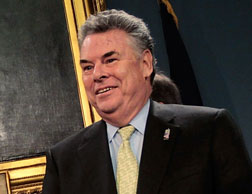


Recent Comments