Month: October 2010

  • The Mortgage Morass

     
    Fred R. Conrad/The New York Times

    Paul Krugman

    October 14, 2010

    The Mortgage Morass

    American officials used to lecture other countries about their economic failings and tell them that they needed to emulate the U.S. model. The Asian financial crisis of the late 1990s, in particular, led to a lot of self-satisfied moralizing. Thus, in 2000, Lawrence Summers, then the Treasury secretary, declared that the keys to avoiding financial crisis were “well-capitalized and supervised banks, effective corporate governance and bankruptcy codes, and credible means of contract enforcement.” By implication, these were things the Asians lacked but we had.

    We didn’t.

    The accounting scandals at Enron and WorldCom dispelled the myth of effective corporate governance. These days, the idea that our banks were well capitalized and supervised sounds like a sick joke. And now the mortgage mess is making nonsense of claims that we have effective contract enforcement — in fact, the question is whether our economy is governed by any kind of rule of law.

    The story so far: An epic housing bust and sustained high unemployment have led to an epidemic of default, with millions of homeowners falling behind on mortgage payments. So servicers — the companies that collect payments on behalf of mortgage owners — have been foreclosing on many mortgages, seizing many homes.

    But do they actually have the right to seize these homes? Horror stories have been proliferating, like the case of the Florida man whose home was taken even though he had no mortgage. More significantly, certain players have been ignoring the law. Courts have been approving foreclosures without requiring that mortgage servicers produce appropriate documentation; instead, they have relied on affidavits asserting that the papers are in order. And these affidavits were often produced by “robo-signers,” or low-level employees who had no idea whether their assertions were true.

    Now an awful truth is becoming apparent: In many cases, the documentation doesn’t exist. In the frenzy of the bubble, much home lending was undertaken by fly-by-night companies trying to generate as much volume as possible. These loans were sold off to mortgage “trusts,” which, in turn, sliced and diced them into mortgage-backed securities. The trusts were legally required to obtain and hold the mortgage notes that specified the borrowers’ obligations. But it’s now apparent that such niceties were frequently neglected. And this means that many of the foreclosures now taking place are, in fact, illegal.

    This is very, very bad. For one thing, it’s a near certainty that significant numbers of borrowers are being defrauded — charged fees they don’t actually owe, declared in default when, by the terms of their loan agreements, they aren’t.

    Beyond that, if trusts can’t produce proof that they actually own the mortgages against which they have been selling claims, the sponsors of these trusts will face lawsuits from investors who bought these claims — claims that are now, in many cases, worth only a small fraction of their face value.

    And who are these sponsors? Major financial institutions — the same institutions supposedly rescued by government programs last year. So the mortgage mess threatens to produce another financial crisis.

    What can be done?

    True to form, the Obama administration’s response has been to oppose any action that might upset the banks, like a temporary moratorium on foreclosures while some of the issues are resolved. Instead, it is asking the banks, very nicely, to behave better and clean up their act. I mean, that’s worked so well in the past, right?

    The response from the right is, however, even worse. Republicans in Congress are lying low, but conservative commentators like those at The Wall Street Journal’s editorial page have come out dismissing the lack of proper documents as a triviality. In effect, they’re saying that if a bank says it owns your house, we should just take its word. To me, this evokes the days when noblemen felt free to take whatever they wanted, knowing that peasants had no standing in the courts. But then, I suspect that some people regard those as the good old days.

    What should be happening? The excesses of the bubble years have created a legal morass, in which property rights are ill defined because nobody has proper documentation. And where no clear property rights exist, it’s the government’s job to create them.

    That won’t be easy, but there are good ideas out there. For example, the Center for American Progress has proposed giving mortgage counselors and other public entities the power to modify troubled loans directly, with their judgment standing unless appealed by the mortgage servicer. This would do a lot to clarify matters and help extract us from the morass.

    One thing is for sure: What we’re doing now isn’t working. And pretending that things are O.K. won’t convince anyone.


    Copyright. 2010. New York Times Company. All Rights Reserved

  • From a Maine House, a National Foreclosure Freeze

    Matt McInnis for The New York Times

    Nicolle Bradbury bought her home for $75,000 and stopped paying the mortgage two years ago.


    Matt McInnis for The New York Times

    Thomas Cox, who one worked at a bank calling in small-business loans, took on Mrs. Bradbury’s case for a nonprofit group.


    October 14, 2010

    From a Maine House, a National Foreclosure Freeze

    DENMARK, Me. — The house that set off the national furor over faulty foreclosures is blue-gray and weathered. The porch is piled with furniture and knickknacks awaiting the next yard sale. In the driveway is a busted pickup truck. No one who lives there is going anywhere anytime soon.

    Nicolle Bradbury bought this house seven years ago for $75,000, a major step up from the trailer she had been living in with her family. But she lost her job and the $474 monthly mortgage payment became difficult, then impossible.

    It should have been a routine foreclosure, with Mrs. Bradbury joining the anonymous millions quietly dispossessed since the recession began. But she was savvy enough to contact a nonprofit group, Pine Tree Legal Assistance, where for once in her 38 years, she caught a break.

    Her file was pulled, more or less at random, by Thomas A. Cox, a retired lawyer who volunteers at Pine Tree. He happened to know something about foreclosures because when he worked for a bank he did them all the time. Twenty years later, he had switched sides and, he says, was trying to make amends.

    Suddenly, there is a frenzy over foreclosures. Every attorney general in the country is participating in an investigation into the flawed paperwork and questionable methods behind many of them. A Senate hearing is scheduled, and federal inquiries have begun. The housing market, which runs on foreclosure sales, is in turmoil. Bank stocks fell on Thursday as analysts tried to gauge the impact on lenders’ bottom lines.

    All of this is largely because Mr. Cox realized almost immediately that Mrs. Bradbury’s foreclosure file did not look right. The documents from the lender, GMAC Mortgage, were approved by an employee whose title was “limited signing officer,” an indication to the lawyer that his knowledge of the case was effectively nonexistent.

    Mr. Cox eventually won the right to depose the employee, who casually acknowledged that he had prepared 400 foreclosures a day for GMAC and that contrary to his sworn statements, they had not been reviewed by him or anyone else.

    GMAC, the country’s fourth-largest mortgage lender, called this omission a technicality but was forced last month to halt foreclosures in the 23 states, including Maine, where they must be approved by a court. Bank of America, JPMorgan Chase and other lenders that used robo-signers — the term caught on instantly — have enacted their own freezes.

    The tragedy of foreclosure is that some homeowners may be able to stay where they are if their lenders are more interested in modification than eviction. Without a job, Mrs. Bradbury is not one of them. Her family, including her 14-year-old daughter and 16-year-old son, lives on welfare and food stamps.

    “A lot of people say we just want a free ride,” Mrs. Bradbury said. “That’s not it. I’ve worked since I was 14. I’m not lazy. I’m just trying to keep us together. If we lost the house, my family would have to break up.”

    It has been two years since she last paid the mortgage, which surprises even her lawyers.

    “Had GMAC followed the legal requirements, she would have lost her home a long time ago,” acknowledged Geoffrey S. Lewis, another lawyer handling her case.

    GMAC, which began as the financing arm of General Motors, has received $17 billion from taxpayers in an effort to keep it from failing and is now majority-owned by the federal government. A spokeswoman for the lender declined to comment on Mrs. Bradbury’s case because it was still being litigated.

    John J. Aromando of the firm of Pierce Atwood in Portland, Me., the lawyer for GMAC and Fannie Mae, the mortgage holding company that owns Mrs. Bradbury’s loan, did not return calls for comment on Thursday.

    Fannie Mae and GMAC, which serviced the loan for Fannie, have now most likely spent more to dislodge Mrs. Bradbury than her house is worth. Yet for all their efforts, they are not only losing this case, but also potentially laying the groundwork for foreclosure challenges nationwide.

    “This ammunition will be front and center in thousands of foreclosure cases,” said Don Saunders of the National Legal Aid and Defender Association.

    Just a few miles from the New Hampshire border, this slice of Maine does not have much in the way of industry or, for that matter, people. Mrs. Bradbury grew up around here, married and had her children here, and married for a second time here. Her parents still live nearby.

    In 2003, her brother-in-law at the time offered to sell her a house on property adjacent to his. It was across from a noisy construction supply site. But it was ringed by maple, evergreen and willow trees, and who does not want to be a homeowner, especially when GMAC Mortgage will give you a loan for the entire purchase price and then another loan to improve the property?

    “I was very happy,” she remembered. “It was a new beginning.”

    But Mrs. Bradbury lost her job as an employment counselor in 2006 and did part-time work after that. Her husband, Scott, was in poor health and had other problems. He could not work as a roofer. She fell behind and got a modification from GMAC. It increased her monthly payments and provided no relief.

    Finally, in late 2008, she stopped paying altogether, and GMAC asked a court to approve her eviction without a trial. By the summer of 2009, this removal was well under way when Mr. Cox picked up her file.

    Mr. Cox, 66, worked in the late 1980s and early 1990s for Maine National Bank, a subsidiary of the Bank of New England, which went under. His job was to call in small-business loans. The borrowers had often pledged their houses as collateral, which meant foreclosure.

    “It was extraordinarily unpleasant, but it paid well,” he said. “I had a family to support.”

    The work exacted its cost: his marriage ended and a serious depression began. He gave up law and found solace in building houses. By April 2008, he said, he was sufficiently recovered and started volunteering at Pine Tree Legal.

    By the time Mr. Cox saw Mrs. Bradbury’s case, it was just about over. Last January, Judge Keith A. Powers of the Ninth District Court of Maine approved the foreclosure, leaving the case alive only to establish exactly how much Mrs. Bradbury owed.

    Mr. Cox vowed to a colleague that he would expose GMAC’s process and its limited signing officer, Jeffrey Stephan. A lawyer in another foreclosure case had already deposed Mr. Stephan, but Mr. Cox wanted to take the questioning much further. In June, he got his chance. A few weeks later, he spelled out in a court filing what he had learned from the robo-signer:

    “When Stephan says in an affidavit that he has personal knowledge of the facts stated in his affidavits, he doesn’t. When he says that he has custody and control of the loan documents, he doesn’t. When he says that he is attaching ‘a true and accurate’ copy of a note or a mortgage, he has no idea if that is so, because he does not look at the exhibits. When he makes any other statement of fact, he has no idea if it is true. When the notary says that Stephan appeared before him or her, he didn’t.”

    GMAC’s reaction to the deposition was to hire two new law firms, including Mr. Aromando’s firm, among the most prominent in the state. They argued that what Mrs. Bradbury and her lawyers were doing was simply a “dodge”: she had not paid her mortgage and should be evicted.

    They also said that Mr. Cox, despite working pro bono, had taken the deposition “to prejudice and influence the public” against GMAC for his own commercial benefit. They asked that the transcript be deleted from any blog that had posted it and that it be put under court seal.

    In a ruling late last month, Judge Powers said that GMAC, despite its expensive legal talent and the fact that it got “a second bite of the apple” by filing amended foreclosure papers, still could not get this eviction right.

    Even the amended documents did not bother to include the actual street address of the property it was trying to seize — reason enough, the judge wrote, to reject the request for immediate foreclosure without a trial.

    But Judge Powers went further than that, saying that GMAC had been admonished in a Florida court for using robo-signers four years ago but had persisted. “It is well past the time for such practices to end,” he wrote, adding that GMAC had acted “in bad faith” by submitting Mr. Stephan’s material:

    “Filing such a document without significant regard for its accuracy, which the court in ordinary circumstances may never be able to investigate or otherwise verify, is a serious and troubling matter.”

    It was not a complete loss for GMAC — Judge Powers declined to find the lender in contempt — but nearly so. GMAC was ordered, as a penalty, to pay Mr. Cox personally what he would have been paid for his work on the deposition and related matters had he been charging Mrs. Bradbury. That, he says, is $27,000.

    The court’s ruling on GMAC’s “bad faith” is already being taken up by foreclosure defense lawyers around the country. Mr. Cox “did a remarkable job of proving the lenders not only rubber-stamped these loans on the front end, but they rubber-stamped them on the back end,” said Mr. Saunders of the legal aid group.

    GMAC, which this week expanded its foreclosure freeze to the entire country, is not giving up on Mrs. Bradbury. It will try for the third time to evict her when the case goes to trial this winter.

    If Mrs. Bradbury is not quite victorious, she is still in her house, and for her that is the only thing that counts. If she can get her pickup fixed, she will go back to looking for a job.

    “I am not leaving,” she said this week, standing out on her front lawn, the autumn splendor spread all around her. “We have nowhere to go.”

    This article has been revised to reflect the following correction:

    Correction: October 14, 2010

    An earlier version of a photo caption with this article misspelled the given name of Nicolle Bradbury.

    Copyright. 2010. The New York Times Company. All Rights reserved

  • Yankees Rewrite Script With Outburst in Eighth

    Barton Silverman/The New York Times

    The Yankees’ Marcus Thames lined a single to left field in the eighth inning. More Photos »

    October 16, 2010

    Yankees Rewrite Script With Outburst in Eighth

    ARLINGTON, Tex. — The Rangers still have never won a home playoff game, a truth their fans may find difficult to comprehend had they not suffered Friday night through one of the most torturous innings in the franchise’s 39 seasons in Texas. A crowd that pulsed with excitement fell silent in the eighth, when the Yankees crushed the Rangers’ visions of a superlative start to their inaugural American League Championship Series by pummeling five Texas pitchers in a five-run rally.

    When Marcus Thames lined the go-ahead single that provided the margin of victory in a 6-5 win, the Yankees’ dugout erupted with joy, with players practically falling over the rails. Thames, the seventh straight Yankee to reach base, clapped as he jogged toward first, the comeback complete. The 50,930 people at Rangers Ballpark, standing much of the early innings, slouched lower into their seats. Smiling afterward by his locker, Thames said, “I heard a couple guys say we stole one tonight.”

    That is one way of putting it. Six outs away from potentially forcing the Yankees to reconsider starting A. J. Burnett in Game 4, the Rangers instead watched a parade of relievers, each less effective than the one before, spoil an impressive outing by the left-hander C. J. Wilson and reaffirm the Yankees’ reputation as comeback kings. For the third time in four playoff games, the Yankees stormed back to win, and this victory most closely resembled that from their division-series opener in Minnesota, when they also bailed out a shaky C. C. Sabathia. That night, they trailed, 3-0, heading into the sixth. On Friday, they trailed, 5-0, after six.

    “It’s a bigger win for the Yankees,” said Brett Gardner, whose leadoff single after sliding head-first into first base ignited their eighth-inning outburst. “I’m not sure how they’re feeling or really worried how they’re feeling. I’m not feeling sorry for them. It was a tough game.”

    Just ask the dignitaries sitting in the front row, next to the camera well beside the Rangers’ dugout: former President George W. Bush and Nolan Ryan, one of the team’s new owners, who stewed, arms folded, as the game unraveled merely a few feet away. It all must have looked so painfully familiar to Bush, a former managing partner and minority owner. Their glory years of the 1990s, punctuated by three division titles, ended each time with first-round losses to the Yankees, who have now won 10 straight playoff games against Texas.

    One of those, Game 3 in 1996, collapsed after the departure of Darren Oliver, who, now in his second tour with Texas, relieved Wilson on Friday with a runner on second, nobody out and the Rangers leading, 5-2. He walked Nick Swisher and Mark Teixeira to load the bases for Alex Rodriguez, who smoked the first pitch from the side-arming right-hander Darren O’Day past third baseman Michael Young for a two-run single.

    In came Clay Rapada, one of two left-handers added Friday to the Rangers’ bullpen, to face Robinson Cano. In his last at-bat, Cano had homered off Wilson for the Yankees’ first run. When Rapada grooved a fastball, Cano drilled it back up the middle to score Teixeira with the tying run. “Good thing he threw me a fastball on the first pitch,” Cano said. With Thames due up, Rangers Manager Ron Washington could have brought in a right-hander, a move that Yankees Manager Joe Girardi almost certainly would have countered by pinch-hitting Lance Berkman. Instead, he summoned another left-hander, Derek Holland, and Thames delivered his second game-winning hit at Rangers Ballpark this season.

    “During that inning, I was kind of incredulous,” O’Day said. “For all of us to have that kind of night, the same night, was an aberration.”

    Or so the Rangers hope. The Yankees’ relievers, meantime, rescued Sabathia, allowing only one hit and two walks over five scoreless innings. Joba Chamberlain (one) and Dustin Moseley (two) worked the first three before giving way to the late-inning tandem of Kerry Wood, who picked Ian Kinsler off at first, and Mariano Rivera, who retired Josh Hamilton with the potential tying run on second to secure the victory. “C. C.’s picked us up all year, he’s been a horse for us all year,” said Chamberlain, who made his first appearance of the postseason. “It was our job to pick him up.”

    The nine-day layoff between starts affected Sabathia, who allowed five runs in four innings — three before he even recorded an out — in his shortest start of the season. Aware that his command might suffer after going six days before his division series start against Minnesota, Sabathia adjusted his schedule, throwing five times, but it did not help.

    “I just had no command,” Sabathia said. “I couldn’t execute the game plan because I couldn’t throw the ball over the plate.”

    Of his first nine pitches, seven were outside the strike zone, and the 10th was lined into left-center by Michael Young for a single. Up came Josh Hamilton, who went 2 for 18 against Tampa Bay, a meager showing certainly noticed by the Yankees. The pitching coach Dave Eiland agreed with the assertion that the Rays — especially their left-handers — were successful working Hamilton away with off-speed pitches, something that Sabathia was trying to do with his 0-2 curveball.

    With Jorge Posada setting up outside, the pitch broke over the inside corner and Hamilton lined it into the right-field stands for a three-run blast, the first home run off Sabathia on an 0-2 pitch since another slugging left-handed hitter, Chase Utley, did it in the sixth inning of the World Series opener last October. Sabathia’s fastball kept missing high, the result of his revisiting a familiar mechanical flaw: he collapsed on his back leg, which prevents him from using his 6 feet 7 inches to his advantage and throwing the fastball on a downward plane. Posada even reminded him, motioning downward with his hands, but Sabathia could not adjust.

    “I was fearful of that tonight,” Eiland said, adding, “I’ve never seen him do that on regular rest, I’ll put it to you that way. History shows that when he has a lot of extra rest, he gets like that.”

    It took a lucky bounce off the brick backstop of a wayward fastball — it caromed directly to Posada, who tossed to Sabathia for a tag of Nelson Cruz — for him to escape a bases-loaded, two-out jam in the first with 36 pitches.

    By comparison, Wilson needed precisely that many to plow through three scoreless innings. By his estimation, he has thrown every pitch but a screwball — “a split, forkball, side-armed, everything” — and, perhaps as proof, almost exhausted his inventory during the first. He fired 12 pitches — eight fastballs, a cutter, a slider, a curveball and a changeup — and incorporated them all with such precision and command that it recalled the mastery of the Rangers’ other overwhelming left-hander, Cliff Lee.

    “Before he was here,” said Wilson, discussing Lee’s influence since his arrival in a July trade, “I was actually a right-handed second baseman.”

    If only, the Yankees may have thought. Instead of doing something with his screenwriting major from college, Wilson pursued that baseball thing, and the Yankees were all the worse for it. No starting pitcher stymied left-handed hitters this season more than Wilson (.144 average), who reversed course Friday and pitched more effectively against the Yankees’ right-handed hitters, who combined to go 2 for 19 against him. One of those, Derek Jeter, doubled home Gardner to knock in the first run of the eighth, the first run of their 51st — and most impressive — come-from-behind victory of 2010.

    “Like I said, I’m never really surprised,” Girardi said. “But I am thrilled sometimes.”


    Copyright. 2010. The New York Times Company. All Rights Reserved.

  • Hoover Dam Bypass

    Bicyclists get early glimpse of Hoover Dam bypass bridge

    Image

    Justin M. Bowen

    Participants in the Viva Bike Vegas event gather Saturday on the Hoover Dam bypass bridge before turning around to finish their 115-mile ride.

    Saturday, Oct. 9, 2010 | 5:23 p.m.

    It wasn’t views of the Strip or downtown Las Vegas, or overlooking the water of Lake Mead and cliffs at Red Rock Canyon that brought Scott Burger and Tom Moss from Colorado to Las Vegas on Saturday. It was the bridge.

    The two were among more than 1,500 people who participated in the 115-mile course of Viva Bike Vegas, the Regional Transportation Commission’s annual bike event, which included riding on the new Hoover Dam bypass bridge a week before the general public is invited to walk on it.

    “I wouldn’t come this far for anything except this bridge,” Moss said.

    The two used to work together inspecting bridges for the Colorado Department of Transportation, where Moss still works.

    “So we like bridges,” Burger said. “I probably wouldn’t just up and do a 115-mile ride out of my house (otherwise).”

    In addition to the 115-mile century course, the event included a 50-mile course and a 23-mile course, but the bridge was the star of the event. The longest course drew the majority of the event’s nearly 2,000 participants.

    The shorter courses didn’t include a trip to the bridge.

    After leaving the RTC’s offices next to the County Government Center downtown, cyclists crossed Las Vegas going east to Lake Mead, then followed the lake to Hoover Dam, about 40 miles from the starting line.

    On the bridge, most of the riders took a break to have their picture taken overlooking the dam before getting ready for the next 75 miles of the course. The bicyclists went through Boulder City and Henderson before looping through Southern Highlands on the way to Blue Diamond and Red Rock before returning downtown.

    “The scenery all along has been amazing,” Lori Galleor said while waiting to have her picture taken on the bridge. “We wanted to ride along the lake. We’ve never done that before.”

    The whole ride was scenic, and some of the riders were happy to be supporting the After-School All-Stars and the Nevada Cancer Institute, the two charities that benefit from proceeds from the event, but most said the bridge was the main attraction.

    Heather Stiawalt and Rodney Thanepohn bought new bikes a few months ago and have been training for the ride ever since, motivated by the idea of riding across the bridge.

    “It’s a once-in-a-lifetime chance,” Thanepohn said. “To be the first to ride on the bridge, before even a car rides across, is a unique experience.”

    Even two professional cyclists, Andrew Pinfold and Max Jenkins, who rode the beginning of the course to represent their sponsor, UnitedHealthcare, said they were impressed.

    “It’s spectacular to be able to ride the bridge,” Pinfold said. “It’s a real privilege to be on it. This is probably the only time it will ever happen, for cyclists to have the bridge to themselves. It’s pretty fun to be out here and see all these people and get a great view of the Hoover Dam.”


    Copyright.2010. Las Vegas Sun. All Rights Reserved

  •  

    Emily Berl for The New York Times

    “The Ride”: Passengers on this new theatrical bus tour wave to the Midtown throng, which waves back.


    Emily Berl for The New York Times

    Joe Cummings and Amanda Johns recreate Alfred Eisenstaedt’s 1945 sailor-and-nurse photograph for passengers on “The Ride.”


    October 14, 2010

    Fasten Your Seat Belts and Embrace the City

    I don’t think the woman who flashed us the other night on West 57th Street by lifting up her shirt was in the cast of the new bus ride/city tour/improv show/New York experience called “The Ride.” But I’m only guessing, because one business-suited passerby on 42nd Street was so intoxicated by the Broadway melodies being broadcast by our passing bus that he dropped his briefcase and leapt into a vaudeville tap-dance routine right out of a 1930s musical. And a late-night deliveryman on East 43rd Street was so caught up by the passing tour’s blaring hip-hop soundtrack that he spun and flipped into a virtuosic break-dance routine.

    But unlike those examples, which “The Ride” had clearly set up in advance for its patrons, pretending, with a wink, that the tour was giving us a glimpse of eccentric New York street life, the flasher didn’t seem to be performing a part, at least not one found in a script. She broke into laughter after her feat, watching the transparent-sided bus, with its three rows of stadium seats mounted sideways like a portable theater, filled with shrieking passengers.

    In this, it turns out, she played right into the tour’s hands. So did we all. Because by the end of this 75-minute, 4.2-mile “Ride,” which is making its debut this week, the guides who had led us from West 42nd Street up to Columbus Circle and back had the bus singing a karaoke version of Kander and Ebb’s “New York, New York.” The words were flashed on the vehicle’s 40-some video screens, and the result was apparently heard on the street as we drove down Seventh Avenue. Crowds stopped, gawked and waved arms along with the singers, and applauded us as we applauded them. Who’s onstage? Who isn’t?

    You don’t really know what to make of “The Ride” at first. It’s a commercial enterprise, created by the avant-garde theatrical entrepreneur Michael Counts, written by John Bobey (whose credits include late-night television comedy) and directed by Daniel Goldstein (whose credits include Broadway). Each night a crew of more than 60 technical people, street performers and tour-guide actors with improv-comedy experience tries to combine these diverse styles into an atypical tourist bus ride that costs $59 or $65, depending on the departure time. Plans are to run 364 days a year, with up to 156 rides each week.

    These theatrical prices also accompany a bus meant to look theatrical: black and screaming “The Ride” in neon red along the side. Each bus costs $1.3 million. It is the tallest vehicle allowed by law; its audio systems emulate the punch of club sonics; and its cushioned 49 seats face the transparent side of the bus, allowing outsiders to see in, once its 40 video screens and 3,000 LED lights are illuminated. Three buses are touring now, making round trips from the Marriott Marquis in Times Square, where tickets are sold. A fourth is due soon, and in case of success, another four are planned. (There are also more elaborate hopes, for other cities and other countries.)

    Forget the ride for a moment: all tour buses should be built this way; you miss one side of the street but get a huge panoramic view of the other. From an ordinary bus you can’t sense the streetscape’s expanse, but here, with windows stretching nearly the length of the bus, when we crossed Broadway at dusk, an hour before theater time, the city looked unearthly, a teeming throng of figures and glaring lights.

    Strangely, though, as a tour, “The Ride” was least successful. As our two guides began their opening banter, we might have at first suspected that Scott really was educated in urban planning at Columbia University or that Jackie was a world traveler come home. But there are 18 such Scotts and Jackies, with the same names and script, giving these tours.

    The banter incorporated a fairly lame conceit that “The Ride” has been under development since the end of World War II, that it has all the artificial intelligence of HAL from “2001: A Space Odyssey” (with a more vigorous voice, which is heard throughout the tour) and that it is now embarking on “our biggest and boldest experiment to date, to answer the question: What makes New York … New York — the pulsating capital of the world.”

    Such pulsating is better left not talked about, but the guides were apparently supposed to get a subplot going involving Scott’s romantic interest in Jackie, while filling in travel time with improvised dialogue and “fun facts” about the sights: the grime cleaned off the ceiling of Grand Central Terminal in 1998 was a thick layer of tar and nicotine. The Chrysler Building’s spire was secretly prepared and mounted so the result could surprise rivals as the world’s tallest building — but then it was trumped by the Empire State Building.

    The finest moments, though, had nothing to do with the city’s dazzling stage sets — its buildings and avenues — but with the great crowds found within them, which is why “The Ride” is best taken when the streets are packed. Before the bus leaves Times Square, its voice draws attention to varied street characters (all in the tour’s employ). A man purchases three hot dogs, then suddenly starts juggling them. Pedestrians look on in shock, less at the accomplishment than at his daring to do something so pointless on jammed sidewalks. A man with a sequined top hat and party paraphernalia reserves his spot for New Year’s Eve; he leaps around in celebration after the bus broadcasts a New Year’s countdown. A sailor just home from World War II bends over to kiss a nurse, recreating the renowned 1945 Alfred Eisenstaedt photograph.

    “The Ride,” then, begins in pure silliness, much of it not too funny, but when that suited tap-dancer finishes his bit, the tour takes on a cinematic aura. This is, after all, how so many movies and Broadway shows work. While walking down a street, someone breaks into song or dance, just as strollers do here.

    The urban dance scene of musicals is a genre of its own: first there is the surprise of the passersby, then the affectionate acknowledgment of the dance, and soon the whole streetscape is in on it (unless you are like Gene Kelly, singing in the rain in near isolation). It’s the way of Broadway melody, the style of “West Side Story.” And here, too, on “The Ride,” you begin to watch the passersby look in shock and then pleasure at the theatrical indulgence of these people on the sidewalk; you almost expect them to join in.

    Two singers dressed as Radio City ushers start their own duo; a ballerina dances in an illuminated tutu around Columbus Circle; a woman in front of Carnegie Hall sings an aria from “Carmen.” (“I just got off the bus from Iowa,” she explains. “I’m hoping if I sing outside here, Mr. Carnegie will pass by and discover me.”) It’s all a version of “42nd Street.”

    No one does join in, yet. But you are reminded that one aspect of New York streets is that strange stuff is not that unexpected. It isn’t all that surprising to see someone singing on the street or dancing in the rain; it is only mildly surprising to see a woman lift her shirt.

    The effect may have been much more intense in the 19th century when crowds created a different way of walking; the new urban citizen strolled the city and attended to its exotic sensations and shocks, an anonymous wanderer amid all the other wanderers.

    Now the unexpected may even be uniting rather than isolating. It is a shared phenomenon, something to be talked about; it is even a matter of pride how much strangeness we have seen. Oddity creates community. I may be giving “The Ride” too much credit. But for all its artifice, it gives us a chance to be reminded about this effect; it looked as if quite a few conversations started on the sidewalk as the bus rocked by. Evidently even the flasher was inspired. And when extraordinary things are done in unison, not just by one eccentric but by a large group, the effect is amplified.

    Take a look at the so-called missions of the street-theater group Improv Everywhere, in which hundreds of strangers suddenly freeze in the middle of Grand Central, or, as in its recent “MP3 Experiment Seven,” thousands of listeners simultaneously follow instructions heard over headphones. At first there is a certain implied mockery of those not in on the secret. But ultimately, the large-scale strangeness breaks down isolation with communal comedy. The Improv videos go viral.

    Something like this happened in the tour’s final moments, as “The Ride” featured a transparent busload of passengers waving and singing “New York, New York,” as listeners in the streets stared, watched, ran along or even, eventually, joined in. The street is quite a ride.

    Schedules, information and tickets for “The Ride” are at the New York Marriott Marquis Hotel, 1535 Broadway, at 46th Street; experiencetheride.com, (866) 299-9682.


    Copyright. 2010. The New York Times Company. All Rights Reserved

  • Google Income Rising

    October 14, 2010

    Google’s Income Rises 32%

    SAN FRANCISCO — Google has entered some surprising new businesses in the last few weeks, like robotic cars that do not need drivers and wind energy farms in the Atlantic Ocean. But the company has not been neglecting its core business, search advertising, which drove Google’s better-than-expected performance in the third quarter.

    Google reported net income in the quarter ending Sept. 30 rose 32 percent to $2.17 billion, or $6.72 cents a share, from the year-ago quarter. Excluding the cost of stock options and the related tax benefits, Google’s third-quarter profit was $7.64 a share. The company said revenue climbed 23 percent to $7.29 billion. Net revenue, which excludes commissions paid to advertising partners, was $5.48 billion, up from $4.38 billion a year ago.

    The results were above the expectations of Wall Street analysts. They had expected adjusted income of $6.67 a share and net revenue of $5.2 billion.

    “Our core business grew very well, and our newer businesses, particularly display and mobile, continued to show significant momentum,” Eric E. Schmidt, Google’s chief executive, said in a statement. “Going forward, we remain committed to aggressive investment in both our people and our products as we pursue an innovation agenda.”

    Google investors seemed to like the results; in after-hours trading, the stock was up more than 9 percent.

    For the first time, Google offered some data on revenue from its display and mobile advertising businesses, on a call with analysts. Display ads — non-text ads with images and video on YouTube and other sites across the Web — are expected to account for more than $2.5 billion in revenue this year, Google said. Mobile ads will contribute $1 billion to annual revenue. Google’s search business, which accounts for the vast majority of its revenue, showed improvement in the third quarter. The company said paid clicks on ads on Google sites and other sites that run Google ads grew 16 percent over the year-ago quarter and 4 percent from the second quarter.

    That is a good sign for the rest of the year, said Jordan Rohan, a managing director at Stifel Nicolaus and an Internet and digital media analyst.

    “September is a pretty good predictor of the rest of the year, because there’s a high correlation between back-to-school and the holiday season” in terms of advertiser interest, he said.

    But investors have been waiting to see when Google’s new advertising businesses, like mobile advertising, display ads with video and images and ads on YouTube, will significantly affect revenue.

    Mark S. Mahaney, managing director of Internet research at Citigroup, said Google would reach that tipping point if revenue growth from the year-ago quarter exceeded 24 percent or if growth from the last quarter exceeded 6 percent. Google is hovering around that point — revenue grew 23 percent from last year and 7 percent from last quarter.

    Even if Google’s other ad businesses are big, its search revenue is so large that they do not move the needle. That is why Google is beginning to go after the television advertising market with its introduction this month of Google TV, which lets people access the Web on their television screens.

    “If you really want to move the needle, why don’t you target that north of $50 billion in revenue that’s spent on television screens?” said Colin W. Gillis, technology analyst at BGC Partners. “Television’s ripe for disrupting as people are fast-forwarding through TV ads.”

    Google has also been rapidly investing in other areas, which weighs on its profit margins and “causes some investors to wince,” Mr. Gillis said.

    Google hired 1,526 people in the quarter, which included the post-graduation hiring months, bringing the total number of employees to 23,331.

    Google has also been investing in its new businesses that are not yet generating revenue, including the robotic car project and a large investment in wind energy farms, as well as its Android mobile phones, Chrome browser and operating system and its social networking efforts to head off competition from Facebook.

    Copyright.2010. The New York Times Company. All Rights Reserved


  • The Unfair Game

    Fred R. Conrad/The New York Times
    October 12, 2010

    The Unfair Game

    WASHINGTON

    As Barack Obama struggles to rekindle the magic, one of the most pathetic headlines was the one on a CNN poll last week: “Was Bush Better President Than Obama?”

    “Americans are divided over whether President Barack Obama or his predecessor has performed better in the White House,” the CNN article said.

    So now the Republican president who bungled wars and the economy and the Democratic president trying to dig us out are in a dead heat?

    America’s long-term economic woe has led to short-term memory loss. Republicans are still popular, and the candidates are crazier than ever. And crazy is paying dividends: Sharron Angle, the extreme Republican candidate for the Senate in Nevada, vacuumed up $14 million in the last quarter in her crusade to knock out Harry Reid — the kind of money that presidential candidates dream of collecting.

    Karl Rove has put together a potent operation to use anonymous donors to flood the airwaves with attack ads against Democrats. And a gaunt-looking Dick Cheney is out of the hospital and back to raking in money defending torture and pre-emptive war. He, Lynne Cheney, Rove, Sarah Palin, Newt Gingrich and Laura Bush drew more than 10,000 people at $495 a pop to a conference in Bakersfield, Calif., last weekend.

    Republicans are also gearing up to start re-sliming Valerie Plame Wilson and Joe Wilson when “Fair Game,” the movie based on their memoirs, opens next month. Robert Luskin, a lawyer for Rove who considered Plame collateral damage and labeled her “fair game,” dismissively told Sheryl Gay Stolberg of The Times that the Wilsons are “a little past their ‘sell-by’ date.”

    It’s hard to believe that it was seven years ago when the scandal of the Glamorous Spy and Showboating Ambassador exploded. Joe Wilson first accused the Boy Emperor of not wearing any clothes on the Iraq W.M.D.’s, and then charged the Bush White House with running a “smear campaign” against him and outing his wife as a C.I.A. spy. He was right on all counts and brave to take on a White House that broke creative new ground in thuggery and skulduggery.

    But it was child’s play for the Republicans to undermine the former diplomat and the spy who loved him. Wilson was “pretty widely known as a loudmouth,” as the movie’s director Doug Liman put it, and overstepped at times, posing for Vanity Fair in his Jaguar convertible with his wife coyly cloaked in scarf and sunglasses.

    While her husband was in his promotional whirlwind, Plame was in her reticent cloud, her air of blonde placidity belying her anguish at being betrayed and her disgust that Cheney Inc. bullied the C.I.A., overriding skepticism about Saddam’s weapons system and warping intelligence.

    “It’s called counterproliferation, Jack,” Naomi Watts’s Plame says to her superior. “Counter.”

    The movie makes clear that Plame was not merely “a secretary” or “mediocre agent” at the agency, as partisan critics charged at the time, but a respected undercover spy tracking Iraqi W.M.D. efforts.

    And it reiterates that Plame did not send her husband, who had worked in embassies in Iraq while Saddam and Bush Senior were in charge and was the ambassador in two African countries, on the fact-finding trip to Niger about a possible Iraqi purchase of 500 tons of yellowcake uranium. She merely acted as an intermediary when a colleague threw his name into the hat for the unpaid gig.

    The film creates composites to heighten the tension and suggests that Plame’s Iraqi contacts and their families were murdered once she was outed — a subplot Variety called “apocryphal and manipulative.”

    But the movie is a vivid reminder of one of the most egregious abuses of power in history, and there are deliciously diabolical turns by actors playing Scooter Libby, David Addington and Rove. Plame’s C.I.A. bosses are portraits in cravenness, cutting her loose at the moment she starts receiving death threats and her Iraqi sources become endangered.

    Liman, who grew up watching his father Arthur’s Buddha-like interrogations during the Iran-Contra hearings, does not use an Oliver Stone sledgehammer on history. He views the scandal through the lens of the Wilsons’ marriage, which snaps for a time under the strain of being hounded by the most powerful men on earth.

    (As Valerie writes in her book about Joe’s demand to see Rove “frog-marched out of the White House in handcuffs”: “Husbands. What can you do?”)

    Costumed with lush mane and round paunch, Sean Penn is well suited to capture Wilson’s arrogance and mouthiness, while also showing his honesty, brazenness, sly charm and fierce love of wife and country.

    They were the Girl and Boy Who Kicked the Hornet’s Nest, and we should all remember what flew out.


    Copyright. 2010. The New York Times Company. All Rights Reserved.

  • The Success and the Failures of the Religious Right


    Michael Gerson and Peter Wehner

    Posted: October 12, 2010 09:00 AM

    What has the religious right achieved?

    Among its success, the religious right mustered a broad resistance to the legal establishment of secularism. Some on the left still contend that religiously motivated arguments are illegitimate in the debate over public policy. Evidently, in their conception, the separation of church and state means that, although citizens may advocate a certain political view on the basis of utilitarianism or liberalism or vegetarianism, they may not do so on the basis of moral views rooted in Christianity or Judaism.

    Religious conservatives have stoutly resisted this notion, reminding us that many pivotal events in American political history — from abolition to the civil rights movement — came about in large part thanks to religiously informed social activism.

    Practically speaking, the religious right has also scored some successes. When Roe v. Wade was decided in 1973, essentially legalizing abortion on demand, an editorial in the New York Times announced the abortion debate over. In part because of the religious right, the debate continues — with a majority of Americans in some recent polls now considering themselves pro-life. Given the cultural forces arrayed against pro-life Americans, this is a remarkable achievement.

    The religious right has also formed an element in a larger political coalition defending and encouraging an active, moral role for America in the world. This was especially important during the period of the Cold War. And it has been a stalwart supporter of the often friendless state of Israel in that nation’s struggle for survival against enemies sworn to its destruction.

    Still, could the religious right have done things better, and is a different model of social engagement needed for the future? We believe the answer to both questions is yes.

    The language and tone of the religious right have often been apocalyptic, off-putting, and counterproductive. “Just like what Nazi Germany did to the Jews,” said Jerry Falwell, “so liberal America is now doing to evangelical Christians.” In 1994, a conspiracy-mongering video promoted by Falwell associated President Bill Clinton with drug dealing and murder.

    Such melodrama, or hysteria, is good for fund-raising, but bad for American politics. It makes a civil political conversation impossible, and does a disservice to the cause of a Christian witness to society.

    Strategically, too, the religious right has been inconsistent and politically arbitrary. During the 1980s, the Christian Voice issued report cards measuring candidates’ views not only on school prayer and abortion but also on support for an American defense treaty with Taiwan and opposition to a national Department of Education; there were no categories concerning the relief of poverty or racial equality. Such selectively left a strong impression that the movement was less an independent voice than a tool of a specific political ideology.

    The biggest problem of the religious right, however, has not been tonal or strategic but theological. Some conservative Christians have identified the nature and destiny of America with the nature and destiny of biblical Israel. This view of the New World as the new Israel has a long history, but a pedigree does not make it correct.

    America was not founded as a Christian nation — precisely because the founders were informed by a Jewish and Christian understanding of human nature. Since humans are autonomous moral beings created in God’s image, freedom of conscience is essential to dignity. At least where the federal government was concerned, the founders asserted that citizens should be subject to God and their conscience, not the state. America was designed to be a nation where all faiths are welcomed, not one where one faith is favored. Historically, this disestablishment of religion has served the Christian faith well, preserving it from being corrupted and tainted by political power.

    In combination, the various failings of the religious right — of tone, strategy, theology, and simply human sympathy — abetted a social backlash that goes beyond politics. By the 1990s, argues Robert Putnam, the politicization of religion by the religious right was causing many young people to turn against religion itself. The religious right, it turns out, was not good for religion.

    The religious right began as a defensive reaction to the aggressions of the modern world. It ended by squandering much of its promise because it was too reactive. Often it responded to anger with anger. It responded to the liberal gospel by downplaying the very idea of social justice, thus narrowing the range of evangelical concern. The result was often a partial agenda, even a partisan one. In an unexpected way, this reactive model of social engagement allowed the left to continue setting the social and political agenda.

    The next phase of Christian social engagement will need to move beyond reaction, instead applying first principles to a broad range of public concerns.


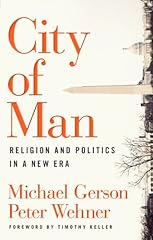
    Michael Gerson and Peter Wehner are authors of the recently released book, City of Man: Religion and Politics in a New Era, from which this post is excerpted.

  • Offshore Wind Power Line Wins Praise, and Backing

    Julia Cumes/Associated Press

    Opponents and supporters of a wind power project at Woods Hole, Mass., earlier this year. Developers of a new Atlantic project say they hope their proposal will meet less opposition.

    The New York Times
    October 12, 2010

    Offshore Wind Power Line Wins Praise, and Backing

    Correction Appended


    WASHINGTON — Google and a New York financial firm have each agreed to invest heavily in a proposed $5 billion transmission backbone for future offshore wind farms along the Atlantic Seaboard that could ultimately transform the region’s electrical map.

    The 350-mile underwater spine, which could remove some critical obstacles to wind power development, has stirred excitement among investors, government officials and environmentalists who have been briefed on it.

    Google and Good Energies, an investment firm specializing in renewable energy, have each agreed to take 37.5 percent of the equity portion of the project. They are likely to bring in additional investors, which would reduce their stakes.

    If they hold on to their stakes, that would come to an initial investment of about $200 million apiece in the first phase of construction alone, said Robert L. Mitchell, the chief executive of Trans-Elect, the Maryland-based transmission-line company that proposed the venture.

    Marubeni, a Japanese trading company, has taken a 15 percent stake. Trans-Elect said it hoped to begin construction in 2013.

    Several government officials praised the idea underlying the project as ingenious, while cautioning that they could not prejudge the specifics.

    “Conceptually it looks to me to be one of the most interesting transmission projects that I’ve ever seen walk through the door,” said Jon Wellinghoff, the chairman of the Federal Energy Regulatory Commission, which oversees interstate electricity transmission. “It provides a gathering point for offshore wind for multiple projects up and down the coast.”

    Industry experts called the plan promising, but warned that as a first-of-a-kind effort, it was bound to face bureaucratic delays and could run into unforeseen challenges, from technology problems to cost overruns. While several undersea electrical cables exist off the Atlantic Coast already, none has ever picked up power from generators along the way.

    The system’s backbone cable, with a capacity of 6,000 megawatts, equal to the output of five large nuclear reactors, would run in shallow trenches on the seabed in federal waters 15 to 20 miles offshore, from northern New Jersey to Norfolk, Va. The notion would be to harvest energy from turbines in an area where the wind is strong but the hulking towers would barely be visible.

    Trans-Elect estimated that construction would cost $5 billion, plus financing and permit fees. The $1.8 billion first phase, a 150-mile stretch from northern New Jersey to Rehoboth Beach, Del., could go into service by early 2016, it said. The rest would not be completed until 2021 at the earliest.

    Richard L. Needham, the director of Google’s green business operations group, called the plan “innovative and audacious.”

    “It is an opportunity to kick-start this industry and, long term, provide a way for the mid-Atlantic states to meet their renewable energy goals,” he said.

    Yet even before any wind farms were built, the cable would channel existing supplies of electricity from southern Virginia, where it is cheap, to northern New Jersey, where it is costly, bypassing one of the most congested parts of the North American electric grid while lowering energy costs for northern customers.

    Generating electricity from offshore wind is far more expensive than relying on coal, natural gas or even onshore wind. But energy experts anticipate a growing demand for the offshore turbines to meet state requirements for greater reliance on local renewable energy as a clean alternative to fossil fuels.

    Four connection points — in southern Virginia, Delaware, southern New Jersey and northern New Jersey — would simplify the job of bringing the energy onshore, involving fewer permit hurdles. In contrast to transmission lines on land, where a builder may have to deal with hundreds of property owners, this project would have to deal with a maximum of just four, and fewer than that in its first phase.

    Ultimately the system, known as the Atlantic Wind Connection, could make building a wind farm offshore far simpler and cheaper than it looks today, experts said.

    Environmentalists who have been briefed on the plan were enthusiastic. Melinda Pierce, the deputy director for national campaigns at the Sierra Club, said she had campaigned against proposed transmission lines that would carry coal-fired energy around the country, but would favor this one, with its promise of tapping the potential of offshore wind.

    “These kinds of audacious ideas might just be what we need to break through the wretched logjam,” she said.

    Projects like Cape Wind, proposed for shallow waters just off Cape Cod in Massachusetts, met with fierce objections from residents who felt it would mar the ocean vista. But sponsors of the Trans-Elect project insist that the mid-Atlantic turbines would have less of a visual impact.

    The hurdles facing the project have more to do with administrative procedures than with engineering problems or its economic merit, several experts said.

    By the time the Interior Department could issue permits for such a line, for example, the federal subsidy program for wind will have expired in 2012, said Willett M. Kempton, a professor at the School of Marine Science and Policy at the University of Delaware and the author of several papers on offshore wind.

    Another is that PJM Interconnection, the regional electricity group that would have to approve the project and assess its member utilities for the cost, has no integrated procedure for calculating the value of all three tasks the line would accomplish — hooking up new power generation, reducing congestion on the grid and improving reliability.

    And elected officials in Virginia have in the past opposed transmission proposals that would tend to average out pricing across the mid-Atlantic states, possibly raising their constituents’ costs.

    But the lure of Atlantic wind is very strong. The Atlantic Ocean is relatively shallow even tens of miles from shore, unlike the Pacific, where the sea floor drops away steeply. Construction is also difficult on the Great Lakes because their waters are deep and they freeze, raising the prospect of moving ice sheets that could damage a tower.

    Nearly all of the East Coast governors, Republican and Democratic, have spoken enthusiastically about coastal wind and have fought proposals for transmission lines from the other likely wind source, the Great Plains.

    “From Massachusetts down to Virginia, the governors have signed appeals to the Senate not to do anything that would lead to a high-voltage grid that would blanket the country and bring in wind from the Dakotas,” said James J. Hoecker, a former chairman of the Federal Energy Regulatory Commission, who now is part of a nonprofit group that represents transmission owners.

    He described an Atlantic transmission backbone as “a necessary piece of what the Eastern governors have been talking about in terms of taking advantage of offshore wind.”

    So far only one offshore wind project, Bluewater Wind off Delaware, has sought permission to build in federal waters. The company is seeking federal loan guarantees to build 293 to 450 megawatts of capacity, but the timing of construction remains uncertain.

    Executives with that project said the Atlantic backbone was an interesting idea, in part because it would foster development of a supply chain for the specialized parts needed for offshore wind.

    Interior Secretary Ken Salazar, whose agency would have to sign off on the project, has spoken approvingly of wind energy and talked about the possibility of an offshore “backbone.” In a speech this month, he emphasized that the federal waters were “controlled by the secretary,” meaning him.

    Within three miles of the shore, control is wielded by the state. Nonetheless, if the offshore wind farms are built on a vast scale, the project’s sponsors say, a backbone with just four connection points could expedite the approval process.

    In fact, if successful, the transmission spine would reduce the regulatory burden on subsequent projects, said Mr. Mitchell, the Trans-Elect chief executive.

    Mr. Kempton of the University of Delaware and Mr. Wellinghoff of the Federal Energy Regulatory Commission said the backbone would offer another plus: reducing one of wind power’s big problems, variability of output.

    “Along the U.S. Atlantic seaboard, we tend to have storm tracks that move along the coast and somewhat offshore,” Mr. Kempton said.

    If storm winds were blowing on Friday off Virginia, they might be off Delaware by Saturday and off New Jersey by Sunday, he noted. Yet the long spine would ensure that the amount of energy coming ashore held roughly constant.

    Wind energy becomes more valuable when it is more predictable; if predictable enough, it could replace some land-based generation altogether, Mr. Kempton said.

    But the economics remain uncertain, he warned, For now, he said, the biggest impediment may be that the market price of offshore wind energy is about 50 percent higher than that of energy generated on land.

    With a change in market conditions — an increase in the price of natural gas, for example, or the adoption of a tax on emissions of carbon dioxide from coal- or gas-generated electricity — that could change, he said.

    Correction: October 12, 2010

    An earlier version of this article misstated the size of the stake in the venture that Marubeni has taken. It is 15 percent, not 10 percent.


    Copyright.2010. The New York Times Company. All Rights reserved.

  • 6 tips for increasing Facebook engagement


    During Friday’s Facebook Success Summit session, “How to build and manage a loyal Facebook fan base,” Amy Porterfield and Cindy King focused on one key tenet of Facebook marketing: adding value. King and Porterfield, two of Social Media Examiner’s three page moderators, have helped the company gain more than 18,000 fans in just over six months.

    Building and managing a Facebook fan base from nothing means you need to offer your customers consistent value that they are not already getting through other means. While promotional offers can be a good source of material once you have an established fan page, King and Porterfield suggest posting only true content for the first 30 days.

    Once you have your page up and running, King and Porterfield say, they have a few key suggestions to drive engagement:

    • Keep your updates short and to the point. Focus on creating headlines that grab readers’ attention.
    • Comment and “like” your own posts. Leverage the promotional power of your own network (as an administrator) to help get the ball rolling. Thus, having multiple administrators and moderators can be to your page’s benefit.
    • End your posts with a call to action. Encourage fans to “like,” comment or share the content.
    • Encourage sharing. Ask your audience questions, start conversation and reach out directly to them. This is about building a social community, not a marketing channel.
    • Post third-party articles. Share relevant content without simply promoting your own material.
    • Keep the content fresh. Offer different kinds of content — using different sources and alternating administrator voices and multimedia features.

    What are you doing to add value and get people talking on your Facebook fan page?

    To learn more key tips and actionable steps for Facebook marketing from social-media leaders Brian Solis, Jay Baer, Mari Smith, and major brands such as Cisco, Xbox, SAP, and the Washington Redskins, sign up for the monthlong online Facebook Success Summit today!


    Related posts:

    1. Andy’s Answers: Use Facebook to get people talking about you
    2. Build your social community with passive users
    3. Xbox lets fans run the show on Facebook

    Copyright Noel Chun. @HolyKow.com 2010. All Rights Reserved