Month: August 2005


  • August 12, 2005
    Tony Soprano and Crew Will Return for ’07 Season
    By BILL CARTER

    In a deal that will extend the run of the most successful series in the history of cable television for another year, HBO announced yesterday that “The Sopranos” will not end with its next season starting in March, but will continue with an additional eight episodes starting in January 2007.

    The drama about a New Jersey mob family has won more Emmy awards than any other show on cable TV and has frequently drawn audiences larger than programs competing against it on broadcast networks, even though HBO is available in only about a third as many homes.

    Chris Albrecht, chairman of HBO, said yesterday that the network had been talking with David Chase, the creator of “The Sopranos,” for several months about his plans for the coming season.

    “Seasons for ‘The Sopranos’ have always been organic,” Mr. Albrecht said.

    Indeed, unlike conventional broadcast network series, there have been no set intervals between the production cycles of “The Sopranos” and they have started at several different times of the year.

    Mr. Albrecht said Mr. Chase had at one time indicated that he was coming to the end of his creative ideas and would produce only about 10 more episodes and then sign off on the series.

    “But David was just really reinvigorated by the reception the show got last year,” Mr. Albrecht said.

    Brad Grey, the new Paramount chief, who retained his title of executive producer on “The Sopranos,” said that Mr. Chase, when he got into the storytelling for the coming season, decided it was still so rich it could be continued, a decision Mr. Grey said that was endorsed by everyone involved in the production.

    “For the people on the show, this has been the greatest creative experience of everyone’s life. Why wouldn’t you want that to continue?” Mr. Grey said.

    For HBO, the business incentives were equally great. The series has been the most popular program the pay cable channel has generated.

    Now HBO will get the opportunity to add 20 episodes of “The Sopranos” instead of the 12 that had been planned. Mr. Albrecht said that HBO did virtually the same thing with its second-most successful series, “Sex and the City.” That comedy had an eight-episode final run a year after its last full season was completed.

    And as “Sex and the City” did, “The Sopranos” will shoot all its remaining episodes in one production cycle, holding over the last eight for what HBO is calling a “bonus season.” The break between the end of May 2006, when the 12-episode run ends, and January 2007, when the final eight episodes will be begin being broadcast, will be by far the shortest break between cycles of “The Sopranos” in the show’s history. Mr. Albrecht said that short break was crucial to Mr. Chase.

    Beyond the advantages HBO will get out of having two cycles instead of one (the channel, like the broadcast networks, tries to package “The Sopranos” with new series it would like to build audiences for), keeping the show in continuous production now means that for technical and contractual purposes it will remain the show’s sixth season. That is relevant because the show’s actors signed contracts that committed them to the series for six seasons.

    Mr. Grey said another advantage of staying in production for 20 episodes is “everybody will stay in the same rhythm.”

    Asked if this was truly an announcement that signaled the series would indeed produce a finale to the Soprano family saga, Mr. Albrecht hedged just a bit. “I’ll know it’s the final episode if David shoots a final episode,” Mr. Albrecht said.

    Copyright 2005 The New York Times Company Home Privacy Policy Search Corrections XML Help Contact Us Work for Us Back to Top


  • NEWS
    2005
    World Tour
    20052006
    Toronto
    club show
    Toronto
    rehearsals
    New album
    A Bigger Bang
    Wish
    list
    LICKS Tour
    20022003
    Tell Me
    Forum
    Mick
    Jagger
    Ronnie
    Wood
    Press
    conference


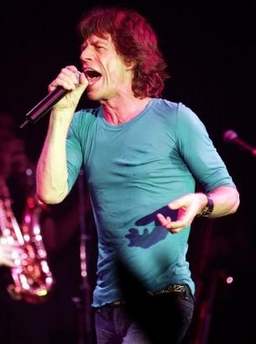
    The Rolling Stones
    Rehearsals club show
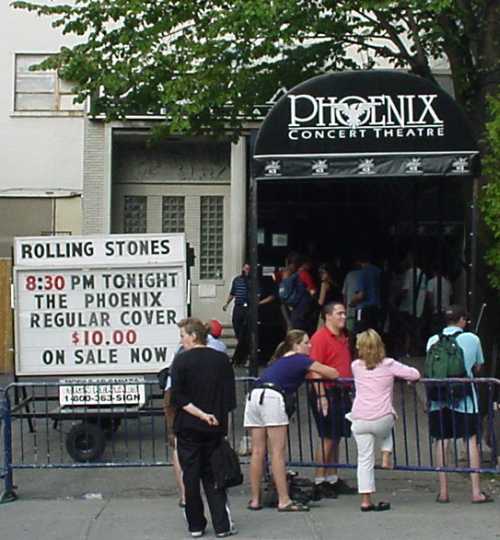
    Phoenix Concert Theatre, Toronto, Canada
    Wednesday, August 10, 2005


    The set list


    1. Rough Justice
    2. Live With Me
    3. 19th Nervous Breakdown
    4. She’s So Cold
    5. Dead Flowers
    6. Back Of My Hand
    7. Ain’t To Proud To Beg
      — Introductions
    8. Infamy (Keith)
    9. Oh No, Not You Again
    10. Get Up, Stand Up
    11. Mr. Pitiful
    12. Tumbling Dice
    13. Brown Sugar
    14. Jumping Jack Flash (encore)
    Show start :  9:35 pm
    Show end : 11:20 pm


    Show review by IORR

    Tickets were given out to approximately 250 people, some who waited 24 hours in line. Also, the night before at the rehearsal hall, approximately 50 tickets were given to regulars who had been hanging around the rehearsal hall for the past few weeks to see the Stones. Tickets were sold for $10 each and each person in line was allowed only 1 ticket. They had to provide photo ID, and were given a wrist band and ticket for their $10. When they arrive at the concert hall (which holds approximately 1,000 people), they have to provide their wrist band (which hasn’t been removed or tampered with), their ticket and their photo ID.

    The warm-up act was a band called “The Trews” from Canada. Great band. Hard hitting and fast rockers from start to finish. If there was any dust on the walls before they took stage it was all blown away when they finished. Great warm-up. Two guitars, one bass and drums. That’s all it takes to make great rock’n roll. They even played louder than the Stones!

    But we were all here for the Stones tonight… On time shortly after 9:30pm Michael Cohl had the great pleasure of yet again introducing the greatest rock’n roll band in the world doing a rehearsals club show in front of a lucky crowd in Toronto.

    The stage was all in red. Stones red. On the left wall they had put up three hugh banners with the “Bigger Bang Tongue”. The Stones tongue exploding in a big bang. And around the place they had placed a few posters promoting “A Bigger Bang”. Those posters soon got into souvenirs for fans picking them down from the walls. The building had a small bacony for VIP’s and family of the band, while the less than 1,000 lucky fans downstairs had open admission and could move around anywhere. Except for the fact that they all crowded up in the front of course.

    Opening song was “Rough Justice”. They played it like it has been performed for ages, but it was in fact the very first time it was performed live in front of an audience. Great rocker with a big punch from their new album. New look on stage. Bernard alone in front at the left. Chuck Leavell could hardly be seen at the far left. Then the four Stones. And Darryl on the far right.

    “Live With Me” rocked.

    Then “19th Nervous Breakdown” in a strange, almost ballad-like reggea version. Slower than in the original version. Still great and unique. But the crowd was sort of quiet on this one…

    “She’s So Cold”. No more quiet crowd. They all went mad. A fast and hard-hitting version with Mick all over the stage. Just wish it will be permanent for the tour. What a great version!

    “Dead Flowers”. Just have to love it every time you hear it. Great solo by Ronnie.

    Then Mick was all up front with a guitar. He started up the blues song “Back Of My Hand” from their new album. Playing the slide. Singing the deep blues like it was a club in Chicago with four people in the crowd only. Then he moved back after a while and left the 2nd part over to Ronnie. First time Mick was doing slide on stage? Well it was great and again it is kind of strage how great a new song is sounding, performed live for the first time ever.

    “Ait’t To Proud To Beg” is another one which is rocking the crowd and again you just have t love these guys doing such great songs!

    Introductions. Lisa and Blondie have been very low profile. Only Bernard up front mostly.

    Then Keith is doing his new song “Infamy”. From the new album. Sort of reggea style. Still quite unique, and a great we all can hope they will keep in the set.

    “Oh No, Not You Again”. Better than the version performed at the press conference. Great song from the new album!

    Then the Bob Marley & Peter Tosh song “Get Up, Stand Up”. At first a song which was straight forward, but then Mick is starting to work the crowd with a great sing-a-long. Everybody is singing and dancing, a great, great song for any size crowd!

    Another cover version coming up: “Mr. Pitiful” by Otis Redding.

    Then, if you ever was not sure this was a Rolling Stones show, because you got so many new songs, you got three of the greatest: “Tumbling Dice”, “Brown Sugar” and “Jumping Jack Flash”. They had been on stage for 1h 45 minutes, but it felt like half an hour. How time flies when you have such a great show going. And they don’t need to rehearse anymore. Not really. Just bring this show on to Boston, and all the fans will be more than happy.

    Final bow. It is all over. The three ex. Charlie is saying godbye for now. Not the first time Charlie is just leaving stage, but the nice thing is he is coming back. On his own. Looks a bit confused. Missing the others. But it is a great memory to bring on to Boston. And talking about Charlie… When Bobby Keys was introduced he hit his drums so hard I was sure Mick was jumping an inch or so. That guy is not old for sure. I am sure Charlie can hit them hard until he hits 100.

    Epilogue: We were all sort of family out there in the street last night, Queuing for tickets. Sharing water, muffins, stories. Unfortunately not everyone coming could get tickets. But those who came early, those who did not wait, those who just left once they got the message, got bonded tonight. When we all came back tonight for the show, after a few hours sleep, all looking fresh, there were smiling faces everywhere. Shaking hands. Smiling. Lucky fans. The best and most precious Stones shirts were on of course. One from Glasgow. The Scotland special 2003 T-shirt. Another one from the 1994 Oakland Halloween show. Then all the other specially selected shirts for the night. And after the show they had to kick us all out. Even bigger smile on all faces. No rush. Big kisses and goodbye when we finally had to go.

    You have something to look forward to. Bridges To Babylon was great. But this is unique. Hard hitting. Great guitars. Less brass. Less backup. More Stones. And with one more week of rehearsals still in Toronto, it will be even better, if possible. Enjoy the tour – soon it will come to a place near you!


    Review by David, Toronto

    The show was unbelieveable. “19th” was swampy slow when they started i thought they were doing “Who’s driving your plane”!!! “She’s so cold” wicked, “dead flowers” bang on “back of my hand” unbelieveable. The band has hit their stride. Jagger playing slide!!!! (no harp all night) then woody comes up behind and compliments his playing with more slide true highlight. “Proud to beg” yeah babeeeee…. keiths song “Infamy” was wonderful, the guitar work between him and ron were beautiful, what a great tune. “oh no…” rocked. “get up stand up” wow wow what a groove song comes to an end and jagger fires it up again for an amazing verson. ok after thinking love train was a weird choice last tour “mr. pitiful” made up for that when jagger said here is an otis song i would not have picked that (remember in the ’89 tour satisfaction was the otis version?) got horns use’em, wonderful. clearly having fun they blasted through “dice”, “Brown sugar” (charlie!!!!!) and “flash”. a good time was had by all, i was 7 people from the stage in the middle, very very sweaty and i had lost my voice within minutes of the show starting!!! and lorraine got hit on the forehead with keiths pick and caught it.

    Review by John Creighton

    I was at the show last night in Toronto and was blown away – again by the band. They seem as great as ever. The new songs are awesome! For me it was one of the best part of the show. I was lucky enough to catch a arrent keith richards guitar pick. I scooped that up as fast as he threw it. Mick was the man last night. Strong vocal performance. He’s definetly ready to rock the world this year. The whole band sounded great. I hope i did’nt hurt any ones ears screaming for my favorite band last night, and especially for charlie. It was a honour to be there last night, a night i will never forget.

    Reports please!

    Please send your reviews and reports to iorr@arena.no – Thanks!

    News reports and links


    Thanks to Høgne Midjord for news links!


  • MINORITY RETORT
    by ELSA WALSH

    How a pro-gun, anti-abortion Nevadan leads the Senate’s Democrats.
    Issue of 2005-08-08 and 15
    Posted 2005-08-01

    About twenty minutes before President Bush announced that John G. Roberts, Jr., was his choice to replace Sandra Day O’Connor on the Supreme Court, he telephoned Harry Reid, of Nevada, the Senate Minority Leader. As Reid recalls the brief conversation, Bush said, “This guy is really smart, and you’ll like him.” Reid replied, “I hope so,” and added that, during the search, he had enjoyed working with the White House legal counsel, Harriet Miers. (A few days earlier, Reid had met with Miers and had suggested ways to avoid a divisive confirmation process.) Mentioning her name, Reid said, was a signal—his way of telling Bush, “Thanks for not giving us any of these crazies.” Or, as he put it a little later, the President “didn’t give us somebody who people like me were jumping up and down screaming the first time the name was uttered.”

    Reid has been the Democrats’ leader in the Senate for six months. He is sixty-five, a trim man with short, graying hair and slightly stooped shoulders, and not someone who appears likely to jump up and down screaming. When we met last week in his Capitol office, it was clear that the Roberts nomination had come as a relief. “There were lots of people we didn’t want, and I made sure he knew what those names were,” Reid said, and mentioned the federal judges Edith Jones and Janice Rogers Brown, among others. “I think the President submitted someone who he thinks won’t be much trouble.” Nonetheless, Reid was reserving judgment until the F.B.I. investigation and the Senate Judiciary Committee hearings were completed. “Roberts is not a slam dunk,” he said. “I’m just keeping, as some have heard me say, my powder dry until we find out what the deal is.” And yet he couldn’t quite conceal his pleasure.

    The day after Bush made his choice public, Roberts went to Capitol Hill to meet with some of the senators who will eventually be asked to vote on his confirmation. Reid, who is a former trial lawyer, spent thirty minutes with Roberts. One thing he asked him was how he felt about Supreme Court precedents—in particular, on what grounds they might be overturned. “Precedent is so important to me in the law,” Reid told him.

    Roberts, Reid recalled, said, “ ‘Oh, on the Supreme Court you can change precedent only if there’s this and this,’ and he was rattling them off. I hope I didn’t act surprised, but I’d never heard anything like that before.” Roberts, in Reid’s view, left no doubt that he would be very reluctant to overturn precedents. To do so, Roberts had said, the Court would first have to consider a series of objective criteria, two of which stood out: whether a precedent fostered stability in the nation; and the extent to which society had come to rely on an earlier ruling, even a dubious one. “I thought it would be more of a weaselly answer than that, but he said you have to meet all these standards before you can change a precedent,” Reid said. Roberts’s view of precedent is likely to be an important issue during the upcoming confirmation hearings. Earl Maltz, a conservative and a professor at the Rutgers University School of Law at Camden, says that what Roberts told Reid could be “very significant,” because it runs counter to the “originalist” approach of Antonin Scalia and Clarence Thomas, who believe that the Constitution should be strictly interpreted, according to the original intent of the Founding Fathers; on that premise, some previously decided cases, including Roe v. Wade, would be ripe for overturning. “The Constitution is not a living organism,” Scalia has said.

    The other important part of their conversation, as Reid recounted it, had to do with an environmental case that Roberts had successfully argued before the Supreme Court in 2002—“one of the biggest environmental victories in decades,” Reid said. As a private attorney, Roberts had represented the Tahoe Regional Planning Agency, which had been sued for imposing a building moratorium in Lake Tahoe, Nevada. Under questioning by the Justices, Roberts had cited the potential for “irreparable harm” to the lake, and at one point said, “A temporary ban on development doesn’t render property valueless.” The environment is one of Reid’s causes, and what impressed Reid was that Roberts’s argument had been reasoned, not doctrinaire—“He based it on the facts.” Reid felt that the case demonstrated Roberts’s ability to grasp both sides of a debate.

    Reid more than once compared Roberts to Justice David Souter, who was appointed by the first President Bush, in 1990, and today is widely detested by conservatives because he frequently sides with the more liberal Justices. Souter and Reid are friendly. “He’s my favorite man on the Court,” Reid said. “I think he’s such a wonderful man, and he believes in precedent. That’s all he’s doing. He’s just following the law.” Reid smiled, and continued, “If somebody is a real lawyer and not a Clarence Thomas or Edith Jones, who is there not to be a judge but to be a legislator, it gives us some hope, and so, if he is approved, I would hope he would turn out like Souter or somebody like that.” There is, to be sure, little in Roberts’s early record to suggest that he is anything but a conservative. A Washington Post report last week, for instance, quoted documents suggesting that Roberts had been an aggressive advocate of Ronald Reagan’s agenda when he served as a special assistant to Attorney General William French Smith.

    Reid, though, believes that Bush chose Roberts in a moment of political weakness. Two months earlier, the Democrats had been successful in beating back the so-called “nuclear option”—Senator Trent Lott’s infelicitous name for the Republican attempt to change long-standing Senate rules on the filibuster. That issue had occupied the Senate for months, and for good reason: Republicans have a ten-vote advantage in the hundred-member Senate, but it requires sixty votes to stop a filibuster; the Republican leadership wanted to change that to a simple majority of fifty-one votes, which would have made it almost impossible for the Democrats to block a controversial Supreme Court nomination. “I don’t want to stick my finger in his eye, at this stage,” Reid said, speaking of Bush. “I’m trying, in a nice way, to say I think everyone’s experience here with the nuclear option has made everyone, including the President, more cautious about judges, because, as it turned out, we spent a third of the Senate’s time so far this year basically on it.” The filibuster issue was finally resolved by means of a complex bargain worked out by a group of centrist Republicans and Democrats, who became known as the Gang of Fourteen. In the end, the filibuster was preserved. The result was widely seen as a victory for Reid and a setback for his counterpart, Majority Leader Bill Frist, of Tennessee.

    After that, Reid said, Bush “just didn’t need another fight.” He added, “He’s had plenty.” He pointed to a drop in Bush’s approval rating, and cited a recent Wall Street Journal / NBC News poll in which only forty-one per cent of the respondents said they believed that Bush was honest and straightforward. Reid attributed the President’s declining popularity to bad news from Iraq, the investigation into whether his key political adviser, Karl Rove, leaked the name of an undercover C.I.A. agent, and his proposal, now faltering, to privatize part of Social Security. “He’s always been king of the hill,” Reid said. “His numbers have been good, but they’re not good now.” Reid also thought that Bush had come to have a different view of him. “I just don’t think he estimated me at all—under or over.” Now, Reid said, “I think he understands me a little bit more than he used to.”


    This spring, I went to see Reid in Nevada, which he has represented in Washington since 1983, in the House of Representatives for two terms and, since 1987, in the Senate. Outside his home state, or the orbit of the United States Capitol, though, he is not widely known. During one stop, Reid called around the country to some committed Democratic donors. In two out of three calls, he had to identify himself several times before the recipient figured out who he was. “This is Harry Reid.” Pause. “I’m a U.S. senator.” Pause. “Harry Reid. I’m the Senate Minority Leader. Harry R-E-I-D.” When he hung up, he turned to me and said, “I guess I’m not too well known in that household.”

    In Nevada, a state where the federal government owns nearly ninety per cent of the land and politics can be incestuous, Reid’s power and influence are widespread. He was embarrassed two years ago when a Los Angeles Times story revealed that one of his sons and his son-in-law had lobbied in Washington for “companies, trade groups and municipalities seeking Reid’s help in the Senate.” Over the previous four years, the newspaper reported, these efforts, supported by Reid, brought more than two million dollars in business to firms that employed family members. At the time, Reid’s four sons, ranging in age from thirty to forty-two, worked for Nevada’s largest law firm, Lionel Sawyer & Collins. The story noted that the Howard Hughes Corporation alone “paid $300,000 to the tiny Washington consulting firm of [Reid’s] son-in-law Steven Barringer to push a provision allowing the company to acquire 998 acres of federal land ripe for development” in the Las Vegas metropolitan area. When I asked Reid about the L.A. Times story, he pointed out that his son-in-law had been a lobbyist before his daughter married him. Susan McCue, Reid’s chief of staff, said in an e-mail that when the newspaper started making inquiries “Senator Reid (and I) agreed that we needed to put up a wall between any family members lobbying and this office for the sake of appearances, even if they’re working on issues that benefit Nevada.” Soon after he was interviewed by L.A. Times reporters, Reid banned relatives from lobbying his office.

    Reid seems, at first, an unlikely choice for party leader in the Senate, especially given the tradition of men like Lyndon Johnson, whose method of leadership was to cajole and threaten his colleagues. Reid doesn’t have the sort of domineering personality that L.B.J. had; in fact, despite an occasionally quick temper, he can seem almost shy. But, if Reid is no Johnson, he has, unlike his immediate predecessor, Tom Daschle, of South Dakota, or Frist, been able to keep his party largely united. That is due, in part, to his attentiveness; he is in constant contact with colleagues, and even reserves a pocket in his suit for their written requests. Susan McCue says that Reid is always assessing a person’s vulnerabilities in order to “disarm, to endear, to threaten, but most of all to instill fear.” And Reid has made it plain that there are consequences for stepping out of line. Without Reid’s approval, Senator Byron Dorgan, of North Dakota, who was making a bid to chair the Democratic National Committee, announced that he had Reid’s support. Reid—a friend of Dorgan’s—promptly and publicly withdrew his backing.

    Like L.B.J. and other Southwestern politicians, such as Barry Goldwater, Reid has a habit of using language that his critics say is inappropriate for a Senate leader. “I think Senator Reid often says what we’re all thinking but perhaps are afraid to say,” Senator Edward Kennedy says. Reid has called Alan Greenspan, the Federal Reserve chairman, a “political hack,” said that Clarence Thomas was an “embarrassment,” and labelled Bush a “loser” and a “liar.” He surprised the Democratic operative Jim Johnson, who was conducting John Kerry’s search for a running mate, by sharply criticizing a long list of potential candidates, including John Edwards.

    In public presentations, Reid is sometimes barely audible, which forces his spokesman to stand very close to him to hear what he says. In his haste to finish a speech, he sometimes mangles the text, and he is not much liked by television—he suffers from a certain charisma gap. When I asked him one day which former Senate leader he most admired, he mentioned Mike Mansfield, of Montana, who was the Majority Leader from 1961 to 1977. “He hated going on programs like ‘Meet the Press,’ and he was so bad they eventually hated having him on,” he said. Yet the aversion to television also works to Reid’s advantage. As former Senator John Breaux, Democrat of Louisiana, says, “It’s easier for an elected official like Harry to be more trusted and accepted by his colleagues if they don’t think that he’s out in front trying to do it for the media.”

    To most politicians, this kind of anonymity would be torment. But Reid is not aspiring to be the face of the Democratic Party, or even its voice. “I know my limitations,” he said, and added, “I haven’t gotten where I am by my good looks, my athletic ability, my great brain, my oratorical skills.” Reid is a Mormon, and differs with most of his Democratic colleagues on social issues. He is opposed to abortion, gay marriage, and gun control, and supports the death penalty. He voted for both Persian Gulf wars. At a time when the White House and Congress are controlled by Republicans, Reid’s essential role is defensive—to hold the line for his party when the Bush agenda threatens to trample what Democrats most value. And, despite his relative anonymity, Reid has certainly been noticed by conservatives. When the Senate finally reached a deal on the filibuster, James Dobson, the ultraconservative chairman of Focus on the Family, delivered a backhanded compliment to Reid. “This Senate agreement represents a complete bailout and betrayal by a cabal of Republicans and a great victory for united Democrats,” Dobson said.


    When Reid talks to constituents, he likes to single out staffers for particular praise. He told a group of Las Vegas businessmen that Susan McCue was one of ten children and that “she worked like a dog to get through college.” McCue, who is thirty-nine, and has worked intermittently for Reid since 1990, rolled her eyes at Reid’s description. When Reid speaks about Bush, his tone changes; he has called Bush “King George,” and in Las Vegas he told a group of community activists that the President’s view was “If you’re poor it’s your fault. Go out and be part of America’s success. Go out and get a job and be rich.” And he added, “I wish it were so.” When I asked McCue about this apparent class sensitivity, she said, “It’s not resentment on Reid’s part. But he knows they”—Reid and Bush—“are from different sides of the track.” She urged me to visit Searchlight, Nevada, where Reid was born and has a home—a place that does double duty as a political backdrop, evoking the authentic Old West.

    Seven years ago, Reid wrote a history of his home town, “Searchlight: The Camp That Didn’t Fail,” published by the University of Nevada, in which he observed, “There are no permanent towns that survive on mining alone. When the tide goes out, when the boom is over, the debris is all that is left. . . . When the town fades, those with money, talent, and initiative generally depart quickly, leaving behind the diehards, the outcasts, the mavericks, or those too old or too sick to move on.” Today in Searchlight, which is about a mile long, one can see the two-room cinder-block schoolhouse that Reid attended, a small casino on the main street, and a McDonald’s. Almost all the houses are double-wide mobile homes, with no landscaping.

    There were about two hundred people left in the town when Reid was born, in 1939, the third of four sons of Harry Reid, Sr., a gold miner with an elementary-school education, and his wife, Inez, who did laundry for some of the local bordellos, which were by then the town’s primary business. Reid’s boyhood home was built out of scavenged railroad ties; it had no indoor toilet and no hot water. There were no telephones in Searchlight until the nineteen-fifties. When Reid’s younger brother, Larry, broke a leg in a bicycle accident, the leg was never set. “We didn’t go to doctors in those days unless it was a matter of life and death,” Reid said. “And he just lay there. It was so painful, and you couldn’t touch the bed. And that’s the way it just was for several days.” (Larry and another brother are retired; the third, an alcoholic, died in 1977.) Reid’s parents drank and his father often got into brawls. “He didn’t like people coming around and wouldn’t let us answer the door even if we were home,” Reid said. When he could no longer work, because of silicosis, a miner’s cough, Reid’s father stopped drinking, but at the age of fifty-eight he committed suicide, with a gunshot to the head. “He was always depressed,” Reid said, adding that his father’s depression was evident to him only in hindsight. “We always joke that Dad sobered up and killed himself.” His mother tacked to the wall a blue pillowcase with gold fringe and a message of perseverance that originated with Franklin Delano Roosevelt: “We can. We will. We must.”

    Because the school in Searchlight went only up to eighth grade, every week Reid hitchhiked forty miles to Henderson, a factory town, where he boarded with relatives while he went to the public high school. “I always knew I wanted to get out of there,” he said of Searchlight. “I knew that from the time I was a little kid.” In Henderson, Reid met Landra Gould, the woman whom he eventually married. Reid said that Gould’s parents, who were Jewish, liked him until they realized how serious the couple was—“They wanted their daughter to marry a Jewish boy”—and tried to end the relationship. Her father, Landra Reid told me, “would tear up Harry’s letters, hang up the phone on him. They had a fight in the front yard.” Reid has said that the fight ended when he knocked his future father-in-law, a chiropractor, to the ground. Landra says, “I remember a lot of yelling and pushing.” In 1959, when Harry was twenty and Landra was nineteen, they eloped. After a honeymoon dinner at a Chinese restaurant in Las Vegas, Landra called home to report the news; within days, she got a letter from her parents saying that, despite their misgivings, their daughter’s happiness came first. Reid now wears his father-in-law’s ring.

    In Henderson, Reid also met Donal (Mike) O’Callaghan, who arrived at the high school to teach government and boxing. O’Callaghan, who had lost a leg in the Korean War and was just ten years older than Reid, became a hero to Reid after he faced down a school bully. Reid, a catcher on the school’s championship baseball team and a guard on the football team, learned to box from O’Callaghan, who helped him win a partial athletic scholarship to a junior college in Utah and later helped pay his way through law school. O’Callaghan, like Reid, had larger ambitions: in the seventies, he served two terms as governor of Nevada, and he went on to become the executive editor of the Las Vegas Sun and a sometime columnist for the paper. When he died, last year, Reid eulogized him as the best friend he had ever had. McCue told me that the only time she ever saw Reid cry was at the news of O’Callaghan’s death.

    While Harry was in college, he and Landra converted to Mormonism. “The thing that was so impressive to me—in addition to the spiritual aspects that I’d never experienced before—was the emphasis on family,” Reid said. “The biggest jump for me,” Landra Reid said, “was to try to understand the connection between Judaism and the Old Testament and the New Testament, and how to make any sense of how Christianity fit into it.” She added, “Before we got married, we had talked about it and decided we were not going to let religion divide us after what we’d been through. If we found something, we were going to find it together.” Until both of her parents died, Harry Reid said, the family observed the Jewish holidays. “My two oldest children have great affection for things Jewish, and my three younger children are aware of their mother’s lineage, and all of them are very proud of the fact that they are eligible for Israeli citizenship.” On the doorway of their house in Searchlight, the Reids have a mezuzah.

    The Reids’ house, a Mediterranean-style two-bedroom home that faces the open desert, is situated on a hundred acres at the end of a long dirt road. They had it built four years ago, after living for years in a double-wide. Reid’s friend Jay Brown, a Las Vegas lawyer and a Brooklyn native, said, “You should have seen the trailer,” and complained that simply getting there ruined the tires of his car. Reid is a former marathoner—he ran twelve races before an injury and then a fall sidelined him. Now he takes an hour-long walk each morning, often with Landra, whose presence appears to put him in a lighter mood.

    The Reids took me on a tour of the house, which is decorated in a Western mining motif, including a gate from one of the town’s mines that hangs on a wall in the entry hall. Next to it is an abstract oil painting of Martin Luther King, Jr. Reid showed me his high-school yearbook; when he was sixteen, his nickname was Pinky. A painting of what appeared to be a mountain man with a white scraggly beard caught my attention. “That’s my brother Larry,” he said.“He still looks that way.” He pointed to a skeletal structure in the distance, the remains of one of the mines where his father worked.


    As George W. Bush has learned, Harry Reid does not ignore slights. “I believe in vengeance,” he once told a reporter. In May, he began a commencement address at George Washington University Law School by saying that the last time he had set foot on the campus was January, 1964—the year he graduated from the school. “I’ve been holding a grudge,” he said. Law school was difficult. “We managed to get by, but just barely,” he said. At one point, while Landra was pregnant with their second child and he was working six days a week as a Capitol police officer, the transmission of their car, a 1954 Buick Special, broke down. He was desperate. “No car,” he continued. “No way to get to work. Too many bills.” When he approached a dean for help, he recalled, the dean said, “ ‘Why don’t you just quit law school?’ I don’t remember exactly what I thought he would say, but that was not it,” he said. “Since that day, I’ve harbored ill will toward this school.”

    Reid told the graduates that he regretted his pettiness, but it’s fair to say that payback has been a factor in his career. When I asked what got him interested in politics, he had a one-word reply: “Rudeness.” He explained that not long after he returned to Henderson to practice law, a client, a doctor, had asked him to accompany him to an administrative hearing at a hospital. “As we walked in, the chairman of the board of trustees said, ‘We don’t need lawyers here. We do what we want to do,’ ” Reid recalled. “It was just so rude. I wasn’t there to say anything. I was there just to watch. As a result of how rude he was, I decided to run for the hospital board.” He was elected in 1966, and not long afterward, he said, “we got him”—the administrator—“fired.” Soon, Reid decided that he could accomplish more in the state assembly, and in 1968 he announced his candidacy. This time, he went after the telephone company. “Service was so bad then, and they were dumb enough to respond to me,” Reid has said. “So I had an issue.” Reid served in the assembly for only two years, but he acquired a reputation as a consumer advocate, and he still holds the Nevada record for introducing the most bills in a session.

    In 1970, Reid was barely thirty, and preparing for another state run, when it was suggested that he enter the lieutenant governor’s race. His good friend Mike O’Callaghan was running for governor as a Democrat—a long-shot candidacy—and Reid decided to run, he says, “within fifteen minutes.” His law partners gave him a party, and, as Reid tells it, “one of the local columnists wrote that I must be supported by Howard Hughes—otherwise how could I have a big party like that. Howard Hughes had just come to town. Of course it wasn’t true, but who was I to deny that he was helping me?”

    Reid believes that the pseudo-Hughes connection may have frightened off challengers, and both O’Callaghan and Reid, running separately, won. But success, he says, made him overconfident. Reid had been lieutenant governor for four years when Senator Alan Bible announced his retirement. “I was a shoo-in,” Reid says. “Everything was in my favor. But I was young and impulsive and I attacked everybody. Every day, we would get up and find out who we were going to attack that day.” His pollster was Pat Cadell, who went on to work for Jimmy Carter’s Presidential campaign in 1976. Cadell assured him that he couldn’t lose. “I showed him,” Reid says. “I lost by six hundred and twenty-four votes,” to Paul Laxalt. When friends told him that such reverses always turn out for the best, he said, “I wanted to kick them in the shins.”

    In 1977, O’Callaghan appointed him to the chairmanship of the Nevada Gaming Commission, which oversees casinos, and that was an experience that made his other work look easy. Before Reid took the job, O’Callaghan introduced him to the outgoing chairman, Peter Echeverria. “Pete was telling us, ‘I’ve had people out here watching me, these gangsters,’ and he said, ‘I think they’ve tapped my phone,’ ” Reid recalled. “I thought he was making all this stuff up. It just didn’t make sense. I had no concept of the Mob. It meant nothing to me.” There had been a decrease in Mob activity, but organized crime was again investing in Las Vegas, and for four years Reid confronted wiseguys like Tony (the Ant) Spilotro, who had been sent to Las Vegas by a Chicago branch of La Cosa Nostra, “the Outfit,” and was known for killing his victims by squeezing their heads in a vise. In 1979, Reid barred Spilotro from all casinos.

    In July of 1978, a man named Jack Gordon, who was later married to LaToya Jackson, offered Reid twelve thousand dollars to approve two new, carnival-like gaming devices for casino use. Reid reported the attempted bribe to the F.B.I. and arranged a meeting with Gordon in his office. By agreement, F.B.I. agents burst in to arrest Gordon at the point where Reid asked, “Is this the money?” Although he was taking part in a sting, Reid was unable to control his temper; the videotape shows him getting up from his chair and saying, “You son of a bitch, you tried to bribe me!” and attempting to choke Gordon, before startled agents pulled him off. “I was so angry with him for thinking he could bribe me,” Reid said, explaining his theatrical outburst. Gordon was convicted in federal court in 1979 and sentenced to six months in prison.

    One day in 1981, Landra Reid noticed that the family station wagon was not running properly, and she discovered a cable under the hood and “something” sticking out of the gas tank. Police found a device that would have exploded had it been correctly grounded. Reid always blamed Gordon for the bomb, and the incident frightened his family—by then there were five children, four sons and a daughter—so that for a year they started the car by remote control. Gordon died in April, at the age of sixty-six, and his connection to the bombing attempt was never proved. McCue, Reid’s chief of staff, says that the episode changed Reid. Whatever the issue, she says, his approach is always “No one is going to kill me over this.”

    When Reid’s Gaming Commission appointment expired, in 1981, he went back to private practice. He was at work on a liability lawsuit stemming from the M-G-M Grand fire, the 1980 blaze in which eighty-four people died, when Nevada was given another seat in the House of Representatives. Reid ran as a New Democrat, in a state that was tilting Republican. “Part of it, I’m sure, was my narrow loss in the Senate race, and it was also to show people I could make a comeback,” Reid said of his desire to run. He won the election and went to Washington in 1983.


    After visiting Searchlight, Reid and I drove to Las Vegas, fifty-five miles away, through the Mojave Desert. On the drive, he talked about his relationship with Bush, whom he regularly disparages; there appears to be no chance that Reid and Bush will duplicate the unusually friendly relationship that Ronald Reagan had with Thomas P. (Tip) O’Neill, the Democratic Speaker of the House, or even the businesslike partnership between Speaker Sam Rayburn and President Eisenhower. At an appearance at the Doris Hancock Elementary School, in Las Vegas, which some of his children attended, Reid began by talking about how his life had become more pressured since he’d become Minority Leader, but he was soon asked about Bush. “I didn’t come here to beat up on President Bush,” he said. “But I have served three Republican Presidents. President Reagan—I cared a great deal for him, and he got most of what he wanted. If you disagreed with him, he did not hold it against you.” He went on, “President Bush No. 1 is such a nice person. Some of my most prized possessions are the three letters he wrote me. But this President is totally different. He takes after his mother. It’s either his way or no way. It’s very, very difficult.” Even Reid seemed surprised by the depth of his reaction. “I’m sorry to give you this report on President Bush,” he said, “but that’s how I feel.”

    Reid had been head of the school P.T.A., and the parents of some of his children’s friends were in the audience. One was the mother of a college roommate of one of his sons. Like Reid, she is an observant Mormon and they were old friends; but she was a Republican and clearly upset that Reid did not support Bush, especially on the partial privatization of Social Security. Later, she told me that she had voted for Reid in every election except the last one. “He became too liberal,” she said. “I love his wife, but I feel he’s left a lot of his beliefs behind.” While we were talking, Reid approached and she told him that one of her son’s friends, a professional football player, had been at the White House on Valentine’s Day. “They said Bush was so nice,” she said. Reid raised his eyebrows.

    What happened between him and Bush? Their first meetings, right after Bush’s 2000 election, were cordial enough, Reid told me. “He was an extremely personable man—the kind of guy you’d like to go to a ballgame with.” But, he went on, “I have a lot of history now that I didn’t have then. First of all, he started out on a real bad foot with me because of Yucca Mountain”—a site a hundred miles northwest of Las Vegas, which the federal government wants to use as long-term storage for tens of thousands of tons of radioactive waste. Al Gore opposed this plan in the 2000 campaign, and Bush seemed to oppose it as well, promising that he would base any decision on “sound science.” Reid believed Bush, but, he said, “my belief was short-lived.” Barely a year into his first term, Bush approved the project, and Reid accused him of lying: “I thought he had misled the people of Nevada on nuclear waste.” Of calling Bush a liar, Reid said, “If somebody doesn’t tell the truth, how else would you describe it? I guess I could have said he didn’t tell the truth.” Reid said that, in a private meeting in the Oval Office in February, 2002, he told Bush, “You sold out on this.” The Wall Street Journal later reported the Yucca Mountain decision as the “biggest defeat” of Reid’s career, but added, “The fact that the campaign went on for so long is testimony to Mr. Reid’s formidable persuasive powers—a gift that still could put him in line to be his party’s next leader.”


    The moment came on November 3, 2004, the day after the election. Tom Daschle had just lost his Senate race in South Dakota, becoming the first Senate leader in half a century to be defeated, and the Republicans had picked up five other seats being vacated by Democrats. Reid, who, as the Democrats’ Minority Whip since 1998, had been Daschle’s No. 2, had assiduously attended to his colleagues’ needs, monitoring legislation on the Senate floor while earning a reputation as trustworthy. By 11 a.m., Reid had the votes he needed. Neither Bush, who had been unsure of his own victory until early that morning, nor Reid, who had spent much of the night on the phone, had slept much. Bush called Reid in Nevada, and, Reid recalled, “he said, ‘This is a new term for me. I’m not running for anything ever again and I want to work with you again.’ ” Reid was pleased, and reported the conversation to his staff. “He had a significant majority in both the House and the Senate, and I thought he would work with us to try to get things done, that we could agree on,” he said.

    Reid has not been particularly tough on Bush’s appointments so far. He voted to confirm Condoleezza Rice as Secretary of State and even announced that he would probably support Scalia as Chief Justice if William Rehnquist retired and Bush wanted him. He didn’t push for a filibuster against Alberto Gonzales as Attorney General, despite the opposition of all eight Democrats on the Judiciary Committee. Yet, on February 7th, the Republican National Committee attacked Reid’s record on its Web site, citing the Los Angeles Times story on his family, in which Reid was accused of voting for legislation that benefitted his sons and son-in-law. (One passage quoted on the R.N.C. Web site said, “So pervasive are the ties among Reid, members of his family and Nevada’s leading industries and institutions that it’s difficult to find a significant field in which such a relationship does not exist.”) On the Senate floor, Reid denounced the story as “scurrilous” and rebuked the President. Coincidentally, Bush had invited the Reids to dinner at the White House that night, along with three other senators and their wives. Reid initially thought about not going, but decided that “it would be too easy for them for me just not to go.” Still, it was clear that he and Landra were angry. Reid recalled that Bush said, “You know, I didn’t have anything to do with that. I don’t know what they do.” Reid wasn’t mollified. The next day, he reminded reporters of Bush’s campaign pledge to be a “uniter.” “I’m beginning to think those statements were just absolutely false,” he said.

    There is no longer anything about Reid’s family on the R.N.C. Web site. The offending lines were removed on orders from Karl Rove. According to Rove, following the dinner Bush told him to tell Ken Mehlman, the chairman of the R.N.C., to “never mention Reid’s family again.” When I asked Reid about this, he said he was aware that the section had been deleted, but not of Bush’s role. “That’s nice of him,” he said.

    Reid said that relations with Bush got worse in April, during the filibuster dispute, at a breakfast meeting in the White House between Bush and the congressional leadership. Reid said that he appealed to Bush to stay out of the fight, telling him, “I hope you’re going to help us on this nuclear option.” The President, he said, “was very direct and blunt: ‘I have nothing to do with this. This is your business. It’s not mine.’ ” Reid thought that would remove one powerful obstacle. But, within days, Vice-President Dick Cheney announced that, as acting president of the Senate, he would provide the tie-breaking vote if it was needed to change the rule. Bush, Reid said, had pulled a “halfback’s stutter step”—a fake—on him. “He was just trying, it appears to me, to mislead me. He just wasn’t telling me the truth at that breakfast meeting. No question about it. He could have said to me, ‘What you’ve done is wrong and I’m going to do everything I can to get it exercised. I want all my judges.’ But he didn’t.” Reid paused. “Just tell me what I have to work with. Don’t mislead me. How do I say this—because I don’t want to appear holier than thou—but relationships are built on trust, and that’s the problem that I’m having with the White House today. It’s that I don’t think they want to establish trust with me.” Reid paused again and shrugged. “I’m not important to them. They can just go around me.” He sounded weary, but then his voice strengthened. “He’s not a dictator. He’s a President. And he has the same power that I do. He individually may have more power. But his branch of government has no more power than mine.”


    About a month later, at a point when negotiations on resolving the filibuster issue seemed to have stalled, Reid made his only phone call on the issue to the White House—to Rove. “This thing should be worked out,” Reid said he told Rove. “It’s craziness.” At the time, Bush had re-submitted the names of seven appellate-court nominees whom Senate Democrats had previously blocked, using the filibuster tactic. “We let this continue to go on, twenty years from now, if either of us is still alive, we’re going to look back and be ashamed of what we allowed to happen,” Rove said. He said that harsh attacks were driving out possible nominees who were leery of the confirmation process. “I get it,” Reid responded. He told Rove that he had been trying for years to improve the process, and added, “I’m just trying to find a way out of this.”

    For Rove, the most painful example was Miguel Estrada, who had worked in the Solicitor General’s office, and who was Bush’s first appellate-court nominee, in 2001. Estrada withdrew his name twenty-eight months after being nominated. During the confirmation struggle, Estrada’s wife miscarried; in November, 2004, she died, of an overdose of alcohol and sleeping pills. The death was ruled accidental by the medical examiner. Rove said that Mrs. Estrada had been traumatized by the nastiness of the process. Reid told Rove that he empathized with Estrada, but said that the Republicans’ treatment of President Clinton’s nominees—more than sixty were never voted on by the Judiciary Committee—had created victims, too. Rove, according to Reid, replied, “We need to sit down and talk about this,” adding that the ugliness of the confirmation process had reached a new low.

    Rove recalls that the conversation was mostly about making a deal on the judicial nominees. According to Rove, Reid said, “They’re all unqualified, but you can pick the one you want,” and eventually it got to two. At one point, Rove asked Reid, “If they’re unworthy, why are you letting us have any?” And he said, “Harry, it’s like you’re asking us to pick one of our children and kill them.” He said that Reid kept jumping around with the numbers: “It was a nutty conversation.” For Reid at this point, the individual nominees were a secondary issue. “I didn’t like the judges,” he said later, “but there was a principle higher than any of those men or women”—the preservation of the Senate filibuster rule. When the discussion ended in an impasse, Reid was disappointed, but he said, “I wasn’t owed anything, that’s for sure.”

    Reid had always regarded a full Senate vote on the “nuclear option” as a gamble. Frist appeared to hold the advantage; with Cheney in the wings, he needed only fifty senators to make the rules change, while Reid needed to persuade six Republicans to cross over. And although Reid thought that he had those six votes, he was certain only of four. “Each day, I started losing people,” he recalled. By May 23rd, the day before the scheduled vote, Reid believed that neither he nor Frist really knew for sure who had the votes, and when the seven Democrats in the Gang of Fourteen told Reid that they were ready to make a deal with the Republicans he acquiesced. “I thought we might have the six votes, but I wasn’t positive, and I wasn’t willing to take the chance. He”—Frist—“didn’t know that he had the votes, but he was willing to take the chance.” In the final compromise, three of the seven Bush judicial choices that Reid and Rove had discussed were approved by the Senate, and it was simultaneously agreed that senators could filibuster a nominee “under extraordinary circumstances”—somewhat vague language that has yet to be tested. For the Democrats, though, the agreement preserved the power to block a Bush Supreme Court choice.

    Standing before reporters, Reid, who had worked behind the scenes for this result, looked euphoric. Frist, who appeared later, looked glum—understandably, some observers thought. Frist had staked a lot on the issue; he has said that he plans to retire from the Senate in 2006, and it is believed that he may seek the Presidency. “I was not a party to that agreement nor was the Republican leadership,” Frist said. “Now we move into a new and uncertain phase.” The Senate that Frist purportedly led had suddenly been taken over by a bipartisan group beyond his reach. And, for Reid and others, it is not a stretch to see the connection between the filibuster compromise and the relatively noncontroversial nomination of John G. Roberts.


  • August 6, 2005
    F.D.A. Responds to Criticism With New Caution
    By GARDINER HARRIS

    Stung by a series of drug safety scandals, the Food and Drug Administration has in recent months issued a blizzard of drug-safety warnings and approval times for new drugs are slower.

    The agency is issuing twice the number of public advisories about drug risks as it did a year ago and adding five times as many black box warnings – its most serious alert – to drug labels. And drugs approved in the first half of this year took almost twice as long to get that approval as drugs approved in the same period last year.

    This new conservatism, a response to fierce recent criticism from Congress that the F.D.A. has failed to protect the public against drug dangers, has upset some doctors and drug makers.

    Doctors say that the agency’s vague warnings and confusing advice mean that doctors are not getting the information they need to avoid problems but will get blamed for them anyway. Drug makers say the warnings are scaring patients and reducing sales.

    The apparent changes have done little to mollify the F.D.A.’s many critics, who say that the agency is either not doing enough, doing too much or failing to be consistent.

    “The F.D.A. should not be slowing things down or speeding them up depending on how the wind blows,” said Senator Charles E. Grassley, a powerful Iowa Republican who has become one of the agency’s toughest critics. “Instead, the agency should be a rock of stability.”

    F.D.A. officials dismissed the notion that the agency has changed the way it regulates drugs.

    “Maybe we’re not being overly cautious but instead trying to be responsive,” said Dr. Scott Gottlieb, the agency’s deputy commissioner.

    But Dr. Gottlieb said that the agency’s advisory committees – crucial arbiters of drug risks – are vulnerable to a growing chorus of criticism. If the advisory committees become more cautious, he said, the F.D.A. might follow their lead.

    The agency once avoided issuing disturbing warnings about drugs unless studies proved that a risk was certain. Agency officials had worried that issuing warnings about suspected problems would cause undue alarm and lead patients to stop taking needed therapies.

    But two episodes over the last year – one involving antidepressants and suicide risk and the other the withdrawal of the pain pill Vioxx – have led the agency to become more cautious.

    Now, instead of waiting for proof, the agency has promised to issue public health alerts about drug risks even when problems are only suspected. And over the last year, it has demanded that pharmaceutical companies add tough warnings for drugs as diverse as the antidepressant Zoloft, because it might lead a small number of teenagers to become suicidal, and the popular pain pill Advil, because it might in rare cases cause heart attacks.

    In each case, according to disclosures at open hearings, the agency has acted with little or no evidence that the risks are real. But it has demanded that warnings be placed on them anyway. In many cases, patients have stopped taking the medicines in the wake of the warnings.

    “Drug reviewers have seen that the environment has changed, and they’ve become more cautious because they don’t want to be the next person hauled before Congress,” said Dr. Kenneth I. Kaitin, director of the Tufts Center for Study of Drug Development.

    Agency officials say that they are simply trying to do a better job of communicating drug risks directly to doctors, pharmacists and patients after years of letting drug makers do most of the talking. The agency will soon issue instructions to drug companies about how to send information by e-mail directly to physicians about drug risks, Dr. Gottlieb said.

    Dr. Lester Crawford, who last month was confirmed by the Senate to become the Food and Drug Administration commissioner, has said that the agency can no longer wait until risk information is proved but must communicate its uncertainty to the public. This has left many physicians uneasy.

    “They’re just passing the blame onto the physician if something goes wrong,” said Dr. Phillip Kennedy, a family-practice physician in Augusta, Ga. “They’re just trying to say that they warned us.”

    Vague warnings about uncertain risks are difficult for doctors to interpret, Dr. Kennedy said.

    Dr. William Schreiber, an internist from Louisville, Ky., said that the agency’s murky and sometimes contradictory messages have hurt its credibility.

    “Many of us depend on that agency to tell us that a drug is O.K.,” Dr. Schreiber said. “And when they miss the risks for a whole category of significant drugs – and I’m still not sure whether they’re right – it makes you question the linchpins of the system.”

    The problem is that the F.D.A. is often uncertain about how important a potential problem with a drug might be, Dr. Kaiten said.

    “So, more often than not, they just don’t know what to tell physicians and patients,” Dr. Kaiten said.

    When it is unsure, the agency often advises patients to speak with their doctors, Dr. Kaiten said, “but the physicians don’t know what to tell patients, either.”

    Dr. Jeremy A. Lazarus, vice speaker of the House of Delegates of the American Medical Association, said that there is a solution. “We think there have to be better studies done that are adequately designed and long enough to answer these questions,” he said.

    So far this year, the F.D.A. has issued 11 public health advisories about drug risks compared with five in all of last year and two in 2003. In the first half of 2005, the agency placed black-box warnings – its most serious alert – on the labels of 45 drugs compared to just 9 during a similar period last year.

    The agency is also taking more time to review new drug applications. For drugs approved in the first half of 2005, the average time from application to approval was 29 months, compared with an average of 16 months for drugs approved in the first half of 2004. And the F.D.A. is more often asking that drug makers study the safety of their medicines after they are approved.

    Dr. Gottlieb explained that much of the recent increase in the number of black-box warnings is due to the agency’s decisions to place the warnings on 33 antidepressants. He said that because the agency processes so few new drug applications, average approval times can change substantially from year to year because of a single difficult application.

    The agency’s growing caution has drawn muted praise and scorn from critics. Dr. Sidney Wolfe of Public Citizen said that the agency still is not cautious enough. Dr. Jerry Avorn, a professor of medicine at Harvard Medical School who for years criticized what he saw as a lack of caution at the F.D.A., said that the agency has overreacted.

    “They went from comatose to spastic without any rational period in the middle,” Dr. Avorn said.

    Jack Calfee, a resident scholar at the American Enterprise Institute who has long criticized the agency for being overly cautious, said that its latest actions are an unfortunate but understandable reaction to fierce public criticism.

    “It would be amazing if they did not become more cautious in the wake of the Vioxx episode,” Mr. Calfee said.

    Merck, the maker of the painkiller Vioxx, withdrew the drug from the market in September after a study found that it doubled the risks of heart attack and stroke.

    The Vioxx withdrawal has been a driving force for some of the changes at the agency. Critics in Congress pointed out in hearings that the F.D.A. negotiated with Merck for 14 months in 2001 and 2002 before any substantial mention of Vioxx’s heart risks appeared on the drug’s label.

    “When F.D.A. goes through a 14-month-long period to get a labeling change that both it and its panel of experts agrees is necessary, that shows us that something is wrong,” Representative Maurice D. Hinchey, Democrat of New York, said in a hearing last week.

    Dr. Steven Galson, director of the agency’s center for drugs, answered Mr. Hinchey, “We’re not proud of how long that took, let me just be clear about that.”

    The F.D.A. does not own a drug’s label, drug makers do. Short of threatening to seize a drug if a label is not changed, the agency must negotiate with drug makers over any changes. This can lead to delays.

    Some in Congress have proposed giving the agency the power to mandate label changes, but Dr. Crawford said that the Bush administration has no position on these proposals.

    Even without legislation, the agency is trying to fix the problem of delayed label changes by moving away from its almost complete reliance on drug labels to communicate with physicians and patients. Instead, the agency is increasingly using the Internet, news releases and public health advisories.

    Two weeks ago, the agency issued a news release about the recall of 206,000 intravenous pumps made by Baxter International, a first for such a recall. In the past, the F.D.A. had asked companies to publicize such recalls. The agency recently created a Drug Safety Oversight Board that will likely encourage more such communiqués.

    But public warnings issued by the agency garner far more attention and create more alarm than those made by drug makers.

    Some experts worry that physicians and patients will stop paying attention if the F.D.A. issues too many warnings. Agency officials say that they are aware of this problem.

    Still, F.D.A. observers are predicting that the agency will remain cautious for some time to come.

    “The F.D.A. came under a lot of criticism, and it’s reacting as regulators do,” said Dr. Alastair Wood, an associate dean at Vanderbilt University Medical Center. “Now the pendulum is swinging a bit too far the other way.”

    Copyright 2005 The New York Times Company Home Privacy Policy Search Corrections XML Help Contact Us Work for Us Back to Top


  • August 7, 2005

    Spreading the Gossip at Snail Mail Speed


    ASK Liz Smith, the gossip columnist, what she thinks about the state of her business after Army Archerd, Variety’s octogenarian gossip columnist, announced his retirement last week. She is as blunt as a tabloid headline.


    “I can’t get any scandal anymore,” said Ms. Smith, in her ninth decade at age 82. “I’m more of a philosopher, nowadays, because nobody can compete with the bloggers.”


    Ms. Smith as Socrates might seem like a stretch, but she may be on to something. Because of an ever-expanding blogosphere, keeping a juicy item secret until the next day’s paper seems positively quaint. So when Ms. Smith’s column begins appearing in Variety next month, she might be more observer than reporter.


    Which is funny, of course, since bloggers seem to view themselves more as armchair quarterbacks than actual players in the gossip game, shaping news rather than breaking it themselves. But Jessica Coen, an editor of Gawker.com, which chronicles New York’s personalities, said bloggers have influenced how the traditional game between publicists and gossip columnists is played. “The old-time guys kind of played nice in order to get access,” Ms. Coen, 25, said. “A lot of times blogs take off the celebrity veil of press releases.”


    Much of that change occurred beyond the Internet as well. Celebrity coverage on television and in weekly magazines has exploded over the last decade or so.


    Jeff Jarvis, a blogger at BuzzMachine.com and an adviser on Internet strategy to several large media companies (including The New York Times), says Ms. Smith’s quandary goes back to the 1980′s when “gossip stopped being mere gossip and became an industry.”


    “People magazine did it,” said Mr. Jarvis, a former television critic at that publication, wrote in an e-mail message. “The stars – and their flacks – began to realize their true value in selling magazine covers. The stars were making the publishers rich. And so it dawned on them that they held magazine editors by the tenders and if they could not share in the wealth they could at least get more control.”


    So, it seems, bloggers are merely trying to shift control back to the writer, using the Internet’s speed and the blogger’s best friend: ironic detachment.


    “It lets all of us bloggers snark at the stars as if we were gossip columnists,” Mr. Jarvis said.


    For his part, Mr. Archerd, who bristled at the “gossip columnist” label, said he was competitive with Internet scribes, and loved getting his work online as well. It’s a process, he said, that makes him nostalgic for his days as a cub reporter. “It’s a flashback to the way it was with The Associated Press when the story was as close as the nearest phone,” he said. “It was a 24/7 thing.”


  • Department of Energy, via Reuters

    Yucca Mountain crest, in Nevada, a proposed nuclear storage site

    August 10, 2005
    Million Years of Safety Are Sought for A-Waste
    By MICHAEL JANOFSKY

    WASHINGTON, Aug. 9 – The Environmental Protection Agency said Tuesday that it had revised its health standard for the proposed nuclear waste storage site at Yucca Mountain in Nevada to limit radiation releases for a million years.

    The new standard is a response to a federal appeals court ruling 13 months ago that said the previous standard, for 10,000 years, did not go far enough. The revision includes an additional standard for 990,000 years.

    Yucca Mountain, about 90 miles northwest of Las Vegas, has been under legal challenges led by Nevada state officials since Congress selected it in 1987 to be a central depository for nuclear waste now stored across the country. But the United States Court of Appeals for the District of Columbia Circuit dismissed all but one challenge to the project last summer.

    The remaining question was the agency’s health safety guarantee, which was many fewer years than the National Academy of Science had recommended for the project.

    The announcement by the environmental agency drew stinging criticism from Nevada lawmakers who have consistently opposed moving the nation’s radioactive material into their state.

    “I am appalled at the complete arrogance of the E.P.A. in announcing these standards,” said Senator John Ensign, the Nevada Republican who accused the agency of proposing a standard that lacked scientific basis.

    Senator Harry Reid of Nevada, the minority leader, called the new approach “voodoo science and arbitrary numbers.” Mr. Reid added that he was “astounded that the E.P.A. actually put those recommendations on paper.”

    The executive director of the Nevada Agency for Nuclear Projects, Robert R. Loux, echoed their sentiments. Mr. Loux said the revised standard was far more lenient than the current one for people who live close to nuclear energy plants and included no protections for groundwater beyond 10,000 years.

    “It’s just an outrageous standard,” he said.

    Officials at the environmental agency said the new approach would adopt the earlier proposed standard for the first 10,000 years and a second, less strict one, from 10,000 to one million years.

    If the two-tier approach is adopted after public comments and public hearings in Nevada and Washington, the Federal Nuclear Regulatory Commission will use it to judge the application that the Energy Department will submit to open the site.

    A spokesman for the department, Craig Stevens, said the department believed that it could meet the revised standard.

    The court ruling last year sent scientists at the environmental agency back to their laboratories to redevelop models and produce one that they were confident would reflect safe limits for the additional 990,000 years by withstanding potential threats like earthquakes, climate changes and volcanic activity.

    “This was an unprecedented scientific challenge,” Jeffrey R. Holmstead, chief of the air and radiation office at the E.P.A., said in a conference call with reporters, explaining how the revised standard would protect the next 25,000 generations of residents living near the site.

    Mr. Holmstead said that under the revised proposal residents near the site would be exposed to no more than 15 additional millirems a year in the first 10,000 years and no more than 350 additional millirems after that.

    Americans are exposed, on average, to 360 millirem a year from X-rays, riding airplanes and other sources. Mr. Holmstead said a routine chest X-ray produced about 10 millirem, a mammogram about 30 and daily life for a year in a high-altitude city like Denver about 350.

    Mr. Holmstead said he was confident that the court would approve the new proposal, although he hedged slightly when asked about public confidence in a standard that applies so far into the future.

    “We do the best job we can based on the best science we have,” he said. “Ten thousand years from now, a million years from now, who knows how technology can evaluate the need? Who knows if radiation will even be an issue? There’s just no way to predict.”

    These days, just a handful of people live anywhere close to the edge of the proposed site. Among the 1,100 nearest, about 20 miles away in Beatty, Nev., reaction was mixed.

    Lamar Walters, chairman of the Beatty Advisory Board, a panel that oversees town operations, said people he had spoken to about Yucca Mountain were just as comfortable with the 10,000-year standard.

    Alpheus Bruton II, owner of the Beatty Club, a bar, said that even though he felt comfortable with the shorter standard, he was surprised that the environmental agency could be so sure about a standard 100 times longer.

    “I just can’t imagine how the E.P.A. can guarantee anything for a million years, including whether the earth will still be here,” Mr. Bruton said. “To say anything is going to be good for a million years is preposterous.”

    Copyright 2005 The New York Times Company Home Privacy Policy Search Corrections XML Help Contact Us Work for Us Back to Top


  • Illustration by Mario Hugo Gonzalez

    August 7, 2005
    Up in Smoke
    By STEPHEN J. DUBNER and STEVEN D. LEVITT
    Developing a Crack Index

    If you rely on the news media for your information, you probably think that crack cocaine is a thing of the past. If you rely on data, however, you reach a different conclusion.

    Measuring the use and impact of a drug like crack isn’t easy. There is no government Web site to provide crack data, and surveying dealers is bound to be pretty unreliable. So how can you get to the truth of crack use? One way is to look at a variety of imperfect but plausible proxies, including cocaine arrests, emergency-room visits and deaths. Unlike the volume of news coverage, the rates for all of these remain shockingly high. Cocaine arrests, for instance, have fallen only about 15 percent since the crack boom of the late 1980′s. Cocaine-related deaths are actually higher now; so are the number of emergency-room visits due to cocaine. When combined in a sensible way, these proxies can be used to construct a useful index of crack.

    And what does this index reveal? That crack use was nonexistent until the early 1980′s and spiked like mad in 1985, peaking in 1989. That it arrived early on the West Coast, but became most prevalent in the cities of the Northeast and Middle Atlantic States. And that it produced a remarkable level of gun violence, particularly among young black men, who made up the bulk of street-level crack dealers. During the crack boom, the homicide rate among 13- to 17-year-old blacks nearly quintupled. But perhaps the biggest surprise in the crack index is the fact that, as of 2000 — the most recent year for which the index data are available — Americans were still smoking about 70 percent as much crack as they smoked when consumption was at its peak.

    If so much crack is still being sold and bought, why aren’t we hearing about it? Because crack-associated violence has largely disappeared. And it was the violence that made crack most relevant to the middle class. What made the violence go away? Simple economics. Urban street gangs were the main distributors of crack cocaine. In the beginning, demand for their product was phenomenal, and so were the potential profits. Most crack killings, it turns out, were not a result of some crackhead sticking up a grandmother for drug money but rather one crack dealer shooting another — and perhaps a few bystanders — in order to gain turf.

    But the market changed fast. The destructive effects of the drug became apparent; young people saw the damage that crack inflicted on older users and began to stay away from it. (One recent survey showed that crack use is now three times as common among people in their late 30′s as it is among those in their late teens and early 20′s.) As demand fell, price wars broke out, driving down profits. And as the amount of money at stake grew smaller and smaller, the violence also dissipated. Young gang members are still selling crack on street corners, but when a corner becomes less valuable, there is less incentive to kill, or be killed, for it.

    So how can it be that crack consumption is still so high? Part of the answer may have to do with geography. The index shows that consumption is actually up in states far from the coasts, like Arizona, Minnesota, Colorado and Michigan. But the main answer lies in the same price shift that made the crack trade less violent. The price has fallen about 75 percent from its peak, which has led to an interesting consumption pattern: there are far fewer users, but they are each smoking more crack. This, too, makes perfect economic sense. If you are a devoted crackhead and the price is one-fourth what it used to be, you can afford to smoke four times as much.

    But as crack has matured into a drug that causes less social harm, the laws punishing its sale have stayed the same. In 1986, in the national frenzy that followed the death of Len Bias, a first-round N.B.A. draft pick and a cocaine user, Congress passed legislation requiring a five-year mandatory sentence for selling just five grams of crack; you would have to sell 500 grams of powder cocaine to get an equivalent sentence. This disparity has often been called racist, since it disproportionately imprisons blacks.

    In fact, the law probably made sense at the time, when a gram of crack did have far more devastating social costs than a gram of powder cocaine. But it doesn’t anymore. Len Bias would now be 40 years old, and he would have long outlived his usefulness to the Boston Celtics. It may be time to acknowledge that the law inspired by his death has done the same.


    Stephen J. Dubner and Steven D. Levitt are the authors of ”Freakonomics: A Rogue Economist Explores the Hidden Side of Everything.” More information on the academic research behind this column is at www.freakonomics.com.

    Copyright 2005 The New York Times Company Home Privacy Policy Search Corrections XML Help Contact Us Work for Us Back to Top

  • August 7, 2005

    We Both Live Here


    PAMELA: On Nov. 17, 1952, I slid into the world with barely a whimper. Five minutes later, kicking and squalling, my identical twin sister tumbled out after me. We were as alike as two spoons. We answered in one voice, spoke each other’s thoughts, completed each other’s sentences. We were bound to each other as firmly as any conjoined set of twins.


    But in other senses we were polar opposites. I was the steady, stoic one; I soothed my needy twin whenever she went on a weeping jag or temper tantrum, which seemed to be all the time. I shone at school; Lynnie didn’t read until fourth grade. I was capable; Lynnie worked on being pretty.


    Then, when J.F.K. was assassinated, the voices started, and though I told no one, I knew I was to blame for the president’s death. Voices and paranoia took over. In high school, I had a car accident because the hallucinated voice of my headmistress told me to hit the accelerator instead of the brakes. I withdrew from extracurricular activities and refused to talk unless it was absolutely necessary. Nothing got through to me. They called me the Zombie. But my parents couldn’t see that I was in trouble. They thought it was an adolescent phase.


    In college, my roommate couldn’t wear her red sweater without my thinking she was going to kill me. I was sure the local pharmacist was X-raying my brains. I ended up overdosing on sleeping pills and spending five months in the hospital. They put me on antipsychotic medication. And it worked. But when I left the hospital feeling better, I stopped taking it.

    CAROLYN: I was the cute twin, too shy for my own good. I didn’t even try to compete with Pammy, who seemed incapable of failure. But in junior high she changed: she didn’t shower or wear clean clothes unless I reminded her; in school corridors she clung to the walls and hid from people. I was horrified when I found out that some kids thought I was Pammy.


    Somehow, when Pammy fell apart in college and was hospitalized, I came into my own. I challenged myself for the first time. I went to medical school. Still, I saw Pammy as a threat to my accomplishments, even to my separateness. She was the talented one. I had no right to succeed.


    In our 20′s, she told me about the Japanese living inside her apartment walls, about Brother Luke, the spirit who guided her, and about her role in the Kennedy assassination. It was incredibly difficult for me to watch her change from looking like me to being someone I didn’t recognize.


    When I became a psychiatrist, I finally realized that Pammy’s oddness in high school, her hospitalizations and her bizarre adult behavior were symptoms of chronic schizophrenia. Gradually, I told my family, and in the 1990′s Mom started to help me take care of Pammy. Dad had never dealt with her. Feeling disowned, Pammy had even gone so far as to change her last name.


    Pammy became dangerously suicidal and violent. She was hospitalized for months, restrained frequently and forced to take medication that caused a huge weight gain. My visits only highlighted the startling change in her appearance: no one believed we were twins. She had hallucinations 24 hours a day that commanded her to kill herself.


    Finally, last year, I did one of the hardest things I have ever had to do: I authorized electroconvulsive therapy — shock treatments — against my sister’s will. I thought she would never talk to me again. I felt like a traitor. But she got better, and she thanked me later. And for the first time, the whole family rallied to support her.


    Pammy isn’t cured. Once she stops taking her pills, for any reason, there’s no halting the inexorable decline until once more she is hospitalized and I lose any control I ever had to help her change her situation. Thus goes her life, our lives. It’s a life lived in and out of hospitals, a trade-off between symptom and side effect, an endless revolving door between hell and hope. My sister’s road may be more painful, but mine is not without pain as I watch her descend again and again into madness. I don’t want to be Pammy’s doctor, I want to be her sister. I want my twin sister back.

    PAMELA: Now that I’m on regular medication, I am finally recovering. For the first time in my life, I feel well and healthy. But it has been only six months. Things are still fragile. I know how easily I could still crumble, psychosis exploding my world. As I learn to dress like a normal person and fix my hair and take regular showers and shampoos, all things I have never done before, I realize that I look more and more like Lynnie again. I hope one day to have people see us on the street and smile the way they used to at the happy sight: twins.


    Pamela Spiro Wagner, a writer and poet, and Dr. Carolyn S. Spiro, a psychiatrist, are co-authors of ”Divided Minds: Twin Sisters and Their Journey Through Schizophrenia,” to be published this month by St. Martin’s Press.


  • Kathy Willens/Associated Press

    Jason Giambi got a standing ovation for his 14th homer of July.

    August 7, 2005
    For a Damned Yankee, Redemption at the Plate
    By TYLER KEPNER

    TORONTO, Aug. 6 – He still does not say the word steroids. There is no incentive for Jason Giambi to do that, nothing for him to gain but an unwanted distraction.

    And Giambi, improbably, is not a distraction anymore. In a year of unrest for the Yankees and for baseball, Giambi is their renewed slugger, swatting game-winning home runs the way he used to, reaching base at a higher rate than any other hitter in the major leagues.

    Unlike the other prominent players linked to baseball’s steroid scandal, it is Giambi who has emerged as the game’s most redemptive story. Barry Bonds has been injured all season. The retired Mark McGwire, Giambi’s mentor, broke down in tears before Congress in March. Sammy Sosa is a shadow of himself. Rafael Palmeiro, who pointed his finger at Congress and swore he had always been clean, was suspended this week for failing a drug test.

    The Yankees have endured their most trying season in a decade, still trailing in the race for a playoff spot. But after exploring ways to void his contract and its remaining $82 million, they no longer worry about Giambi. He has lifted his average by nearly 100 points in three months and resumed his place among the game’s elite power hitters, with a .289 average and 21 homers through Saturday.

    Giambi is proof, perhaps, that a player can stop using steroids and regain his old aura. But he does not frame his redemptive season in those terms. To Giambi, his story is about overcoming the tumor that all but incapacitated him last summer. If he were tempted to use steroids now, he said, he would be a fool to give in. “Trust me, there is no way, no possible way,” Giambi said this week, over two revealing interviews about his comeback. “I’ve gotten to this point because I’m healthy. There’s no chance I’m going to take a chance on doing anything. There’s no way.”

    But Giambi, who has been tested this season, told the news media before the 2004 season that he had never taken steroids. It was later reported that he had said the opposite a few months earlier, before the grand jury investigating the Bay Area Laboratory Co-Operative.

    All that was before his ordeal last summer, however, an ordeal that he said has changed his outlook on life and baseball. Giambi played only 80 games in a season ruined by a benign pituitary tumor. He finished with a .208 batting average and 12 home runs, and that was all fans could see.

    “A lot of people blew it off and said he’s not sick, he just wasn’t playing well,” said Yankees pitcher Tanyon Sturtze, perhaps Giambi’s closest friend on the team.

    “We’re all happy for him, and I think he’s probably happy he’s playing well when so many people talked so poorly about him last year. Now he’s able to do the things he’s doing.”

    Giambi said he was not enjoying this season more because he was proving critics wrong. His success, including a major-league-best .450 on-base percentage, is sweet to him because he is healthy and hitting.

    “Let’s be honest, there aren’t people falling over dying from everything else,” Giambi said, making a careful comparison between steroid use and his struggle with the tumor. “I don’t really want to get into it, but people are playing and functioning and doing stuff.

    “Everybody saw me when I walked into the clubhouse last year. I was a mess. That’s not caused by one thing. I was sick. That’s what I knew I needed to battle back from – just get healthy and be right, just be me.”

    Giambi was the American League most valuable player for Oakland in 2000, and the runner-up in 2001. He signed with the Yankees that winter and hit 41 home runs in each of the next two seasons.

    He did it with the help of steroids, according to The San Francisco Chronicle’s account of his testimony at the Balco trial. Giambi reportedly said that he stopped using steroids in July 2003 because he was worried he would aggravate his left knee injury, which would hinder him the rest of that season.

    Part of his recent surge has been his emphasis on rehabilitating the knee with his personal trainer, Bob Alejo. The work would have started sooner, but Giambi essentially lost about five months to the illness last year.

    Giambi had homered to win a game June 6, 2004, and driven in both runs in a 2-1 victory in the next game. He was not having one of his best seasons, but his average was .271 and the fans would soon elect him as a starter for the All-Star Game.

    That alone, Giambi implied, should have been proof that he had not lost much in the time period after he reportedly stopped using steroids.

    “If that was such an issue, the stigma and everything, I should have been terrible the whole year,” Giambi said. “But I made the All-Star team and then I got sick.”

    After the 2-1 victory on June 8, Giambi said, he went back to his apartment and started throwing up. He thought he had a flu bug that was sweeping the clubhouse, but he did not get better. He kept playing, but he kept feeling worse.

    During a series in Los Angeles, he visited the Dodgers’ team doctor and told him he could not keep down food. His vision was so blurry he often could not drive. The doctor instructed him to see a specialist in New York, who told Giambi he had an intestinal parasite.

    “It got to the point where I wasn’t able to function,” Giambi said. “Sleep until game time, if I could sleep.”

    He said he lost 10 to 15 pounds. He was able to drink protein shakes and maybe eat oatmeal, but nothing else. He sweated constantly. He sat out some games, played in others, but felt washed out.

    On July 23, standing on second base in a game at Fenway Park, Giambi felt as if he would pass out. His eyes could not focus. He met with Joe Torre in the manager’s office and told him he was scared.

    “I can barely sit here in this chair,” Giambi told Torre.

    Giambi left the team for a series of tests – for cancer, mononucleosis, hepatitis and different parasites – in New York. The diagnosis of a pituitary tumor made sense to Giambi, because the pituitary gland controls so many bodily functions.

    Giambi is aware of the perception that he developed the tumor because of steroids. The Chronicle story said that Giambi might have taken Clomid, the female fertility drug, and that medical experts had told the paper that Clomid can exacerbate a pituitary tumor.

    But Giambi said doctors had assured him he had done nothing to bring the tumor on himself.

    “They said, ‘You get this,’ ” Giambi said. “You don’t develop this. Everybody wants to try to associate something, but it doesn’t do anything like that. You just have it. And as you get older, it gets bigger and bigger and it grows, and before you know it, it starts shutting down certain points.”

    Dr. Gary I. Wadler, a New York University medical professor and a member of the World Anti-Doping Agency, essentially supported that claim.

    “I’m not aware of human growth hormone causing a tumor of the pituitary,” Wadler said in a telephone interview. “I don’t see how using performance-enhancing drugs could be related to developing a pituitary tumor. People develop pituitary tumors because they have pituitary tumors.”

    To fight the tumor, as The Daily News first reported, Giambi had to take a form of steroids called corticosteroids, which are not performance-enhancers. He admits, looking back, that he should have insisted on shutting himself down for the season. He tried to come back in September but was too weak.

    “I looked in his eyes, I mean, deep pools, and I asked him, ‘What are you thinking?’ ” Torre said. “He wanted to play and try to get it back and all that, but I knew better. He just looked empty. It was sad.”

    Giambi stayed with the Yankees through the playoffs and went home to Las Vegas, taking another month off and then resuming workouts with Alejo. The Chronicle story broke in December, and Giambi leaned on advice from his agent and the Yankees on how to handle the fallout.

    By never directly admitting to steroid use, Giambi has not jeopardized the deal. The news media does not ask him about steroids because he will not address the issue, and even with the Balco case settled, Giambi will not publicly examine his past.

    “It’ll open up a whole big can of worms,” he said.

    For Giambi, it is better to focus on baseball. Early this season, he said, he worked so much with the hitting coach Don Mattingly that he needed two cortisone injections in his left elbow to combat tendinitis. And his body took time to re-adjust to the rigors of the regular season.

    But even when his average bottomed out at .195 on May 9, Giambi could feel his old skills returning. He had no interest in a minor-league stint. He was still drawing walks, a sign that he was not anxious at the plate. He soon started hitting balls solidly, off the barrel of the bat, not the handle.

    The power would be last to come, Torre felt, and it exploded in July with 14 homers, the most by a Yankee in a month since Mickey Mantle in July 1961.

    Giambi wears No. 25 because the digits equal 7, Mantle’s number. He pointed that out, tearfully, at his first Yankees news conference in 2001, sharing a moment with his father, John, who grew up a Mantle fan in California.

    Now, through it all, Giambi is living the fantasy again. Fairy tales do not include words like steroids, but the subtext is there and Giambi knows it. If he does not exactly feel vindicated, he is proud of his success.

    This is the clean Jason Giambi, he insists, and the clean Giambi is a star.

    “I was always a great player,” he said. “I never had any doubts. That’s what kept me determined, because I knew, in me, that it was there.”

    Copyright 2005 The New York Times Company Home Privacy Policy Search Corrections XML Help Contact Us Work for Us Back to Top


  • Lars Klove for The New York Times

    The artist Banks Violette.


    Lars Klove for The New York Times

    The artist’s great-uncle’s trunk, whereby hangs a tale.

    August 7, 2005
    A Southern Gothic Memento Mori
    By DAVID COLMAN
    TIRED of reality? Well for Pete’s sake don’t go to art galleries, boot up a blog or turn on your television. In all of these realms devotion to the quotidian details of adult life is so omnipresent as to constitute an art movement. Bored? It must be working.

    Some artists, though, prefer an escape from, not a voyage to the center of the Banal Planet. Banks Violette, who at 31 is one of the youngest artists to have a one-man show at the Whitney Museum (through Oct. 2), is more a fan of teenage angst than of adult apathy, as evidenced by the skulls, burned-out churches and white horses he loves to draw. Even his choice of medium, graphite on paper, recalls the morbid obsessiveness of a sullen teenager penciling in his notebook during math.

    While Mr. Violette is still an inveterate party boy, he at least paid attention in art history, drawing as much from the melancholy vales of Romanticism as from heavy-metal imagery. And just as he loves to watch the History Channel (or “the Military History Channel,” as he calls it) while he is working, he is also drawn to darker chapters of his family’s Southern history.

    A favorite heirloom, which he cannot legally bring to New York City, is his grandmother’s Smith & Wesson handgun, which she once used to wing a chicken thief in Texas in the 1940′s. As a potent symbol, though, nothing trumps his great-uncle’s World War I “trunk locker.” It is the lone relic of a strange family saga.

    Mr. Violette’s great-aunt, the sister of the sharpshooting grandmother, had never been marriage-minded, but the very persistent James Monroe Head wooed, pursued and married her a week before he shipped off to Europe as a lieutenant in World War I. She kept the marriage from her family, and when her husband died in an outbreak of influenza, she kept both that news – and his effects, which came home in the trunk – from the family as well. Only decades later did she tell her sister, and only after the death of both women did Mr. Violette’s mother, going through her mother’s letters, learn the whole story.

    Mr. Violette fell in love with the tale and the trunk and finally pirated it from his brother a few years ago. It is now with him, ghostly and empty, in his loft in Williamsburg, Brooklyn.

    “As an object it’s beautiful,” he said. “It’s battered, but it’s really well made, with tenon joints, and it’s hand-stenciled. It has this bare trace of artisanal sophistication. There’s this disjointedness. It looks like a folk-craft object, but it was made for the first large-scale mechanized war.”

    The trunks were used only by commissioned officers, who had to pay for them. Many were made by Abercrombie & Fitch, which advertised them as “a trunk built to stand rough Army use.” They cost $10 to $18.

    Mr. Violette never met his great-aunt, much less knew of a great-uncle. But as someone who is fascinated by the tiny details of crime-scene photography, he holds the trunk, 39 by 19 by 18 inches, to be a near-perfect piece of evidence. It reveals both little – his great-uncle’s name, J. Head; rank, lieutenant; and unit designation, Company G, 38th Infantry, Third Division – and a lot.

    “Here’s a thing that’s totally generic, like a crumpled cigarette,” he said, “but it has this whole sacred dimension. It means more than it should ever mean. It’s a vector to this whole weird, quiet, pathetic opera.”

    So if you find the mundane boring, maybe you should look a little deeper.

    Copyright 2005 The New York Times Company Home Privacy Policy Search Corrections XML Help Contact Us Work for Us Back to Top